Role of bacterial translocation in post op infection after GI surgery.

‘The incidence of postoperative sepsis has increased in the past decades, with the proportion of severe sepsis cases rising to unprecedented levels. Cases of sepsis are noted both after elective and emergency surgeries, but in the cases of elective surgeries, mortality is not respectively affected. Gastrointestinal perforation is the most common surgical condition requiring immediate surgical intervention. More specifically, colonic perforation may cause peritonitis through the spread of bacteria from the intestines, and, therefore, there is a high risk for further bacterial spread via blood flow.”

Figure 1 Mechanism of bacterial translocation after major gastrointestinal surgery.
Continue reading

Bacterial Translocation in Abdominal Trauma and Postoperative Infections

There is higher risk of BT in trauma patients, and it is associated with a significant increase of postoperative infections. An abdominal trauma index ≥10 was found to be associated with the development of BT. This is the first study describing BT among patients with abdominal trauma, where causality is confirmed at molecular level.

Continue reading

Bacterial translocation

‘Bacterial translocation (BT) describes the passage of bacteria from the gastrointestinal tract to normally sterile tissues such as the mesenteric lymph nodes (MLNs) and other internal organs. The clinical and pathophysiological significance of BT remains controversial. This report describes results obtained over a 13-year period of study.”

Table 1. Patients characteristics and indication for laparotomy

Type of surgery
 Emergency185
 Elective742
Diagnosis
 Malignancy543 (58·6)
  Upper gastrointestinal26
  Pancreaticohepatobiliary16
  Colorectal402
  Other99
 Inflammatory bowel disease94 (10·1)
  Crohn’s disease44
  Ulcerative colitis50
 Benign upper gastrointestinal54 (5·8)
 Benign pancreaticohepatobiliary44 (4·7)
 Benign lower gastrointestinal105 (11·3)
 Abdominal aortic aneurysm87 (9·4)
Continue reading

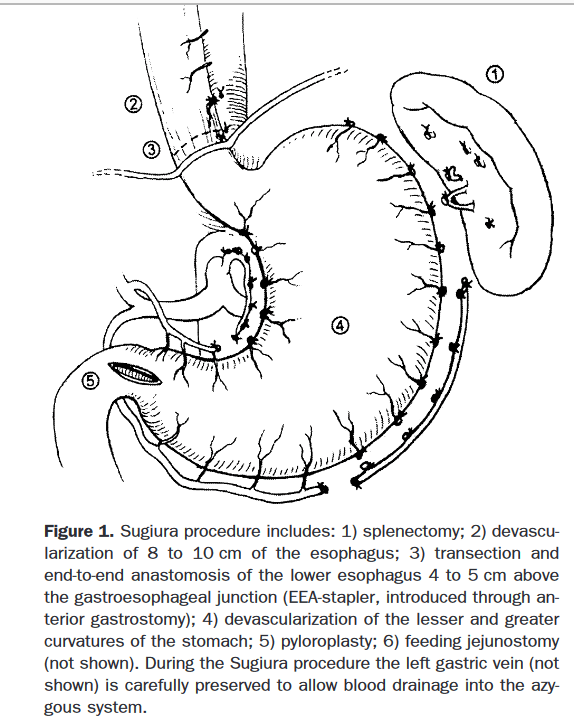
Indication of a Modified Sugiura Procedurein the Management of Variceal Bleeding

“Study results indicate that the modified Sugiura procedure is an effective rescue therapy in patients who are not candidates for selective shunts, transhepatic porto-systemic shunt, or transplantation. Emergency settings and decreased liver function are associated with an increased morbidity.”

Continue reading

Comparison of stapled versus handsewn loop ileostomy closure

“The purpose of this study was to compare the rates of small bowel obstruction, anastomotic complications, and wound infections between stapled and handsewn closures of loop ileostomies. The diverting loop ileostomy is a commonly used stoma, often employed to diminish the consequences of an anastomotic leak in low colorectal anastomoses, ileal pouch-anal anastomoses, and in situations where reversible patient factors increase the risk of an anastomotic dehiscence. They are also used to divert the fecal stream in the event of an anastomotic leak and, occasionally, in severe fistulizing perianal disease.”

Continue reading

Guideline on the role of endoscopy in the evaluation and management of choledocholithiasis

“The aim of this document is to provide evidence-based recommendations for the endoscopic evaluation and treatment of choledocholithiasis based on rigorous review and synthesis of the contemporary literature, using the Grading of Recommendations Assessment, Development and Evaluation (GRADE) framework. The GRADE framework is a system for rating the quality of evidence and strength of recommendations that is comprehensive and transparent and has been recently adopted by the American Society for Gastrointestinal Endoscopy (ASGE). This document addresses the following 4 clinical questions:”


1. “What is the diagnostic utility of EUS versus MRCP to confirm choledocholithiasis in patients at intermediate risk of choledocholithiasis?
2. In patients with gallstone pancreatitis, what is the role of early ERCP?
3. In patients with large choledocholithiasis, is endoscopic papillary dilation after sphincterotomy favored over sphincterotomy alone?
4. What is the role of ERCP-guided intraductal therapy (EHL and laser lithotripsy) in patients with large and difficult choledocholithiasis?”

Continue reading