Management of pericannular bleeding after peritoneal dialysis catheter placement

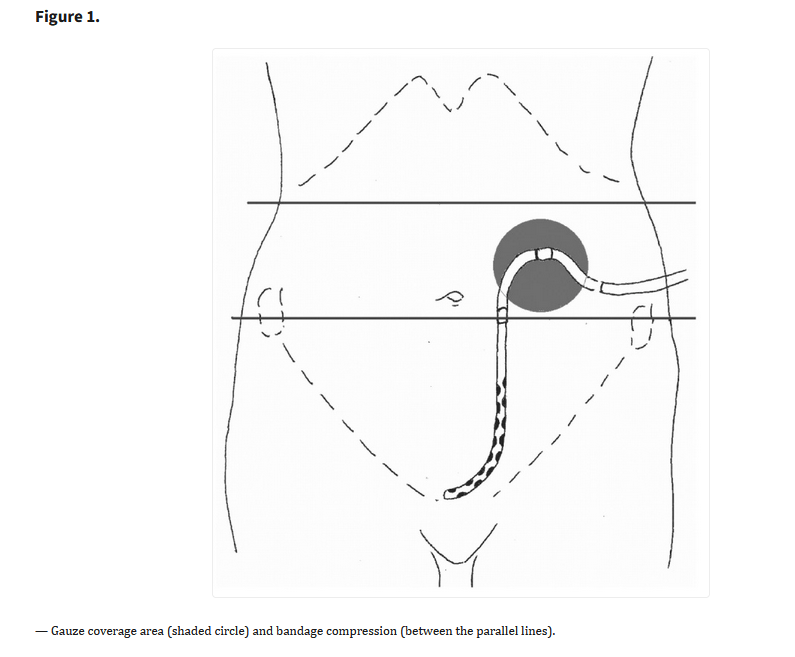
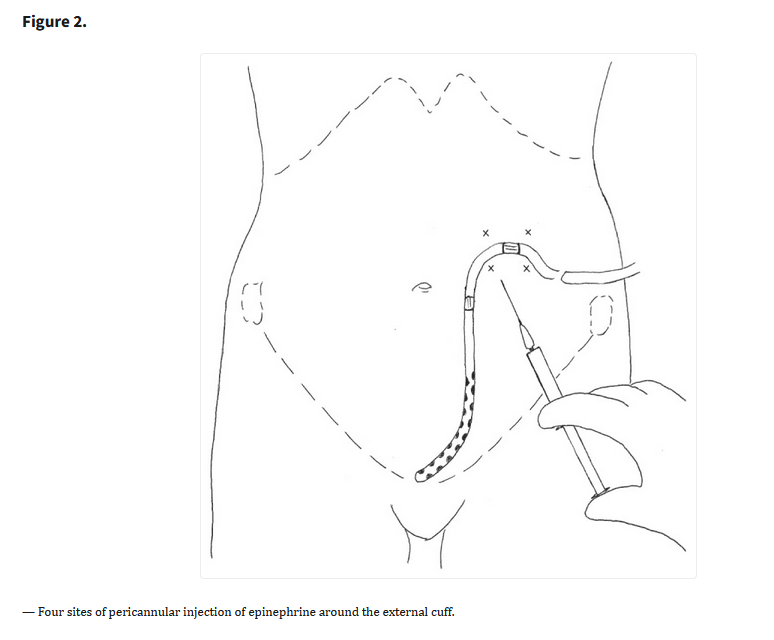
“Pericannular bleeding is a common acute complication developed within 1 month after peritoneal dialysis (PD) catheter insertion, especially in patients subjected to long subcutaneous tunneling. We designed a protocol for the management of acute postoperative pericannular bleeding.
Acute pericannular bleeding is defined as the need to change the dressing more than twice daily within 2 weeks of the operation.”

Continue reading

Pathologies of acute tubular necrosis

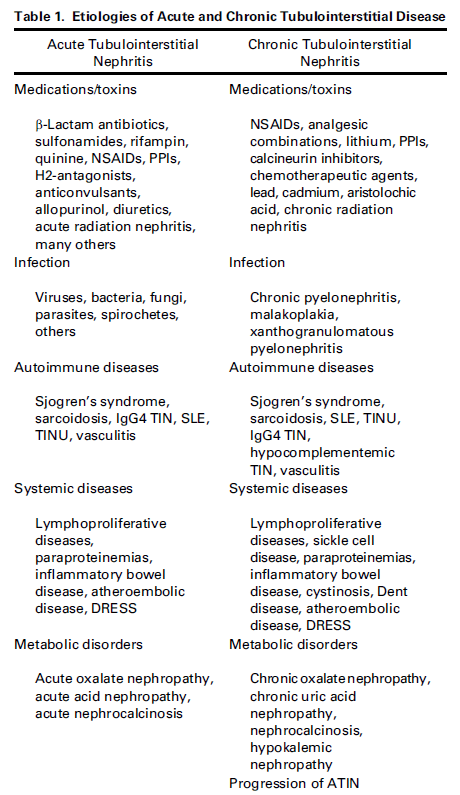
Perazella MA. Clinical Approach to Diagnosing Acute and Chronic Tubulointerstitial Disease. Adv Chronic Kidney Dis. 2017 Mar;24(2):57-63. Full-text for Emory users.

Abbreviations: ATIN, acute tubulointerstitial nephritis; CTIN, chronic
tubulointerstitial nephritis; NSAIDs, nonsteroidal anti-inflammatory
drugs; PPIs, proton pump inhibitors; SLE, systemic lupus erythematosis;
TIN, tubulointerstitial nephritis; TINU, tubulointerstitial nephritis
uveitis; DRESS, drug related eosinophilia systemic syndrome. (Perazella, p. 59)
Continue reading

Parathyroidectomy in the management of tertiary hyperparathyroidism

Ferreira GF, et al. Parathyroidectomy after kidney transplantation: short-and long-term impact on renal function. Clinics (Sao Paulo). 2011;66(3):431-5. Free full-text.

Materials and methods: This was a retrospective case-controlled study. Nineteen patients with persistent hyperparathyroidism underwent parathyroidectomy due to hypercalcemia. The control group included 19 patients undergoing various general and urological operations.

Results: In the parathyroidectomy group, a significant increase in serum creatinine from 1.58 to 2.29 mg/dl (P < 0.05) was noted within the first 5 days after parathyroidectomy. In the control group, a statistically insignificant increase in serum creatinine from 1.49 to 1.65 mg/dl occurred over the same time period. The long-term mean serum creatinine level was not statistically different from baseline either in the parathyroidectomy group (final follow-up creatinine = 1.91 mg/dL) or in the non-parathyroidectomy group (final follow-up creatinine = 1.72 mg/dL).

Conclusion: Although renal function deteriorates in the acute period following parathyroidectomy, long-term stabilization occurs, with renal function similar to both preoperative function and to a control group of kidney-transplanted patients who underwent other general surgical operations by the final follow up.

Continue reading

Vancomycin-Related Acute Kidney Injury

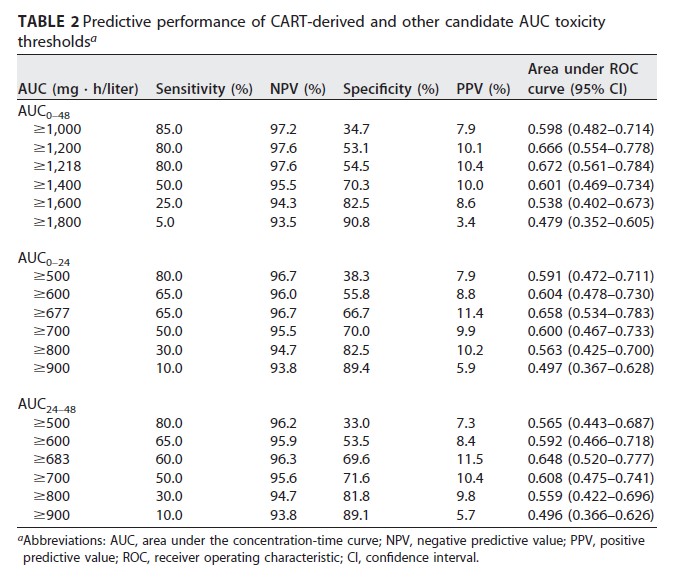
Zasowski EJ, et al. Identification of Vancomycin Exposure-Toxicity Thresholds in Hospitalized Patients Receiving Intravenous Vancomycin. Antimicrob Agents Chemother. 2017 Dec 21;62(1):e01684-17.

Evidence supports vancomycin therapeutic-drug monitoring by area under the concentration-time curve (AUC), but data to establish an AUC upper limit are limited and published nephrotoxicity thresholds range widely. The objective of this analysis was to examine the association between initial vancomycin AUC and nephrotoxicity. This was a multicenter, retrospective cohort study of adult patients receiving intravenous vancomycin from 2014 to 2015. Nephrotoxicity was defined as a serum creatinine increase of 0.5 mg/liter and 50% from baseline on consecutive measurements. Vancomycin exposure profile during the initial 48 h of therapy was estimated using maximum a posteriori probability Bayesian estimation. Vancomycin AUC and minimum-concentration (Cmin) thresholds most strongly associated with nephrotoxicity were identified via classification and regression tree (CART) analysis. Predictive performances of CART-derived and other candidate AUC thresholds was assessed through positive and negative predictive value and receiver operating characteristic curves. Poisson regression was used to quantify the association between exposure thresholds and nephrotoxicity while adjusting for confounders. Among 323 patients included, nephrotoxicity was significantly higher in patients with AUCs from 0 to 48 h (AUC0-48) of ≥1,218 mg · h/liter, AUC0-24 of ≥677 mg · h/liter, AUC24-48 of ≥683 mg · h/liter, and day 1 Cmin (Cmin24) of ≥18.8 mg/liter. Vancomycin exposure in excess of these thresholds was associated with a 3- to 4-fold-increased risk of nephrotoxicity in Poisson regression. The predictive performance of AUC for nephrotoxicity was maximized at daily AUC values between 600 and 800 mg · h/liter. Although these data support an AUC range for vancomycin-associated nephrotoxity rather than a single threshold, available evidence suggests that a daily AUC limit of 700 mg · h/liter is reasonable.

Continue reading

Article of interest: Effect of No Prehydration vs Sodium Bicarbonate Prehydration Prior to Contrast-Enhanced Computed Tomography in the Prevention of Postcontrast Acute Kidney Injury in Adults With Chronic Kidney Disease: The Kompas RCT.

Timal RJ, et al Effect of No Prehydration vs Sodium Bicarbonate Prehydration Prior to Contrast-Enhanced Computed Tomography in the Prevention of Postcontrast Acute Kidney Injury in Adults With Chronic Kidney Disease: The Kompas Randomized Clinical Trial. JAMA Intern Med. 2020 Feb 17. [Epub ahead of print]

Full-text for Emory users.

RESULTS: Of 554 patients randomized, 523 were included in the intention-to-treat analysis. The median (interquartile range) age was 74 (67-79) years; 336 (64.2%) were men and 187 (35.8%) were women. The mean (SD) relative increase in creatinine level 2 to 5 days after contrast administration compared with baseline was 3.0% (10.5) in the no prehydration group vs 3.5% (10.3) in the prehydration group (mean difference, 0.5; 95% CI, -1.3 to 2.3; P < .001 for noninferiority). Postcontrast acute kidney injury occurred in 11 patients (2.1%), including 7 of 262 (2.7%) in the no prehydration group and 4 of 261 (1.5%) in the prehydration group, which resulted in a relative risk of 1.7 (95% CI, 0.5-5.9; P = .36). None of the patients required dialysis or developed acute heart failure. Subgroup analyses showed no evidence of statistical interactions between treatment arms and predefined subgroups. Mean hydration costs were €119 (US $143.94) per patient in the prehydration group compared with €0 (US $0) in the no prehydration group (P < .001). Other health care costs were similar.

Risk of Acute Kidney Injury After IV Contrast Media Administration

Hinson JS, Ehmann MR, Fine DM, et al. Risk of Acute Kidney Injury After Intravenous Contrast Media Administration. Ann Emerg Med. 2017 May;69(5):577-586.e4.

Full-text for Emory users.

Results: “Rates of acute kidney injury were similar among all groups. Contrast administration was not associated with increased incidence of acute kidney injury (contrast-induced nephropathy criteria odds ratio=0.96, 95% confidence interval 0.85 to 1.08; and Acute Kidney Injury Network/Kidney Disease Improving Global Outcomes criteria odds ratio=1.00, 95% confidence interval 0.87 to 1.16). This was true in all subgroup analyses regardless of baseline renal function and whether comparisons were made directly or after propensity matching. Contrast administration was not associated with increased incidence of chronic kidney disease, dialysis, or renal transplant at 6 months. Clinicians were less likely to prescribe contrast to patients with decreased renal function and more likely to prescribe intravenous fluids if contrast was administered.”