
To drain or not to drain…the GRECCAR 5 randomized trial

One discussion this week focused on pelvic drains.

Reference: Denost Q, et al. To drain or not to drain infraperitoneal anastomosis after rectal excision for Cancer: The GRECCAR 5 randomized trial. Annals of Surgery. 2017 Mar;265(3):474-480. doi:10.1097/SLA.0000000000001991.

Summary: The GRECCAR 5 randomized trial sought to explore the benefit of a drain for postoperative pelvic sepsis, overall morbidity and mortality, rate of re-operation, length of stay, and rate of stoma closure at 6 months (p.474). It involved 469 patients (236 with drains, 233 without) between 2011 and 2014.

Ultimately, the trial did not find any benefit of the pelvic drain after low anterior resection for rectal cancer. Thus, the authors “recommend not using pelvic drain after rectal excision for cancer, except in case of operative bleeding or beyond TME surgery” (p.480).

The drain did not contribute to an efficient diagnosis of sepsis, for the time to diagnosis of pelvic sepsis was an average of 7.8 days, yet the drain was removed at 5.5 days postop (see figure below; p.1478).
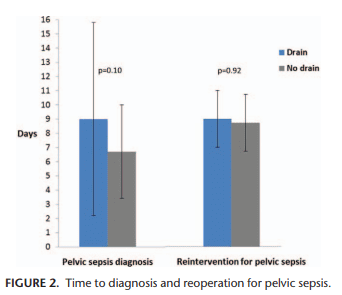
pelvic sepsis

There was no significant difference between the two groups for any of the noted measurements. Pelvic sepsis occurred in 16.1% of those with the drain and 18.0% of those without drain. Re-operation for pelvic sepsis was done in 10.2% of those with drain and 12.0% of those without drain.

Additional reading: Placer C. To drain or not to drain infraperitoneal anastomosis after rectal excision for cancer: an unclosed debate [Letter to the Editor]. Annals of Surgery. 2018. doi:10.1097/SLA.0000000000003005. [Epub ahead of print]

The Prospective Peri-operative Enoxaparin Cohort Trial (PROSPECT)

Reference: Dunn AS, Spyropoulos AC, Turpie AG. Bridging therapy in patients on long-term oral anticoagulants who require surgery: the Prospective Peri-operative Enoxaparin Cohort Trial (PROSPECT). Journal of Thrombosis and Haemostasis. 2007 Nov;5(11):2211-2218.

Summary: Due to limited data on the incidence of peri-operative thromboemobolic and bleeding during bridge therapy, there is no agreement on optimal peri-operative management of patients on oral anticoagulants (OACs). Dunn et al sought to “examine the incidence of major bleeding of a peri-operative strategy using once-daily therapeutic-dose enoxaparin administered primarily at home, and the effect, if any, of the extensiveness of the procedure on the risk of bleeding during bridge therapy” (p.2211-2212).

The study involved 24 sites in North America between January 2002 and August 2003. The figure below shows the study’s peri-operative management protocol (p.2212): periop mgmt2


Safety outcomes:

  • Incidence of major bleeding while on enoxaparin or in the 24 hours following cessation of enoxaparin treatment
    • Occurred in 3.5% (95% CI: 1.6-6.5)
    • Invasive procedures: 1.4%
    • Minor surgery: 0%
    • Major surgery:  27.5%
  • Rate of minor bleeding while on enoxaparin, or within 24 hours of discontinuation
    • Occurred in 108 patients (41.5%, 95% CI:35.7-47.6)
    • Invasive procedures: 44.6%
    • Minor surgery: 47.2%
    • Major surgery: 20.0%

Efficacy outcomes:

  • Incidence of arterial thromboembolic events for patients with afib
    • 4 events out of 176 patients (2.3%, 95% CI: 0.6-5.7)
    • 2 TIAs, 0 strokes, 2 patients had peripheral arterial thromboembolic events
  • Incidence of venous thromboembolic events for patients with a history of DVT.
    • 1 event out of 96 patients (1.0%, 95% CI: 0.03-5.7)
    • None fatal

Bleeding risk is high when bridging therapy is done peri-operatively in major surgery. In this study, there were 8 instances of major bleeding among 40 total patients in major surgery. Out of 220 invasive procedures or minor surgery, there was only 1 major bleeding event.

The value of diverting loop ileostomy to prevent low pelvic anastomotic leak

One discussion this week focused on the impact of diverting ileostomy on low rectal anastamoses.

Reference: Matthiessen P, Hallbook O, Rutegard J, Simert G, et al. Defunctioning Stoma Reduces Symptomatic Anastomotic Leakage After Low Anterior Resection of the Rectum for Cancer: A Randomized Multicenter Trial. Annals of Surgery. 2007 Aug;246(2):2017-214. doi:10.1097/SLA.0b013e3180603024

Summary: Anastomotic leakage is a feared complication of rectal resections, reportedly occuring in 1-24% and increasing postoperative morbidity from 1-8% to 6-22% (Matthiessen et al, 2007). In a randomized multicenter trial of 234 patients (no easy feat for surgical technique studies), Matthiessen et al (2007) found “patients without diverting stoma leaked in 28.0%, compared to 10.3% of those with diverting stomas (OR = 3.4; 95% CI, 1.6-6.9; P < 0.001), a result not previously demonstrated in any randomized trial” (p.207).

surgmm_leakage

Among patients randomized for diverting ostomy, surgeons demonstrated a preference for loop ileostomy vs transverse colostomy (112/116) and in all 25 urgent diverting stomas. In 97% of the patients (227/234), surgeons chose to use pelvic drainage. All anastomotoses were made with a stapling device, none were handsewn.

The authors conclude that their trial accurately demonstrates a decreased rate of symptomatic ansatomotic leakage in diverted patients in low anterior resection. This is the first randomized trial to illustrate this result and, therefore, they recommend the use of a diverting stoma in low anterior resection of the rectum.

(Matthiessen et al, 2007, p.210)

Additional reading: Hanna MH, Vinci A, Pigazzi A. Diverting Ileostomy in Colorectal Surgery: When is it Necessary? Langenbeck’s Archives of Surgery. 2015 Feb;400(2):145-152. doi:10.1007/s00423-015-1275-1.