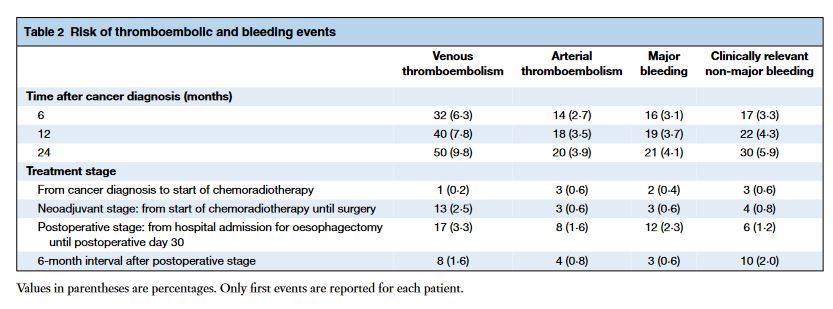
“Patients with oesophageal cancer undergoing neoadjuvant chemoradiotherapy and surgery are at substantial risk of thromboembolic and bleeding events throughout all stages of treatment. Survival is worse in patients with thromboembolic events during follow-up.”
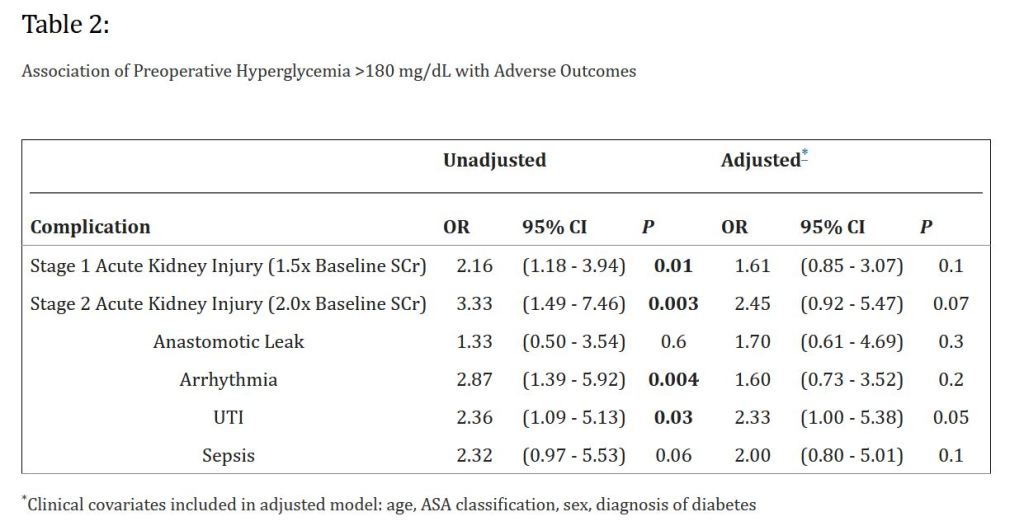
“Hyperglycemia has emerged as a modifiable mediator of adverse events after surgery. Potential mechanisms for these outcomes include the vascular, inflammatory, and hemodynamic derangements that occur as a result of persistently elevated glucose levels, all of which can contribute to the risk of morbidity and mortality after surgery.” (Chen)
“Postoperative hyperglycemia was more significantly associated with adverse clinical outcomes after elective colorectal surgery than was preoperative hyperglycemia. However, preoperative hyperglycemia was associated with postoperative hyperglycemia, suggesting that improved glycemic management preoperatively may help reduce hyperglycemic events after surgery.” (Chen)
“Anastomotic leakage is a common yet one of the most feared complications following colorectal surgery. Dehiscence of the anastomosis can result in fatal complications such as peritonitis, abscess formation, and sepsis, thereby increasing morbidity and mortality, cost and length of hospital stay. Multiple factors contribute to the development of anastomotic dehiscence. Several studies have been published identifying various risk factors that may play a role in causing AL.” (Sripathi)
“Anastomotic leak in colorectal surgery is a multifactorial complication associated with an increased morbidity and mortality rate. It has remained the most feared complication over the past several years, despite numerous studies and technological advances like robotic surgery, staplers, and other anastomotic techniques. The clinical significance of reviewing and summarizing the risk factors of AL is to identify high-risk patients. Awareness and understanding of these factors will provide an opportunity to offer more comprehensive preoperative patient counseling.” (Sripathi)
“The number of intersections of staple lines is associated with anastomotic leakage, and the inversion technique is a useful method for avoiding anastomotic leakage. Using an appropriate technique by skilled operator, double stapling technique for laparoscopic anterior resection is safe and feasible.”
“
Laparoscopic intracorporeal colorectal anastomosis with double stapling technique is difficult because of the unsuitable cutting angle associated with using a linear stapler in the narrow pelvic cavity. Consequently, we sometimes have used multiple stapler firings during division of the rectum. Because of the long and tilted linear staple line placed on the rectal stump, a circular anastomotic plane can create multiple intersections of staple lines and dog-ears. Anastomotic leakage is a major problem in patients with colorectal cancer who have undergo laparoscopic surgery. Despite technical improvements in laparoscopic surgery, recent studies have reported that the anastomotic leakage rate remains at 6.3% to 13.7%.” (Lee)
“One of the largest controversies in perioperative medicine over the last quarter century has been whether anesthesia and surgery contribute to long-term cognitive decline and/or the development of dementia in older adults. This question has major public health implications, since approximately half of adults over 65 will undergo at least one surgery, and over 120,000 Americans will die of Alzheimer’s disease (AD) per year.”
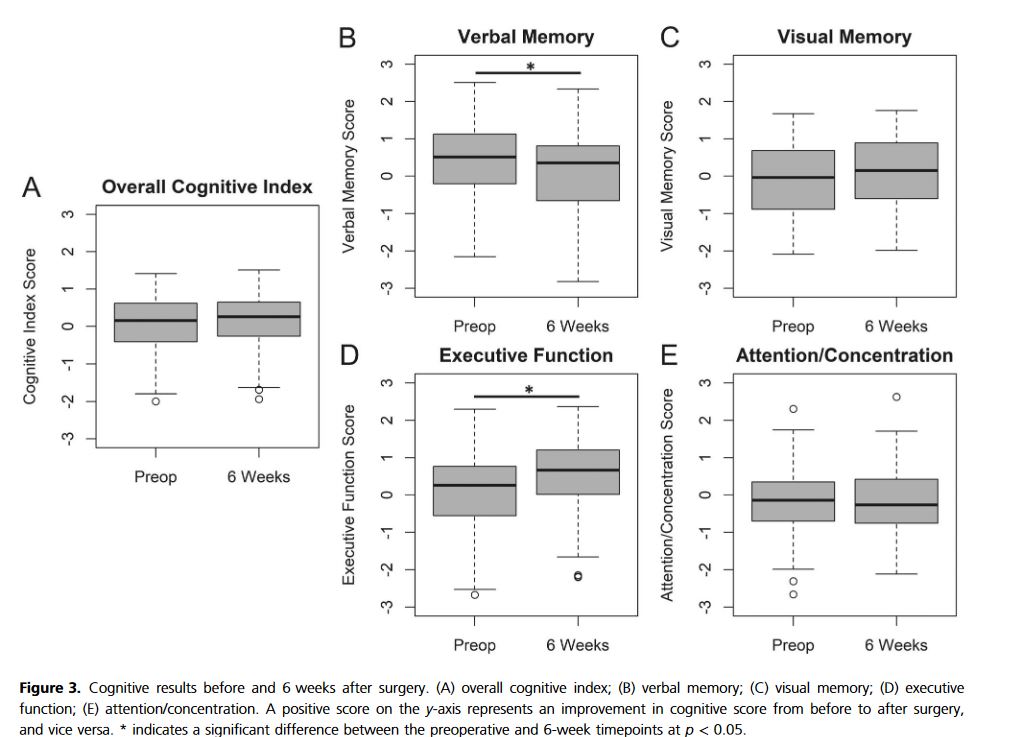
“Neurocognitive changes after non-cardiac, non-neurologic surgery in the majority of cognitively healthy, community-dwelling older adults are unlikely to be related to postoperative changes in AD neuropathology (as assessed by CSF Aβ, tau or p-tau-181p levels or the p-tau-181p/Aβor tau/Aβratios).”
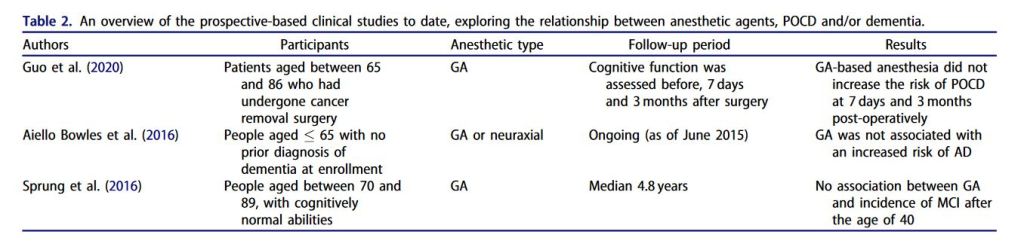
“Although the authors acknowledge that cognitive deterioration following surgery is a common phenomenon, there is little evidence that anesthesia itself or other surgical and patient factors can cause or accelerate cognitive decline and AD. The existing controversy in the field between animal and human studies highlights the need for transitioning from population-based studies to high-quality clinical studies especially with regards to dementia.” (Tsolaki)
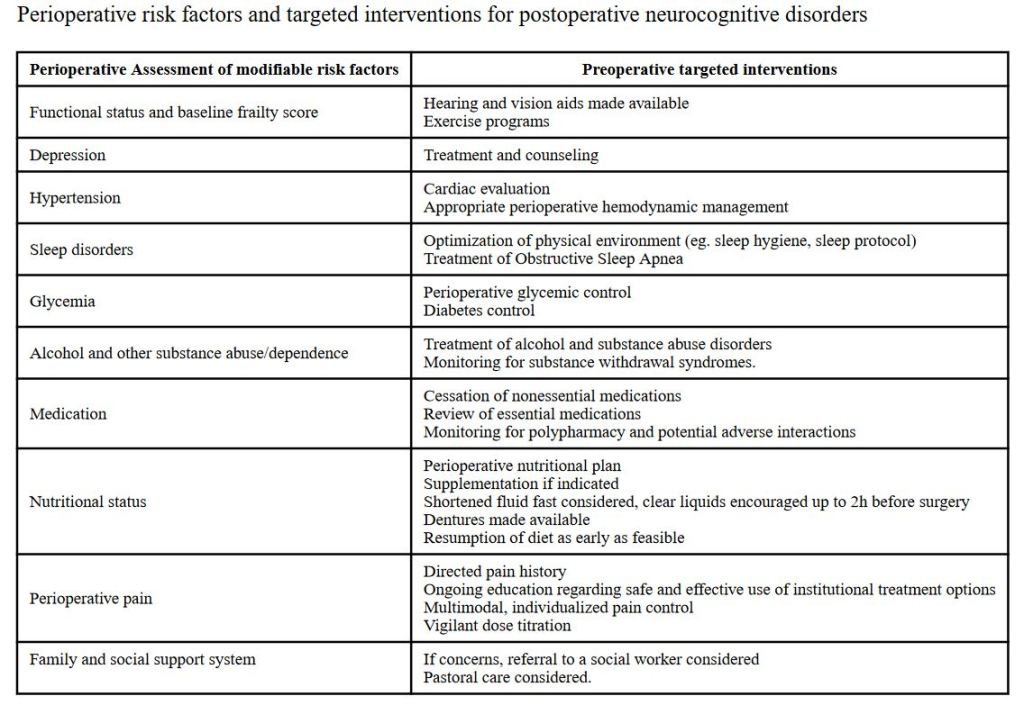
“Postoperative neurocognitive decline is a meaningful concern to patients and represents a significant and expanding challenge to health care in the US and worldwide. Surgeons and anesthesiologists should assess, discuss, and optimize associated potential risks for each patient before surgery. Best practices and interventions can begin before surgery and extend well into the recovery period. To be most effective, these strategies require family engagement and the involvement of an interdisciplinary health care team and comprehensive systems of care.” (Vacas)



 Surgical Focus