Association Among Blood Transfusion, Sepsis, and Decreased Long-term Survival After Colon Cancer Resection

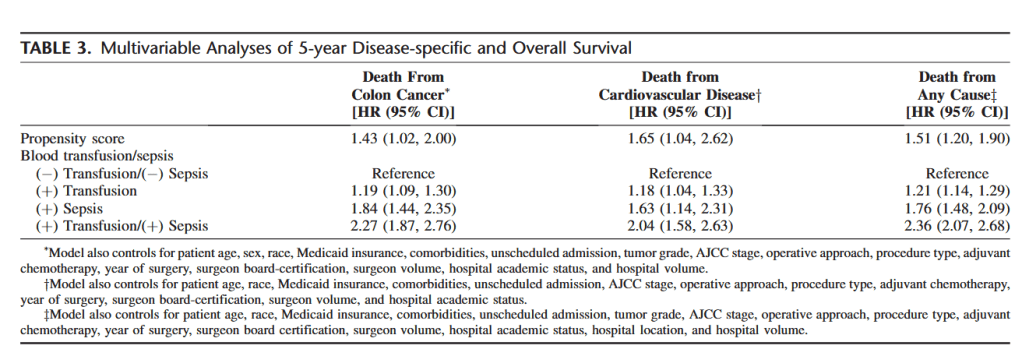
“Colorectal cancer is the second-leading cause of cancer-related mortality in both the United States and Europe. With respect to prognosis, increasing evidence has suggested that systemic inflammation is a key predictor of disease progression and survival for colorectal cancer patients undergoing surgery. Furthermore, whereas red blood cell (RBC) transfusions may be life-saving in some circumstances, there has been growing evidence that transfusions are associated with adverse postoperative outcomes, including infectious complications and cancer recurrence. These detrimental effects are thought to be related to systemic inflammation and transfusion-related immunomodulation (TRIM). Whereas the exact mechanisms remain unknown, TRIM seems to be related to various immunologic changes, including decreased interleukin (IL)-2 production, monocyte and cytotoxic cell activity inhibition, increased suppressor T-cell activity, and immunosuppressive prostaglandin release.”
Continue reading

Management and Morbidity of Major Pelvic Hemorrhage in Complex Abdominopelvic Surgery

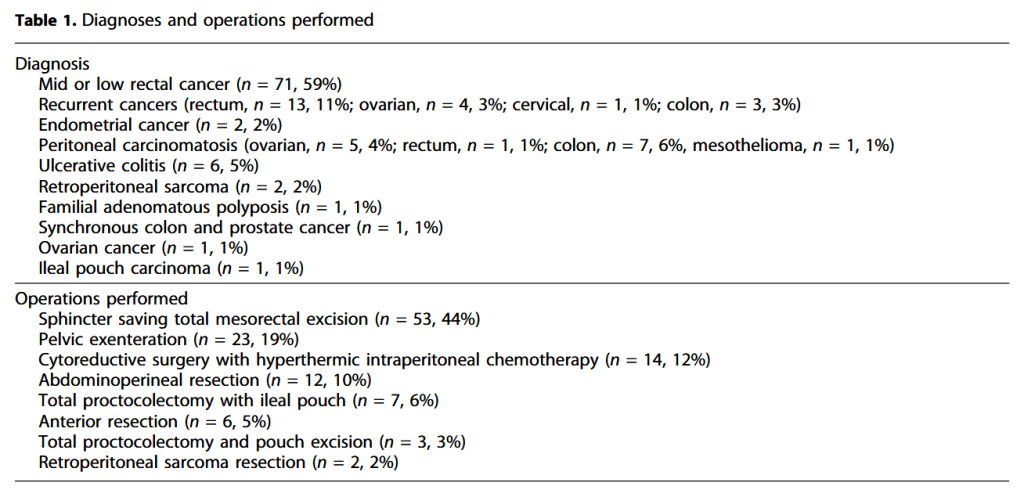
“Complex abdominopelvic surgery (CAPS) includes a wide variety of difficulties related to primary disease and hostile intrapelvic environment. Any radical abdominopelvic operation which is not standardized is complex. Hence, radical oncologic operations for the primary advanced or recurrent carcinoma of pelvic organs, revisional operations for failed restorative operations for maintaining intestinal continuity are considered as CAPS.”

Continue reading

Perioperative protocol for pancreatic resections in patients who refuse blood transfusions.

“The refusal of blood transfusion for surgical procedures at high risk of bleeding, such as pancreatic resection, forces surgeons to face ethical challenges and raises concerns about appropriate perioperative management. In the last two decade the rate of transfusion in high volume centers has gradually decreased thanks to the application of patient blood management (PBM) protocols.”

“In our single-institution experience, patients that categorically refused transfusion were Jehovah’s Witnesses (JW). JW is a religious movement, membership in which accounts for about 0.3% of Western countries’ populations, with USA and Italy having the highest percentages of followers. JW followers believe neither whole blood nor its four major components, namely red cells, white cells, platelets and plasma, should be donated, stored, or accepted in any circumstance, even in life-threatening situations. Advances in transfusion medicine have led the JW’s denomination to modify its position about what is deemed acceptable.”

Continue reading

Utility of thromboelastography to guide blood product transfusion in surgical settings.

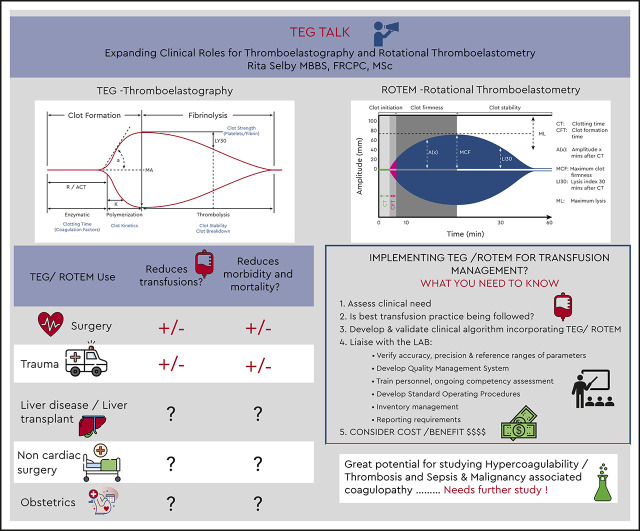
Selby R. “TEG talk”: expanding clinical roles for thromboelastography and rotational thromboelastometry. Hematology Am Soc Hematol Educ Program. 2020 Dec 4;2020(1): 67-75.

Free full-text.

Click to enlarge. 

“Viscoelastic assays (VEAs) that include thromboelastography and rotational thromboelastometry add value to the investigation of coagulopathies and goal-directed management of bleeding by providing a complete picture of clot formation, strength, and lysis in whole blood that includes the contribution of platelets, fibrinogen, and coagulation factors. Conventional coagulation assays have several limitations, such as their lack of correlation with bleeding and hypercoagulability; their inability to reflect the contribution of platelets, factor XIII, and plasmin during clot formation and lysis; and their slow turnaround times. VEA-guided transfusion algorithms may reduce allogeneic blood exposure during and after cardiac surgery and in the emergency management of trauma-induced coagulopathy and hemorrhage. However, the popularity of VEAs for other indications is driven largely by extrapolation of evidence from cardiac surgery, by the drawbacks of conventional coagulation assays, and by institution-specific preferences. Robust diagnostic studies validating and standardizing diagnostic cutoffs for VEA parameters and randomized trials comparing VEA-guided algorithms with standard care on clinical outcomes are urgently needed. Lack of such studies represents the biggest barrier to defining the role and impact of VEA in clinical care.”

Continue reading