Novel approach to surgical repair of enterovaginal fistula in the irradiated pelvis

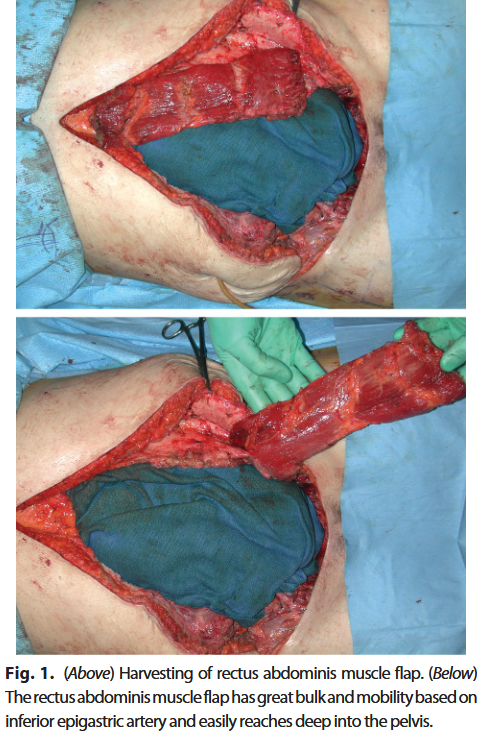
“Gynecologic malignancies are often treated with surgical resection and pelvic irradiation. The small bowel is most important in determining the dose of pelvic radiation because of its sensitivity to the effects of radiation. Enterovaginal fistulas in an irradiated field are rare and very challenging problems, often with devastating clinical and personal consequences. We investigated the use of the rectus abdominis muscle flap for the definitive treatment of recurrent enterovaginal fistula in the irradiated field. The rectus abdominis muscle has
ideal features for this use, including a long vascular pedicle, good bulk, low flap-related complication rates, and excellent graft survival.”
Continue reading

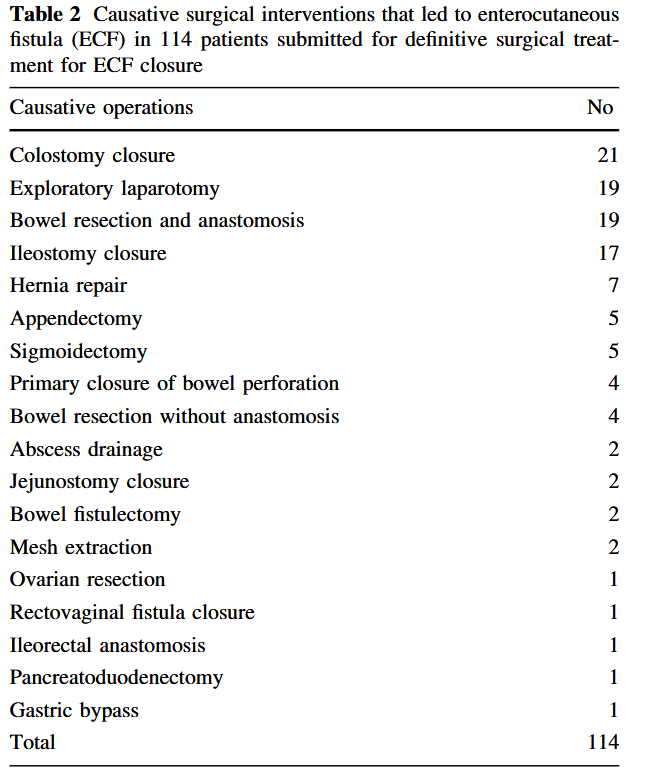
Definitive surgical treatment of enterocutaneous fistula

“Enterocutaneous Fistula (ECF) is defined as an abnormal connection between the gastrointestinal tract and the skin, and it requires labor-intensive medical management and surgical expertise. Complex wound management, severe malnutrition, frequent infectious complications, chronic pain, and depression require significant investment of health care resources and make the short-term and longterm care of these patients difficult. The
subsequent operative management often requires lengthy procedures in hostile abdomens with abundant adhesions and surrounding inflammation. In addition to the significant risk of mortality, morbidity can be equally as devastating.”

Continue reading

The Importance of Abdominal Wall Closure After DefinitiveSurgery for Enterocutaneous Fistula

“In the case of enterocutaneous fistula (ECF) initial medical therapy aims to stabilize the patient, optimize the nutritional status and control of infections and fistula output. When surgery is required, extensive adhesiolysis, bowel resection and anastomosis along with abdominal wall reconstruction are necessary. The primary endpoint in patients undergoing surgical treatment with ECF as well as in the case of intestinal stomas, is to solve the intestinal defect, thus leaving in secondary terms other problems such as ventral hernias.
The simultaneous treatment of fistula/stoma closure with abdominal wall defect closure has been widely debated since some argue that the risk of complications such as anastomotic leakage is increased due to prolonged surgery and anesthetic time. However, various studies are reporting good results in patients undergoing simultaneous stoma with giant wall defect correction surgery, without increased risks and rates of complications.”

Continue reading

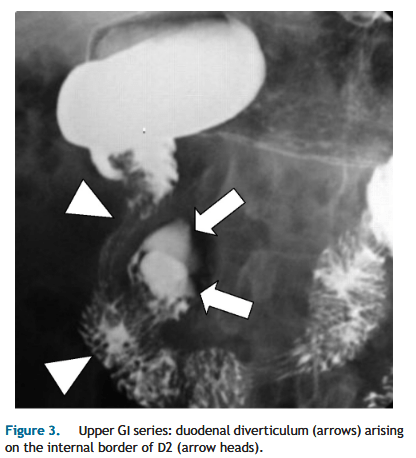
Management of complicated duodenal diverticula

“Despite their frequent occurrence, DD are asymptomatic in 95% of cases, while 1 to 5% eventually become symptomatic. Intervention is indicated only for symptomatic duodenal diverticula(DD). Complications related to DD are rare but may be very severe; they include biliary or pancreatic obstruction, duodenal obstruction, perforation, or hemorrhage.
Endoscopic treatment is usually the first-line approach to biliopancreatic complications related to juxtapapillary DD and also for hemorrhagic complications. Indirect surgical
treatments include bilio-enteric bypasses and even duodenal exclusion. Direct surgical treatment consists of duodenal diverticulectomy, which has significant morbidity and mortality; prophylactic excision of asymptomatic DD is therefore not recommended.”

Continue reading

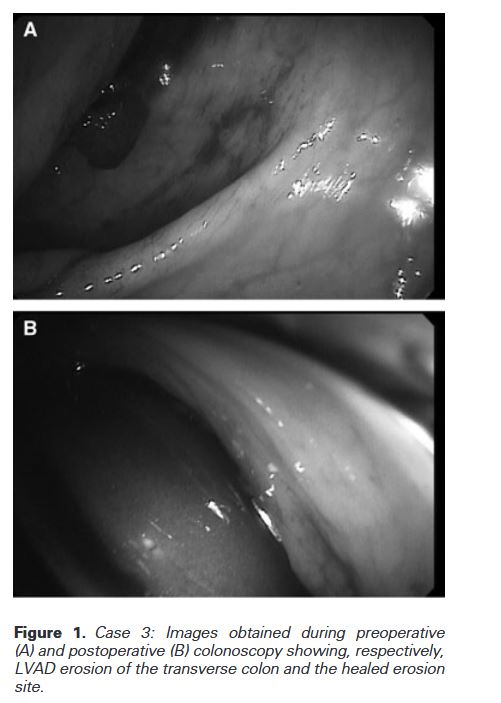
Left ventricular assist device infections resulting from gastrointestinal-tract fistulas

“Despite the benefits provided by continuous-flow left ventricular assist devices (LVADs), such as the HeartMate-II (HM-II), pump-related infection remains a potential complication of LVAD use. The following factors contribute to LVAD infection: malnutrition, diabetes, obesity,
prolonged hospitalization, postoperative bleeding, hematoma formation, reoperation, multiorgan failure, and sepsis.Device-related infection entails an increased hospital stay and increased risk of death. Therefore, bridge-to-transplant patients with LVAD-related infections are upgraded to status IA, classified as the highest level of urgency, on the transplant waiting list.”

Continue reading

Surgical Treatment of Enterocutaneous Fistula

“Enterocutaneous Fistula (ECF) is defined as an abnormal connection between the gastrointestinal tract and the skin, and it requires labor-intensive medical management and surgical expertise. Complex wound management, severe malnutrition, frequent infectious complications, chronic pain, and depression require significant investment of health care resources and make the short-term and long-term care of these patients difficult.”

Continue reading

Management of enterocutaneous fistulas

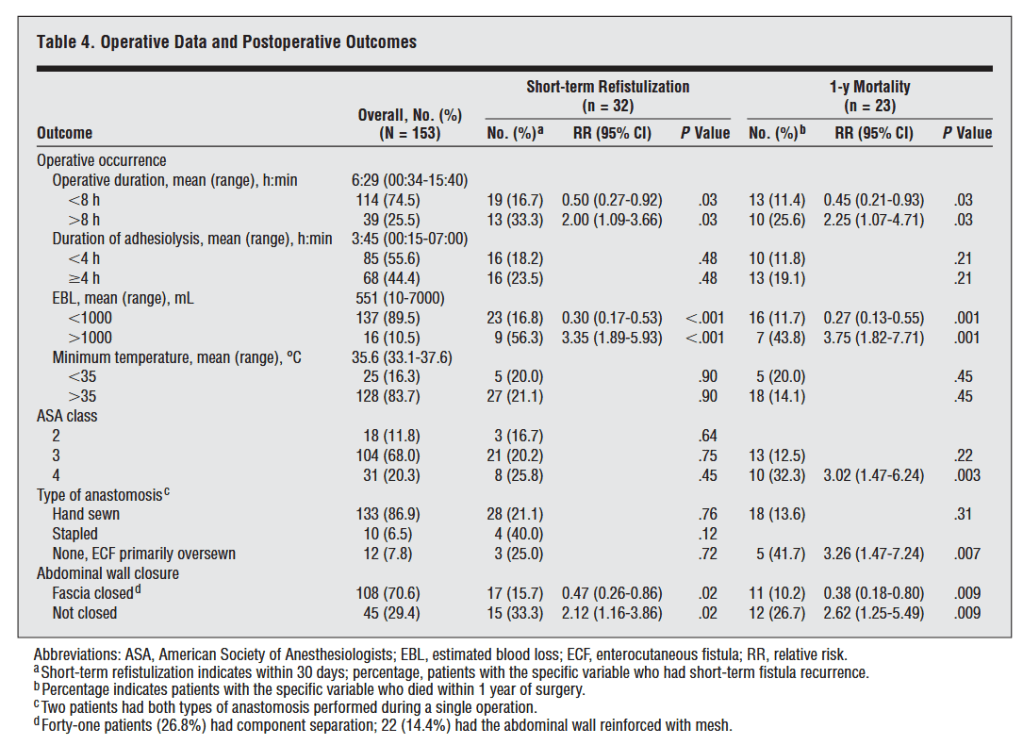
Owen RM, Love TP, Perez SD, Srinivasan JK, Sharma J, Pollock JD, Haack CI, Sweeney JF, Galloway JR. Definitive surgical treatment of enterocutaneous fistula: outcomes of a 23-year experience. JAMA Surg. 2013 Feb;148(2):118-26.

Full-text for Emory users.

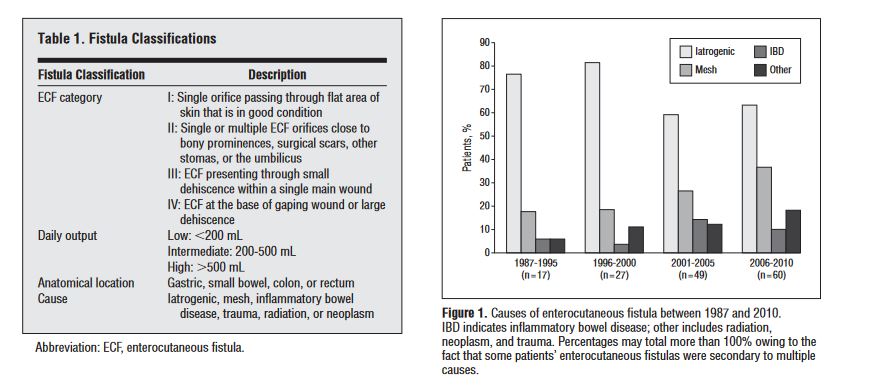
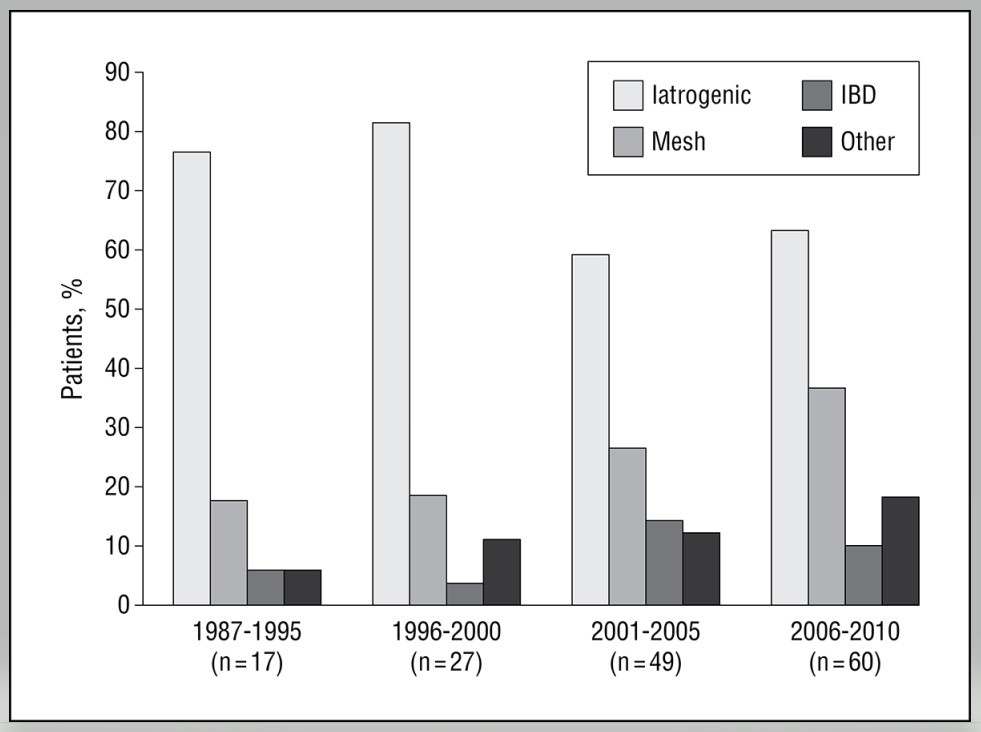
Figure 1. Causes of enterocutaneous fistula between 1987 and 2010. IBD indicates inflammatory bowel disease; other includes radiation, neoplasm, and trauma. Percentages may total more than 100% owing to the fact that some patients’ ECFs were secondary to multiple causes.

Continue reading