Laparoscopic entry techniques

“Laparoscopy is a surgical procedure commonly used in gynaecology whereby a laparoscope is used to gain intra-abdominal access via less extensive incisions. Evidence suggests that laparoscopy provides significant benefits compared to laparotomy in terms of surgical outcomes for patients and costs for healthcare providers. Unlike in conventional open surgery, the surgeon is usually unable to visualise the initial entry into the peritoneal cavity. Most laparoscopic complications occur during the initial entry. These may happen
at several stages including Veress needle insertion, creation of a pneumoperitoneum, and primary trocar insertion. Opinion is divided as to the safest entry technique, and clinical practice is varied. Although gynaecologists commonly use a closed method of entry, other surgical specialties routinely use open methods of entry.”

Continue reading

Surgical technique in constructing the jejunojejunostomy and the riskof small bowel obstruction after Roux-en-Y gastric bypass

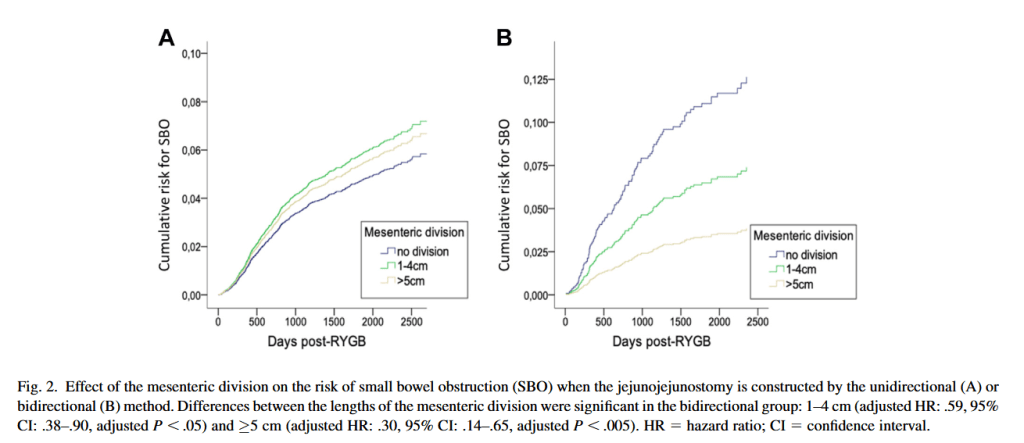
“Laparoscopic Roux-en-Y gastric bypass (RYGB) surgery is an effective bariatric procedure with excellent outcomes in terms of weight loss and reducing co-morbidities. Large series have demonstrated that the procedure can be performed with low postoperative morbidity and very low mortality. However, concerns have been raised about long-term complications, especially small bowel obstruction (SBO).
In Sweden, RYGB is almost exclusively performed laparoscopically using the antecolic, antegastric Gothenburg technique. Since the technique was first described, alterations have been introduced to reduce the risk of internal herniation, but these modifications have been reported to increase the risk of kinking of the jejunojejunostomy (JJ). Our group has previously demonstrated that diagnostic laparoscopy in RYGB patients suffering from postprandial symptoms often reveals surgically correctable dysfunction/kinking at the JJ.”

Continue reading

Inadvertent Enterotomy in Minimally Invasive Abdominal Surgery

“Inadvertent enterotomy (IE) is one of the underreported complications in abdominal surgery. Krabben et al reported a 19% incidence of IE in patients who had a repeat
laparotomy. The incidence of and risk factors for IE during enterolysis were reported in a cohort of patients reoperated on. According to Krabben et al, the risk of inadvertent enterotomy in open surgery is more than 10-fold in patients with a history of 3 or more previous laparotomies.”

Continue reading

Laparoscopic Entry Techniques and Injuries

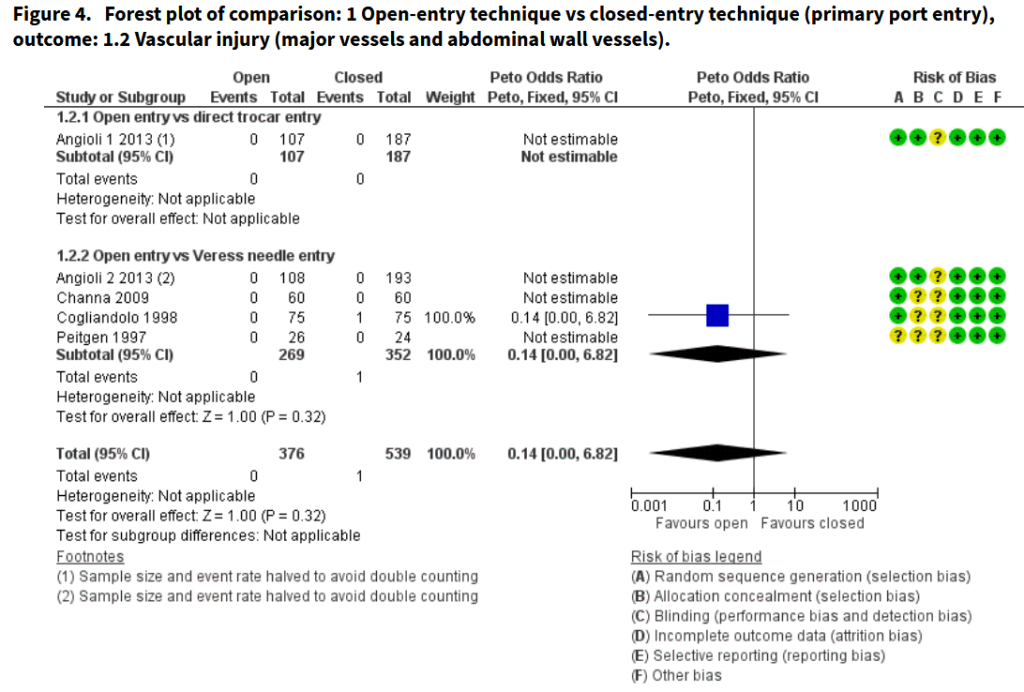
“Recent reports by the Australian Safety and Efficacy Register for New interventions and Procedures (ASERNIP-S) and the Royal Australian and New Zealand College of Obstetricians and Gynaecologists (RANZCOG) concluded that insufficient evidence is available to assess the safety of the open versus closed laparoscopy in regard to major vascular and visceral injuries.” (Larobina & Nottle)

Major Vascular Injuries in Closed vs. Open Laparoscopy (Larobina & Nottle)

“Our case series shows that open laparoscopy can vastly reduce the incidence of access-related morbidity and mortality. Only a single visceral injury occurred in 5900 cases, and no major vascular injuries were reported.These figures are consistent with those of other reported series of open laparoscopy, which also show a zero rate of vascular injury and low rates of visceral injury.The literature review showed a rate of 1 injury to major retroperitoneal vessels per 2272 cases of closed laparoscopy procedures. This compares with a major vascular injury rate of 0 for the open technique. This difference is both statistically significant ( P = 0.003) and highly clinically significant.” (Larobina & Nottle)

Continue reading

Postoperative Inflammatory Response in Crohn’s Patients

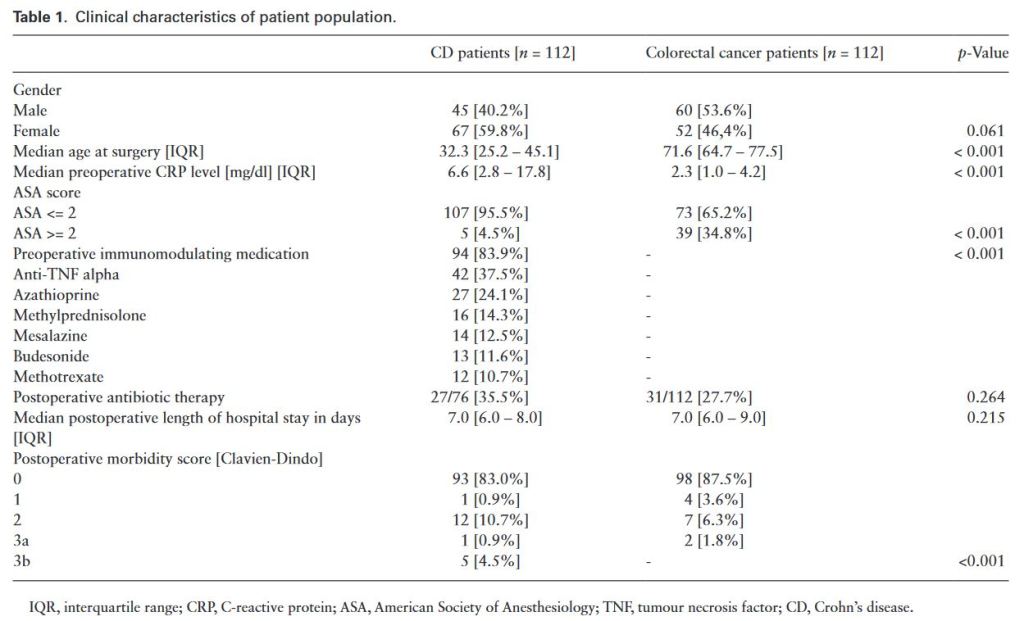
“Crohn’s Disease is an inflammatory bowel disease with a multifactorial pathophysiology. Genetic, immune, gut microbiota, and other environmental factors play a role in the occurrence and maintenance of bowel inflammation. Unfortunately, despite the development of new drugs, about half of all CD patients will need surgery during their disease course.”

Continue reading

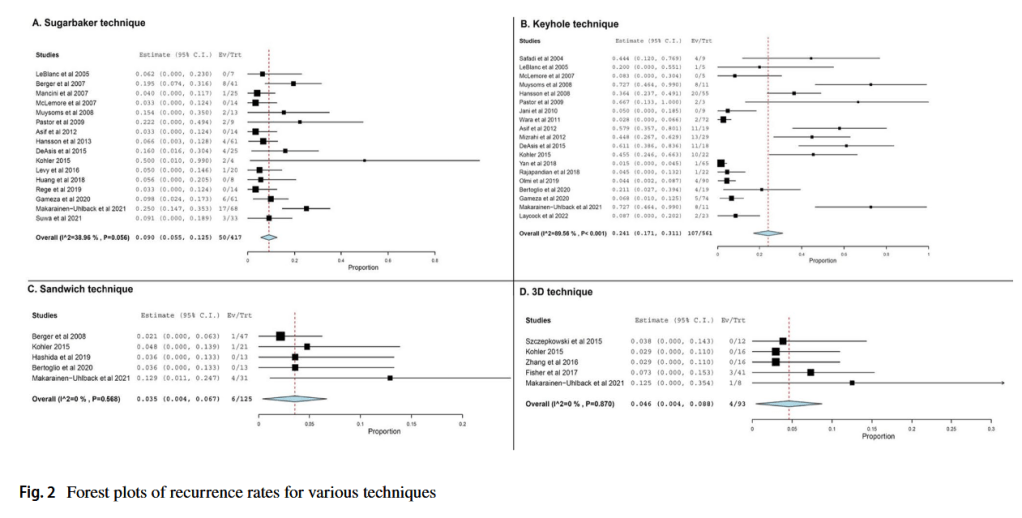
Laparoscopic mesh versus suture repair of hiatus hernia

“Hiatus hernia contributes to the pathophysiology of gastroesophageal reflux disease (GERD). Mesh-augmentation of surgical repair might be associated with a reduced risk of recurrence and GERD. However, recurrence rates, mesh-associated complications and quality of life after mesh versus suture repair are debated. The aim of this meta-analysis was to determine HH recurrence following mesh-augmentation versus suture repair.”

Continue reading

Fundoplication at the Time of Laparoscopic Paraesophageal Hernia Repair

“Laparoscopic paraesophageal hernia repair is a complex surgical problem with many variables that can affect the outcome. Based on the results of our carefully selected patients, the addition of a fundoplication minimizes postoperative reflux symptoms without additional operative time. In addition, neither dysphagia nor paraesophageal hernia recurrence is affected by the presence of a fundoplication.”

van der Westhuizen
Continue reading