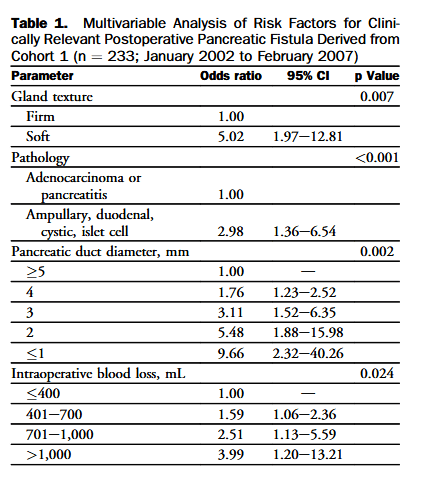
A prospectively validated clinical risk score accurately predicts pancreatic fistula after pancreatoduodenectomy

“Despite advancements in operative technique and improvements in postoperative outcomes, pancreatic fistula is widely considered to be the most common and
troublesome complication after pancreatic resection. It represents the factor most often linked with postoperative mortality, certain complications such as delayed gastric emptying, longer hospital stays, readmissions, and increased costs. Furthermore, it frequently delays
timely delivery of adjuvant therapies, and reduces overall patient survival. Placement of pancreatic duct stents, the use of somatostatin analogs or adhesive sealants, or modifications in reconstruction technique have done little to change the incidence or alter the impact of postoperative pancreatic fistulas (POPF).”

Continue reading

Efficacy of stapler versus hand-sewn closure after distal pancreatectomy (DISPACT)

“Resections of the pancreas reaching to the left of the superior mesenteric vein are defined as distal pancreatectomy. Most distal pancreatectomies are done electively (84%) as a result of chronic pancreatitis (24%), other benign diseases (22%), malignant diseases (18%), neuroendocrine tumours (14%), and pancreatic pseudocysts (6%). The remaining 16% are emergency cases after abdominal trauma or miscellaneous pathological
diagnoses. A systematic review supports the evidence that postoperative pancreatic fistula formation represents a major source of postoperative morbidity (13–64%) and is associated with several further complications, such as intra-abdominal abscess, wound infection, sepsis, malabsorption, and haemorrhage.
A meta-analysis of the most favoured and reported techniques (stapler trans-section and closure vs scalpel trans-section and hand-sewn closure of the pancreatic remnant) did
not define the optimum surgical technique of pancreatic stump closure. Therefore, the multicentre randomised DISPACT trial was designed to assess the effect of stapler
versus hand-sewn closure on formation of postoperative pancreatic fistula after distal pancreatectomy.”

Continue reading

2016 update of the International Study Group (ISGPS) definition and grading of postoperative pancreatic fistula

“Eleven years after its definition, postoperative pancreatic fistula (POPF) still remains one of the most harmful complications after pancreatic resection. Despite all the advances and technical modifications developed during this past decade to prevent POPF, the incidence of this dreaded complication still ranges between 3–45 % of pancreatic operations at high-
volume centers. Updating the ISGPF classification is both relevant and clinically important,
because POPF remains the single main determinant of serious postoperative morbidity and mortality related to pancreatic resection and plays a major role in terms of operation-related mortality, morbidity, hospital stay, and economic impact.”

Continue reading

Definition and grading of postoperative pancreatic fistula

“Based on the literature since 2005 investigating the validity and clinical use of the original
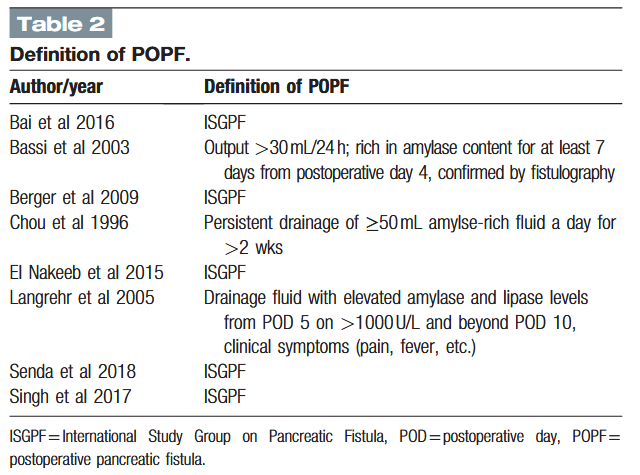
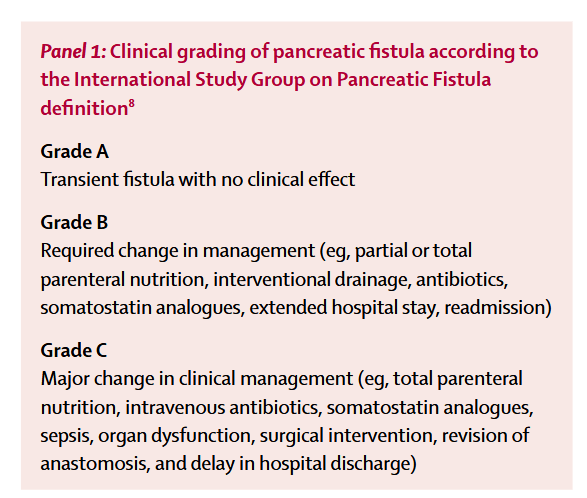
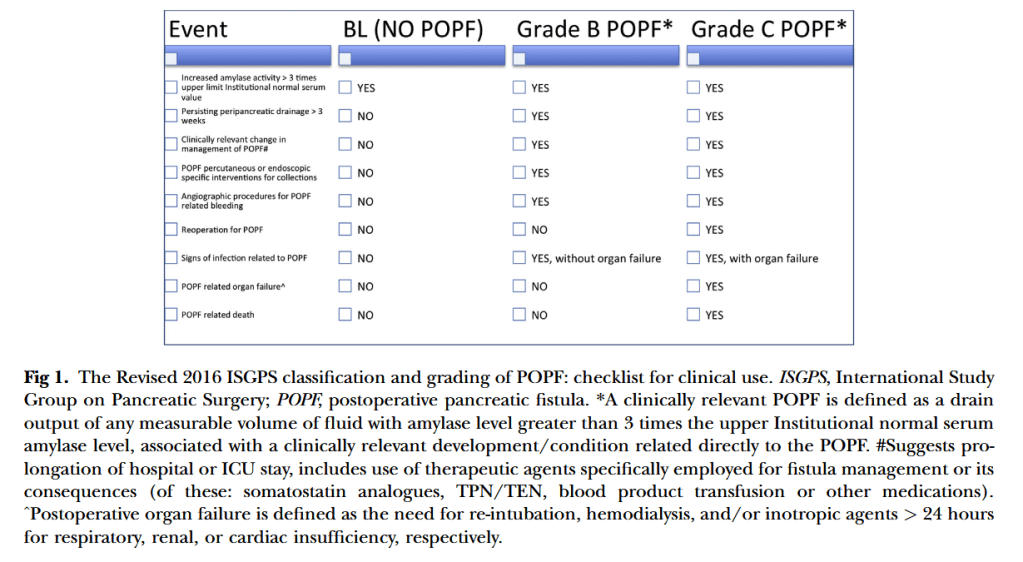
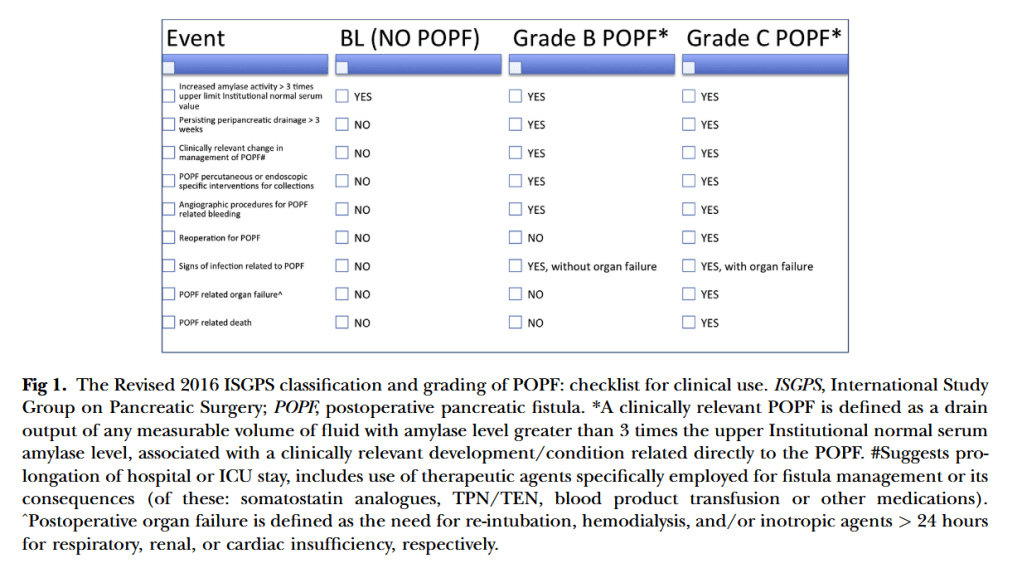
International Study Group of Pancreatic Fistula classification, a clinically relevant postoperative pancreatic fistula is now redefined as a drain output of any measurable volume of fluid with an amylase level >3 times the upper limit of institutional normal serum amylase activity, associated with a clinically relevant development/condition related directly to the postoperative pancreatic fistula. Consequently, the former “grade A postoperative pancreatic fistula” is now redefined and called a “biochemical leak,” because it has no clinical importance and is no longer referred to a true pancreatic fistula. Postoperative pancreatic fistula grades B and C are confirmed but defined more strictly. In particular, grade B requires a change in the postoperative management; drains are either left in place >3 weeks or repositioned through endoscopic or percutaneous procedures. Grade C postoperative pancreatic fistula refers to those postoperative pancreatic fistula that require eoperation or lead to single or multiple organ failure and/or mortality attributable to the pancreatic fistula.”

Continue reading

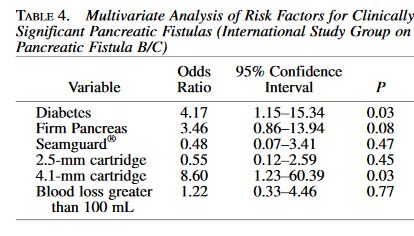
Risk Factors for Pancreatic Fistula after Stapled Gland Transection

“Distal Pancreatectomy (DP) is performed for both benign and malignant conditions affecting the body and tail of the pancreas. DP is also performed for chronic pancreatitis and occasionally for abdominal trauma. With improvements in imaging, surgical technology and technique, and postoperative care, the mortality from DP at high-volume centers is approximately 1 per cent. Despite the low mortality rate from DP, the morbidity rate from this procedure remains high (24 to 64 per cent in some series) with pancreatic fistula (PF) as
a common concern. Even with the use of linear stapling devices, fibrin glue, somatostatin analogs, thermal sealing devices, and mesh staple line reinforcement, PF continues to be a burden to patient quality of life and healthcare resources for those patients undergoing DP.”

Continue reading

Postpancreatectomy hemorrhages: risk factors and outcomes

One discussion this week involved etiologies of postpancreatectomy hemorrhage.


Reference: Yekebas EF, et al. Postpancreatectomy hemorrhage: diagnosis and treatment: an analysis in 1669 consecutive pancreatic resections. Annals of Surgery. 2007 Aug;246(2):269-280. doi:10.1097/01.sla.0000262953.77735.db

Summary: With the purpose of creating algorithms for managing postpancreatectomy hemorrhage (PPH), Yekebas et al (2007) restrospectively analyzed more than 1669 pancreatic resections conducted between 1992 and 2006.  They concluded that the prognosis of postpancreatectomy hemorrhage (PPH) is primarily dependent on the presence of “preceding pancreatic fistula” (p.269).

Continue reading

Postoperative pancreatic fistula

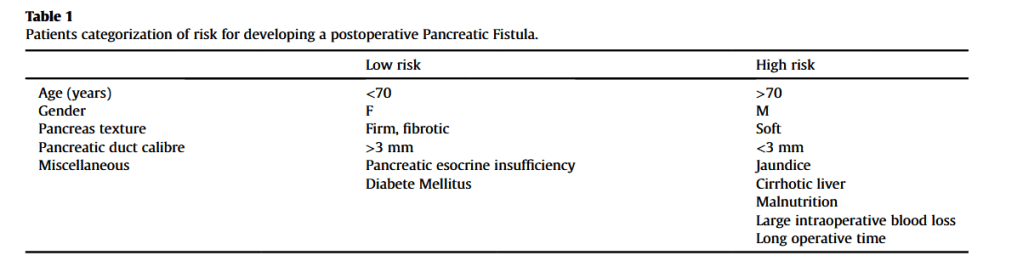
This week’s discussion included risk scoring and management of postoperative pancreatic fistula.


Nahm CB, Connor SJ, Samra JS, Mittal A. Postoperative pancreatic fistula: a
review of traditional and emerging concepts. Clin Exp Gastroenterol. 2018 Mar
15;11:105-118.

Prediction: “Biochemical markers of POP after pancreatic resection are evident from the first postoperative day. These include serum amylase and lipase, and urinary trypsinogen-2. In an observational study of 61 patients undergoing pancreatic resection, the presence of POP on the first postoperative day as determined by these markers was found to be a strong predictor of the development of POPF (OR 17.81, 95% CI 2.17–145.9) [128]

Continue reading