
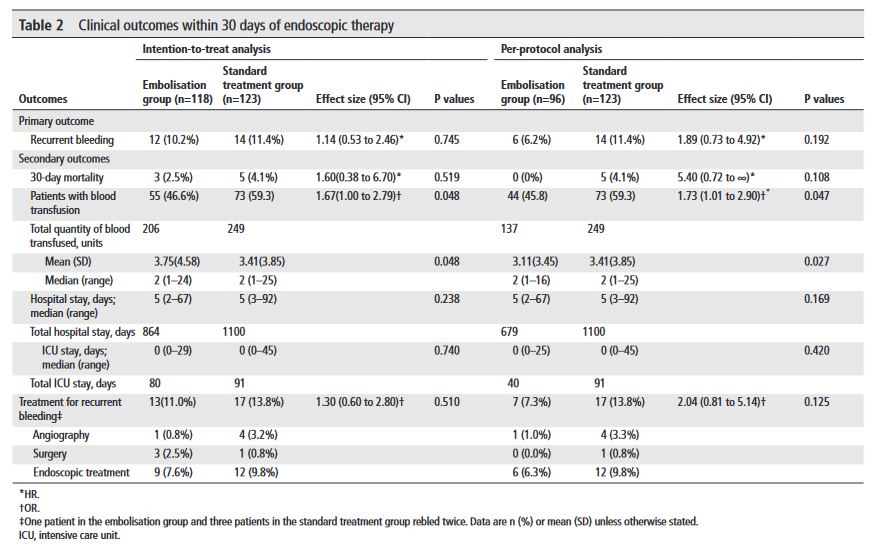
Can angiographic embolisation after endoscopic haemostasis to high-risk ulcers could reduce recurrent bleeding.?

“Acute upper gastrointestinal bleeding (AUGIB) is one of the most common emergencies in gastroenterology. Despite major improvements in its management, AUGIB continues to be associated with significant morbidity and mortality. Bleeding peptic ulcers are one of the principal causes of AUGIB. Endoscopic therapy to bleeding ulcers reduces further bleeding and improves patients’ outcomes”
Continue reading

Postpancreatectomy hemorrhages: risk factors and outcomes

One discussion this week involved etiologies of postpancreatectomy hemorrhage.


Reference: Yekebas EF, et al. Postpancreatectomy hemorrhage: diagnosis and treatment: an analysis in 1669 consecutive pancreatic resections. Annals of Surgery. 2007 Aug;246(2):269-280. doi:10.1097/01.sla.0000262953.77735.db

Summary: With the purpose of creating algorithms for managing postpancreatectomy hemorrhage (PPH), Yekebas et al (2007) restrospectively analyzed more than 1669 pancreatic resections conducted between 1992 and 2006.  They concluded that the prognosis of postpancreatectomy hemorrhage (PPH) is primarily dependent on the presence of “preceding pancreatic fistula” (p.269).

Continue reading