Fundoplication at the Time of Laparoscopic Paraesophageal Hernia Repair

“Laparoscopic paraesophageal hernia repair is a complex surgical problem with many variables that can affect the outcome. Based on the results of our carefully selected patients, the addition of a fundoplication minimizes postoperative reflux symptoms without additional operative time. In addition, neither dysphagia nor paraesophageal hernia recurrence is affected by the presence of a fundoplication.”

van der Westhuizen
Continue reading

Management controversies for paraesophageal hernia

“Paraesophageal hernia repair remains a staple in the armamentarium of the foregut surgeon. Current literature suggests paraesophageal hernia repair should be approached
in a patient-centered, precision medicine manner. In general, hernia reduction, sac excision, and primary suture approximation of the hiatal crura are mandatory. Use of mesh should be based on individual risk factors; if mesh is used, biological meshes appear to have a more favorable safety profile, with the “reverse C” or keyhole configuration allowing for increase in crural tensile strength at it most vulnerable areas.”

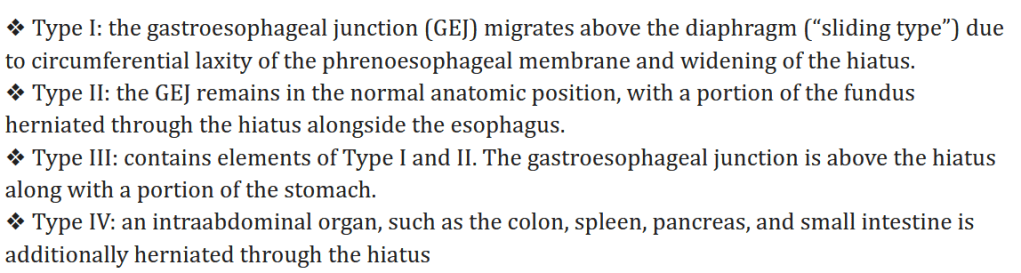
Hiatal hernias are categorized into four types (Rogers)
Continue reading

Diagnosis and Management of Hyponatremia and Hypernatremia

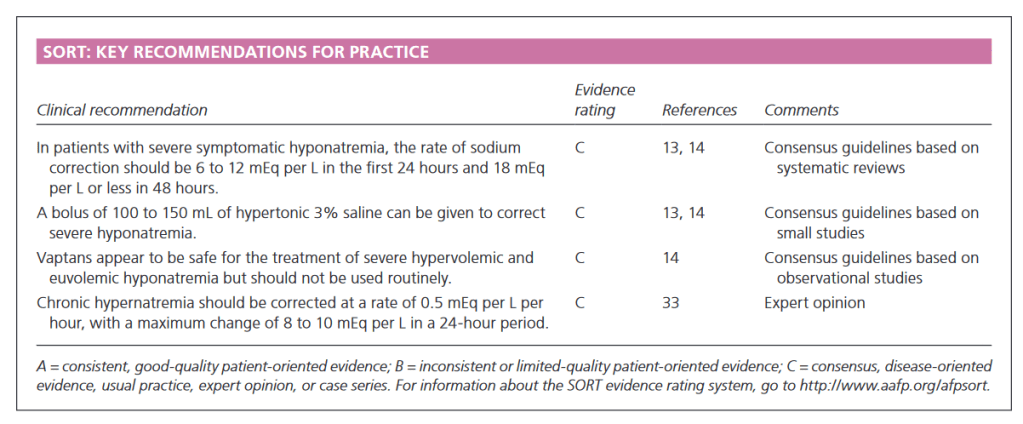
“Hyponatremia and hypernatremia are common findings in the inpatient and outpatient settings. Sodium disorders are associated with an increased risk of morbidity and mortality. Plasma osmolality plays a critical role in the pathophysiology and treatment of sodium disorders. Hyponatremia and hypernatremia are classified based on volume status (hypovolemia, euvolemia, and hypervolemia). Sodium disorders are diagnosed by findings from the history, physical examination, laboratory studies, and evaluation of volume status. Treatment is based on symptoms and underlying causes. In general, hyponatremia is treated with fluid restriction (in the setting of euvolemia), isotonic saline (in hypovolemia), and diuresis (in hypervolemia).”

Braun
Continue reading

Management of anticoagulation in patients with mechanical heart valves undergoing noncardiac surgical procedures

“Although the American Heart Association (AHA) and American College of Cardiology (ACC) and the American College of Chest Physicians (ACCP) provide guidelines on anticoagulation for patients with MHVs, limited guidance is provided for bridging anticoagulation 2,3 The guidelines are focused on preoperative bridging, with virtually no guidance on postoperative bridging.”

Continue reading

Histological Margin Positivity in the Prediction of Recurrence After Crohn’s Resection

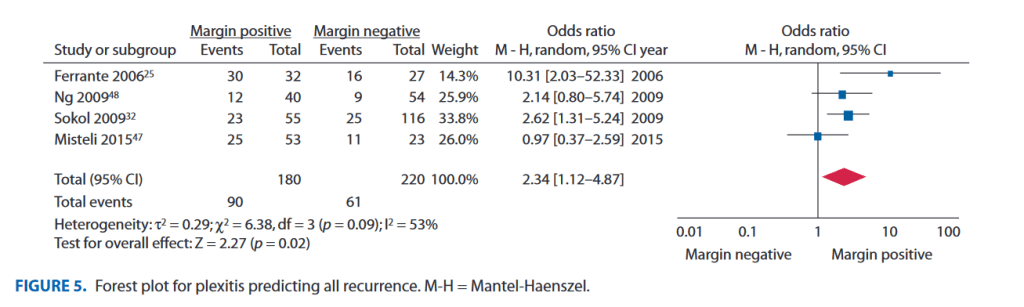
The presence of involved histological margins at the time of index resection in Crohn’s disease is associated with recurrence, and plexitis shows promise as a marker of more aggressive disease. Further studies with homogeneity of histopathological and recurrence reporting are required.“”The presence of involved histological margins at the time of index resection in Crohn’s disease is associated with recurrence, and plexitis shows promise as a marker of more aggressive disease. Further studies with homogeneity of histopathological and recurrence reporting are required.

Continue reading