Variations in practice of thromboprophylaxis across general surgical subspecialties: a multicentre (PROTECTinG) study of elective major surgeries

“General surgical patients who undergo major operations are at risk of venous thromboembolism (VTE). This incurs significant morbidity and healthcare costs. Therefore, the Royal Australasian College of Surgeons and other regulatory bodies recommend routine thromboprophylaxis. Moreover, considerations for thromboprophylaxis is an integral part of theatre timeout performed prior to any operation.”

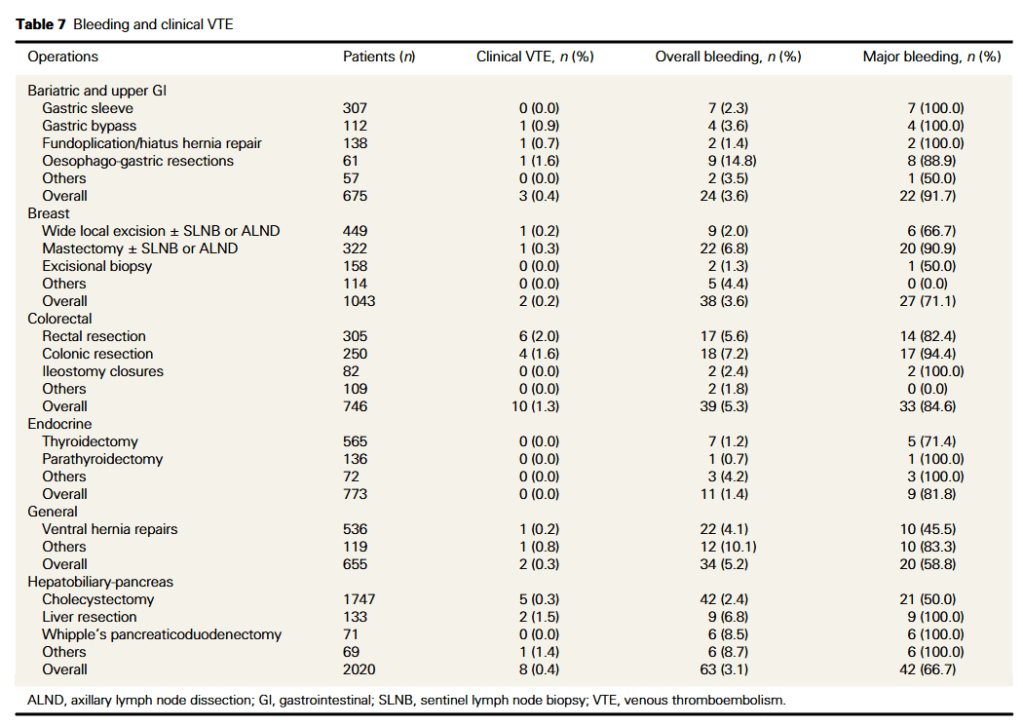
“In this study, we extend the observations made from our multicentre survey by quantifying the heterogeneity of perioperative thromboprophylaxis across all major general surgical operations, and placing them in context of their bleeding and VTE risk. Findings from this study will highlight areas of practice with the greatest variability, allow surgeons to benchmark their practices against that of their colleagues and focus future research to optimize perioperative thromboprophylaxis.”

Continue reading

Cardiac Complications Post Parathyroidectomy

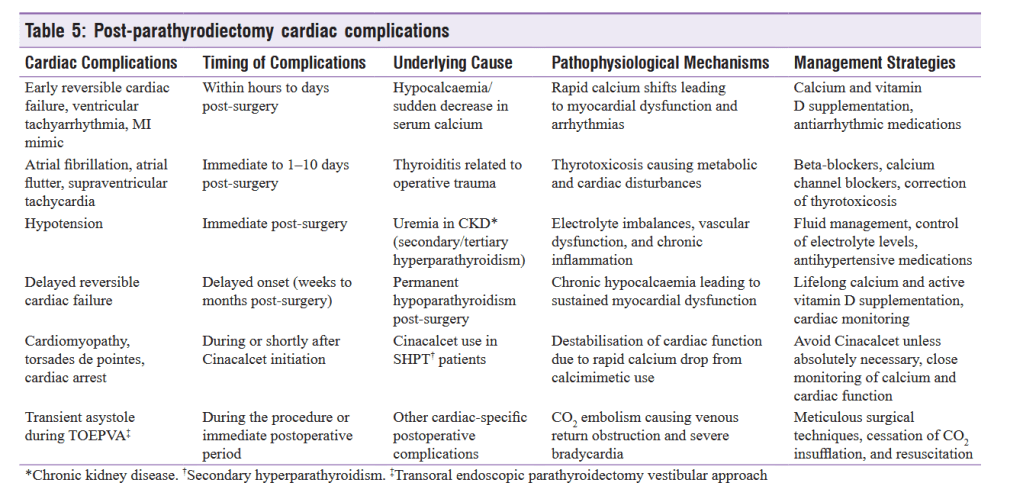
“Parathyroidectomy (PTX) is primarily performed to treat primary and secondary hyperparathyroidism (HPT) and has been shown to reduce cardiac risk factors, including ECG abnormalities, 2D-echo abnormalities, arrhythmias, and NT-proBNP levels Cardiac complications, though rare, can occur in patients undergoing thyroidectomy. In a US-based cohort of 3,575 patients, approximately 0.2%–0.3% developed congestive heart failure (CHF) during follow-up. A study by Kravietz et al. found that while readmission rates were lower in primary HPT (PHPT) patients (5.6%) compared to secondary HPT (SHPT) patients (19.4%), heart failure was more prevalent in PHPT patients (10.8%) compared to SHPT patients (3.9%). Additionally, patients with existing CHF undergoing PTX have a higher likelihood of readmission. Although cardiac complications are rare, they can occasionally be fatal.”

Continue reading

Predictors of operative failure in parathyroidectomy for primary hyperparathyroidism

“Little is known about patient-level predictors of operative failure and persistent primary hyperparathyroidism (PHPT). Previous studies have attributed operative failure to inadequate preoperative imaging localization. Achievement of IOPTH criteria is a known predictor of operative success, though the final target IOPTH level is not agreed upon. Some researchers contend that final IOPTH levels should fall into the normal range, while others recommend lower levels. The independent contributions of preoperative localization, IOPTH biochemical cure, and preoperative biochemical severity to operative success are unclear. Better understanding of the relationship.”

Continue reading

Predictors for Anastomotic Leak, Postoperative Complications, and Mortality After Right Colectomy for Cancer

“Right hemicolectomy is considered one of the simplest colorectal major procedures and is often considered an appropriate first step for residents and young fellows. Despite this, complications after right hemicolectomy for cancer are common, at ≈30%, and postoperative mortality is reported to be ≈3%. Anastomotic leak (AL) after right hemicolectomy for cancer is a major contributor to this short-term morbidity and mortality. The document AL rate after right hemicolectomy ranges widely, from 1.3% to 8.4%. This also has a significant impact on healthcare costs and major oncologic consequences, as demonstrated by the higher cancer recurrence rate after AL.”

Continue reading

Infliximab for Induction and MaintenanceTherapy for Ulcerative Colitis

Ulcerative colitis is characterized by mucosal ulceration, rectal bleeding, diarrhea, and abdominal pain. Pharmacologic management of ulcerative colitis has relied mainly on 5-aminosalicylates, corticosteroids, and immunosuppressants, including purine antimetabolites and cyclosporine. Corticosteroid dependence is a clinically important problem; furthermore, the probability of colectomy within the first five years after diagnosis ranges from 9 percent in patients with distal colitis to 35 percent in patients with total colitis, most commonly because of failed medical therapy. The cumulative risk of recurrent inflammatory bowel disease in the form of pouchitis ranges from 15.5 percent one year after the procedure to 45.5 percent 10 years after the procedure. Accordingly, new treatments for ulcerative colitis are needed.”

Continue reading

Outcome of ligation of the inferior vena cava in the modern era

“Injury to the inferior vena cava (IVC) is a relatively rare event occurring more commonly after penetrating trauma (.5%–5%) than after blunt trauma (.6%–1%). The incidence of IVC injuries, however, has been increasing in civilian trauma centers, with these injuries accounting for up to 40% of abdominal vascular injuries in recent series.
Because of the increasing frequency and persistently high mortality associated with these injuries, perioperative management of the IVC remains a focus of interest. Indeed, while ligation of the significantly injured IVC is an acceptable practice in the era of damage control surgery, little long-term follow-up data are available in survivors of this technique.”

Continue reading

Inter-Rater Agreement of the Classification of Intraoperative Adverse Events (ClassIntra) in Abdominal Surgery

“In surgery, adverse events and medical errors occur pre-operatively, intraoperatively, and postoperatively. Standardized classification of postoperative complications, for example, using the Clavien-Dindo classification, is widely adopted, and has proven relevant to research and quality improvement programs. Prospectively validated classification systems for intraoperative adverse events (iAEs) are not yet broadly adopted. IAEs have a major impact at many levels. First, there is an association between iAEs and postoperative outcome. Second, hospital stays for patients experiencing iAEs are 40% more expensive compared with patients without iAEs. Third, readmission rates in patients whose surgery is
complicated by an iAE are twofold higher. Recently a promising new and practical classification system for iAEs was proposed, the classification of intraoperative complications (CLASSIC). CLASSIC defines iAEs as any deviation from the ideal intraoperative course occurring between skin incision and skin closure, irrespective of the origin (ie, surgical and anesthesiological difficulties, or technical failures). Compared with previous scores such as the severity score by Kaafarani et al. ClassIntra is more inclusive,
accounting for any type iAE, for example, surgical, anesthesiologic, and organizational, and can be graded directly after skin closure.”

Continue reading