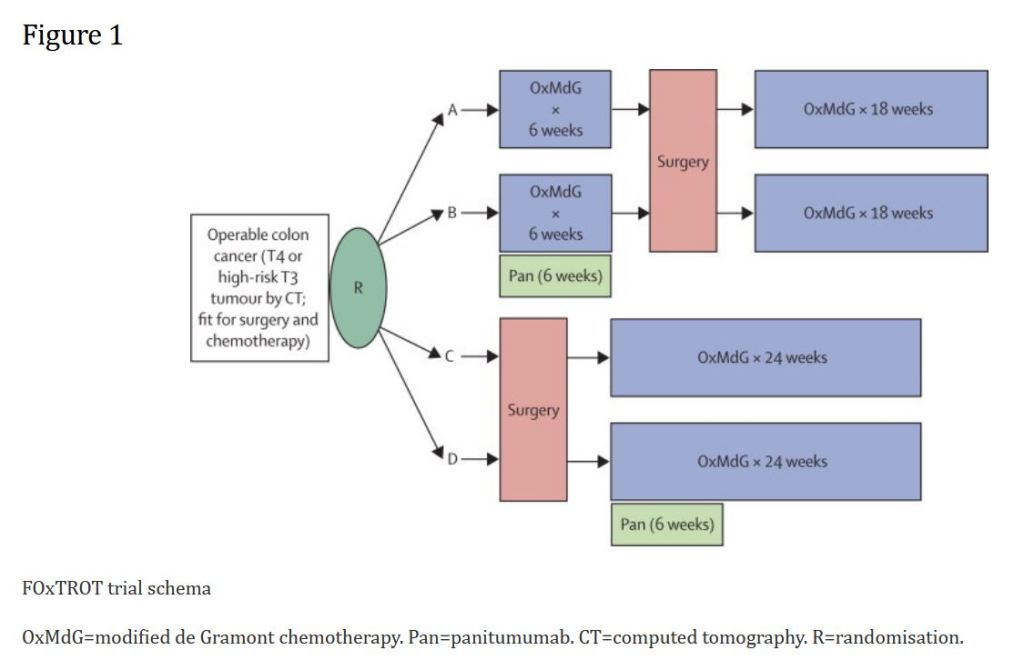
Feasibility of preoperative chemotherapy for locally advanced, operable colon cancer: Foxtrot Study

“Preoperative (neoadjuvant) chemotherapy and radiotherapy are substantially more effective than similar postoperative therapy in oesophageal, gastric, and rectal cancer. Earlier treatment might be more effective at eradicating micrometastatic disease than the same treatment 3 months later, the typical period between diagnosis and starting postoperative chemotherapy, particularly because surgery increases growth factor activity in the early postoperative period, promoting more rapid tumour progression.”

Continue reading

Management of the rectal stump after emergency sub-total colectomy

“Subtotal colectomy and ileostomy with preservation of the rectal stump is established as the preferred operation for acute severe colitis which fails to respond to medical therapy. The surgical management of the rectal stump, however, remains controversial. The options include creation of a low sigmoid mucous fistula, closure of the rectosigmoid but leaving the closed stump in the subcutaneous plane at the lower end of a midline wound, or closure of the rectal stump at the level of the sacral promontory (leaving the rectal suture ⁄ staple-line in the peritoneal cavity).”

Continue reading

Life-threatening pelvis sepsis

“Although extremely uncommon, severe sepsis does occur post-treatment for haemorrhoids and all surgeons who treat such patients should be aware of the potential complications and alert to their presenting features. Early presentation without evidence of tissue necrosis may be managed conservatively, although most cases are managed by means of surgery.”

“Treatments for haemorrhoids can be divided in to conservative measures such as anal hygiene and topical ointments or suppositories, and interventions.

These are either office-based such as:
-injection sclerotherapy
-rubber band ligation (RBL)
-surgical procedures.

Haemorrhoidectomy has long been the mainstay of surgical therapy, but recently new techniques have been described, principally the stapled haemorrhoidopexy or procedure for prolapsing haemorrhoids (PPH).”

Continue reading

Histological Margin Positivity in the Prediction of Recurrence After Crohn’s Resection

The presence of involved histological margins at the time of index resection in Crohn’s disease is associated with recurrence, and plexitis shows promise as a marker of more aggressive disease. Further studies with homogeneity of histopathological and recurrence reporting are required.“”The presence of involved histological margins at the time of index resection in Crohn’s disease is associated with recurrence, and plexitis shows promise as a marker of more aggressive disease. Further studies with homogeneity of histopathological and recurrence reporting are required.

Continue reading

Mesenteric Venous Thrombosis

“Mesenteric venous thrombosis is caused by impairment of venous return of the bowel due to local blood coagulation. Primary mesenteric venous thrombosis is considered spontaneous and idiopathic, whereas secondary mesenteric venous thrombosis is due to an underlying condition. Mesenteric venous thrombosis can lead to venous engorgement and mesenteric ischemia and accounts for 5 to 15 percent of mesenteric ischemic events.”

Continue reading