Evaluation of pre- and post- operative cognitive function and neurodegenerative markers

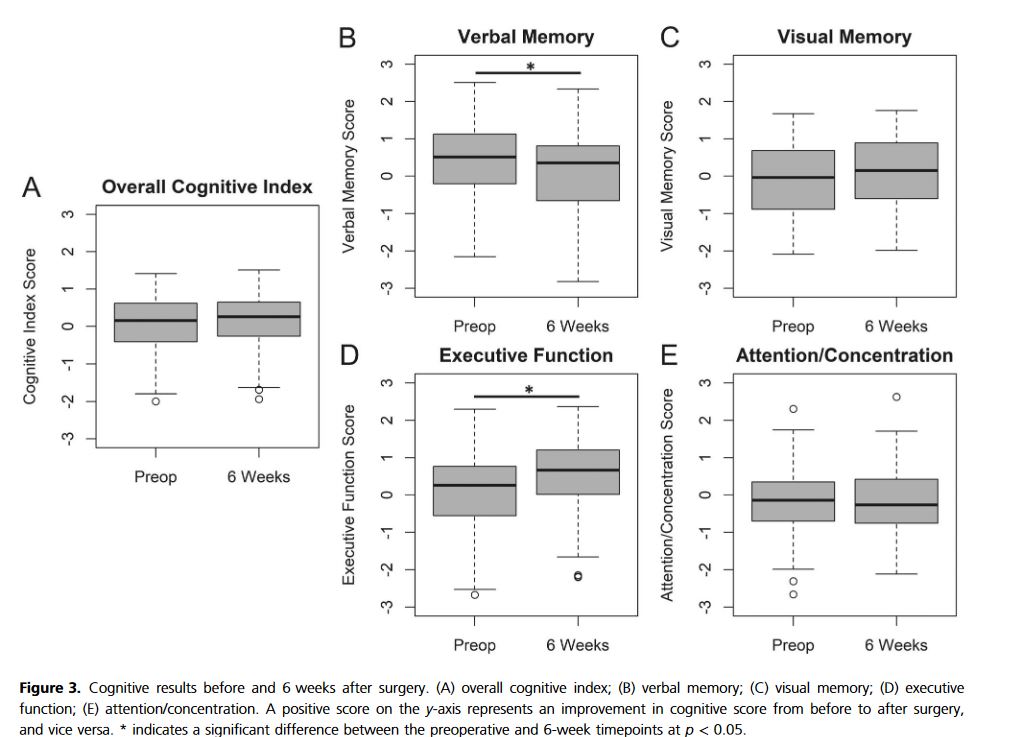
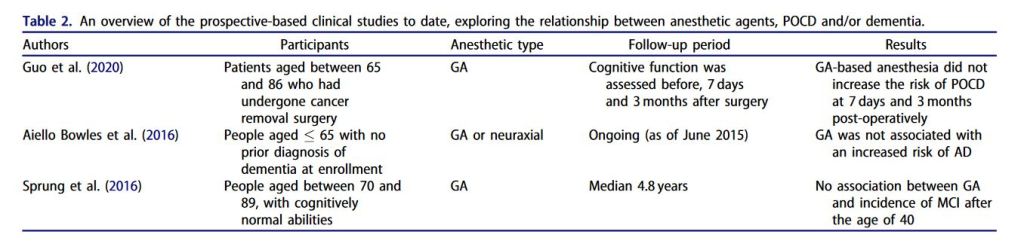
“One of the largest controversies in perioperative medicine over the last quarter century has been whether anesthesia and surgery contribute to long-term cognitive decline and/or the development of dementia in older adults. This question has major public health implications, since approximately half of adults over 65 will undergo at least one surgery, and over 120,000 Americans will die of Alzheimer’s disease (AD) per year.”

“Neurocognitive changes after non-cardiac, non-neurologic surgery in the majority of cognitively healthy, community-dwelling older adults are unlikely to be related to postoperative changes in AD neuropathology (as assessed by CSF Aβ, tau or p-tau-181p levels or the p-tau-181p/Aβor tau/Aβratios).”
Continue reading

“Although the authors acknowledge that cognitive deterioration following surgery is a common phenomenon, there is little evidence that anesthesia itself or other surgical and patient factors can cause or accelerate cognitive decline and AD. The existing controversy in the field between animal and human studies highlights the need for transitioning from population-based studies to high-quality clinical studies especially with regards to dementia.” (Tsolaki)

Tsolaki

Continue reading

Cognitive decline of elderly patients after anesthesia

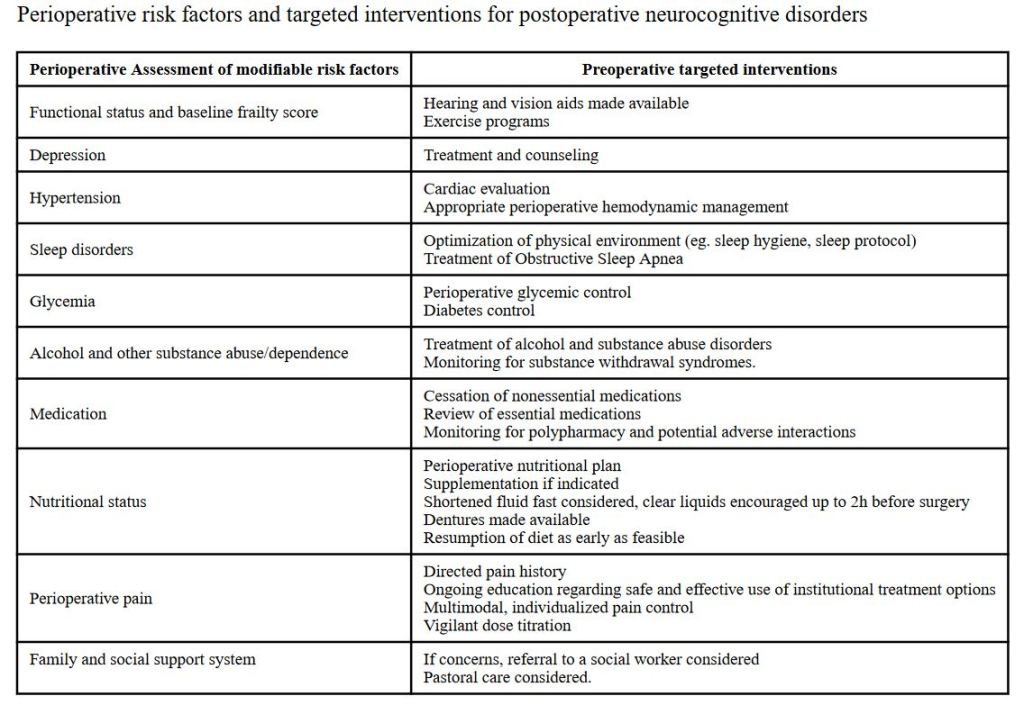
“Postoperative neurocognitive decline is a meaningful concern to patients and represents a significant and expanding challenge to health care in the US and worldwide. Surgeons and anesthesiologists should assess, discuss, and optimize associated potential risks for each patient before surgery. Best practices and interventions can begin before surgery and extend well into the recovery period. To be most effective, these strategies require family engagement and the involvement of an interdisciplinary health care team and comprehensive systems of care.” (Vacas)

Vacas

Continue reading

Postoperative atrial fibrillation: Predictors and risk of mortality

“Atrial fibrillation, the most common sustained dysrhythmia, is a common postoperative complication. Previous studies have shown that the incidence, prevalence, and associated morbidity and mortality increase progressively with age.
Development of POAF and mortality is dependent upon a wide range of factors not limited to age and medical comorbidities. Although a patient may be at an increased risk for POAF this does not mean they are at an increased risk for mortality.”

Continue reading

Postoperative pancreatic fistula

This week’s discussion included risk scoring and management of postoperative pancreatic fistula.


Nahm CB, Connor SJ, Samra JS, Mittal A. Postoperative pancreatic fistula: a
review of traditional and emerging concepts. Clin Exp Gastroenterol. 2018 Mar
15;11:105-118.

Prediction: “Biochemical markers of POP after pancreatic resection are evident from the first postoperative day. These include serum amylase and lipase, and urinary trypsinogen-2. In an observational study of 61 patients undergoing pancreatic resection, the presence of POP on the first postoperative day as determined by these markers was found to be a strong predictor of the development of POPF (OR 17.81, 95% CI 2.17–145.9) [128]

Continue reading

Delayed Emergence from Anesthesia

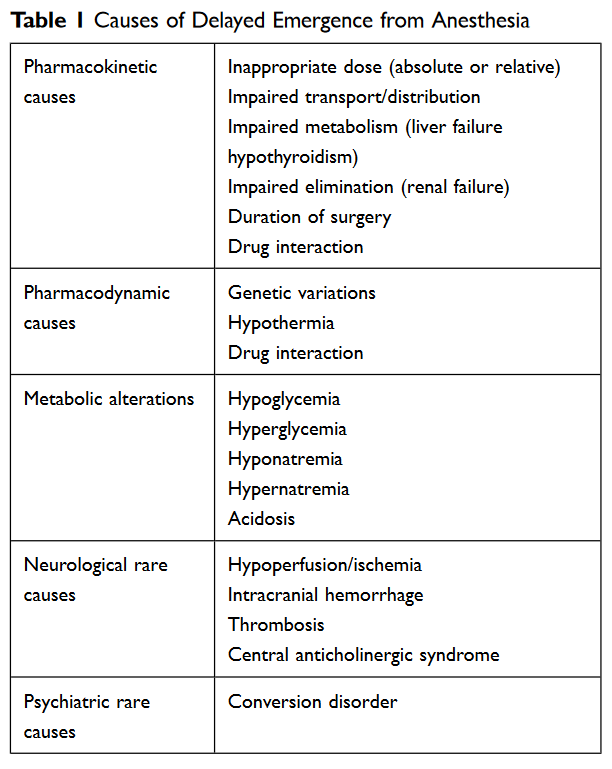
“Despite the medications commonly used in anesthesia allow recovery in a few minutes, a delay in waking up from anesthesia, called delayed emergence, may occur. This phenomenon is associated with delays in the operating room, and an overall increase in costs. Together with the emergence delirium, the phenomenon represents a manifestation of
inadequate emergence. Nevertheless, in delayed emergence, the transition from unconsciousness to complete wakefulness usually occurs along a normal trajectory, although slowed down. On the other hand, this awakening trajectory could proceed abnormally, possibly culminating in the manifestation of emergence delirium. Clinically, delayed emergence often represents a challenge for clinicians who must make an accurate diagnosis of the underlying cause to quickly establish appropriate therapy.”

Cascella
Continue reading