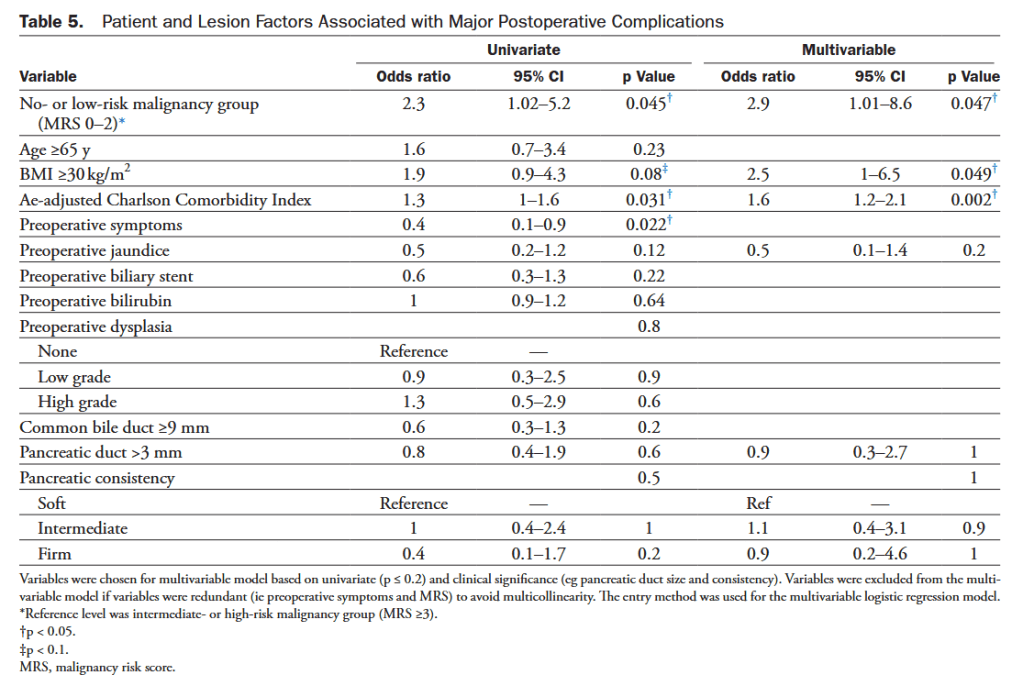
Multi-Institutional Analysis of Pancreaticoduodenectomy for Nonfamilial Periampullary Adenoma

“Preoperative assessment of underlying malignancy in non-FAP-related PAs requiring PD may be difficult, as endoscopic biopsy carries a false-negative rate as high as 50%. Although PD aims at preempting malignant transformation through complete removal of DA, it comes with significant morbidity and mortality risks. This is particularly relevant in patients with benign or premalignant pathology due to soft pancreatic parenchymal texture and small pancreatic duct diameter.”
Continue reading

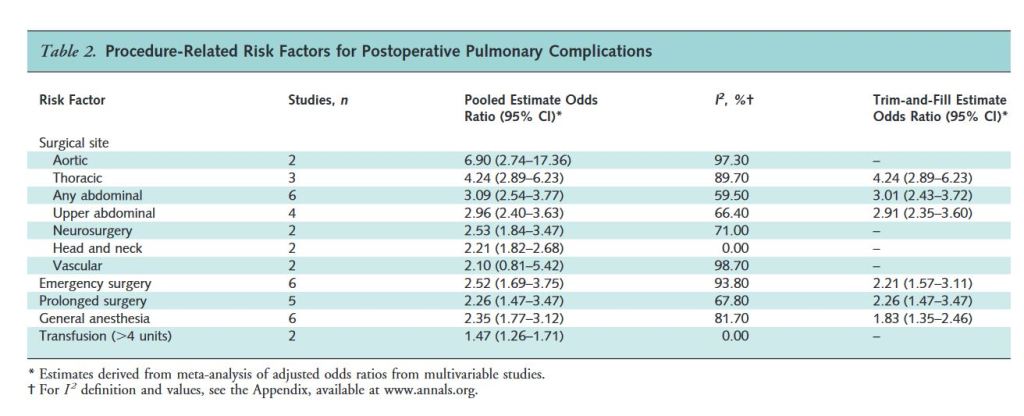
Preoperative pulmonary risk stratification for noncardiothoracic surgery

“Postoperative pulmonary complications contribute importantly to the risk for surgery and anesthesia. The most important and morbid postoperative pulmonary complications are atelectasis, pneumonia, respiratory failure, and exacerbation of underlying chronic lung disease. Clinicians who care for patients in the perioperative period may be surprised to learn that postoperative pulmonary complications are equally prevalent and contribute similarly to morbidity, mortality, and length of stay.”

Continue reading

The negative appendectomy rate: who benefits from preoperative CT?

“Preoperative CT quite consistently has been shown to lower the negative appendectomy rate among women. Relatively few studies, however, have shown a lower negative appendectomy rate with preoperative CT for both sexes. Furthermore, any suggested utility of preoperative CT in men is contradicted by a number of studies that have shown that men derive no benefit from preoperative CT when there is clinical suspicion of acute appendicitis. Nevertheless, CT is used routinely among men with suspected appendicitis at our institution and has been assumed by both surgeons and radiologists to be a useful practice. Therefore, we performed this study to determine the negative appendectomy rates of patients who did and did not undergo preoperative CT and to determine, more specifically, whether men benefit from preoperative CT.”

Negative Appendectomy Rates for Patients Who Did and Did Not Undergo Preoperative Imaging
Continue reading

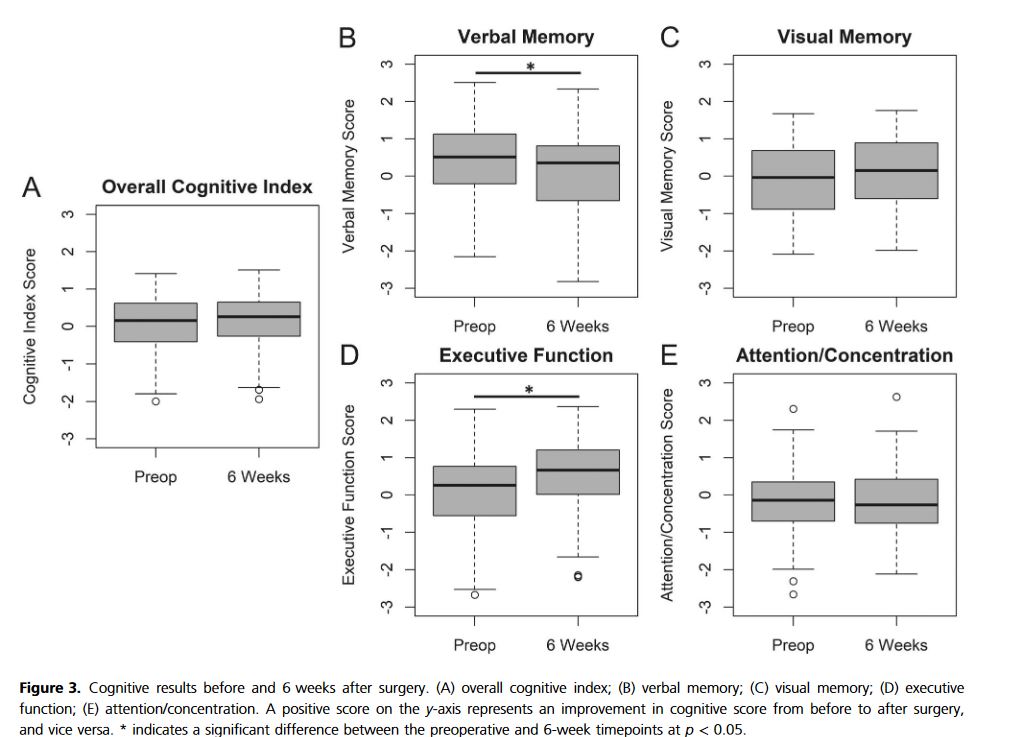
Evaluation of pre- and post- operative cognitive function and neurodegenerative markers

“One of the largest controversies in perioperative medicine over the last quarter century has been whether anesthesia and surgery contribute to long-term cognitive decline and/or the development of dementia in older adults. This question has major public health implications, since approximately half of adults over 65 will undergo at least one surgery, and over 120,000 Americans will die of Alzheimer’s disease (AD) per year.”

“Neurocognitive changes after non-cardiac, non-neurologic surgery in the majority of cognitively healthy, community-dwelling older adults are unlikely to be related to postoperative changes in AD neuropathology (as assessed by CSF Aβ, tau or p-tau-181p levels or the p-tau-181p/Aβor tau/Aβratios).”

Continue reading

PREOPERATIVE URETERAL STENT PLACEMENT IN THE IDENTIFICATION OF INTRAOPERATIVE IDENTIFICATION OF IATROGENIC URETERAL INJURY?

“The use of prophylactic ureteral stents remains controversial and could help in the intraoperative identification of ureteral injury.”

Methods:
Patients undergoing elective abdominal colorectal surgery and preoperative ureteral stent placement at three enterprise-wide tertiary referral hospitals between 2015 and 2021 were retrospectively identified through their billing records. The main study endpoint was ureteral injury identified within 30 days postoperatively. The decision to place ureteral stents was at the discretion of the treating surgeon. A number of demographic, disease-related, and treatment-related variables were examined for possible association with ureteral stent placement. We compared the incidence of ureteral injury and timing of the identification according to use of ureteral stents. Bivariate associations were examined using Kruskal-Wallis tests for continuous variables and Chi-square tests for categorical variables.


Continue reading