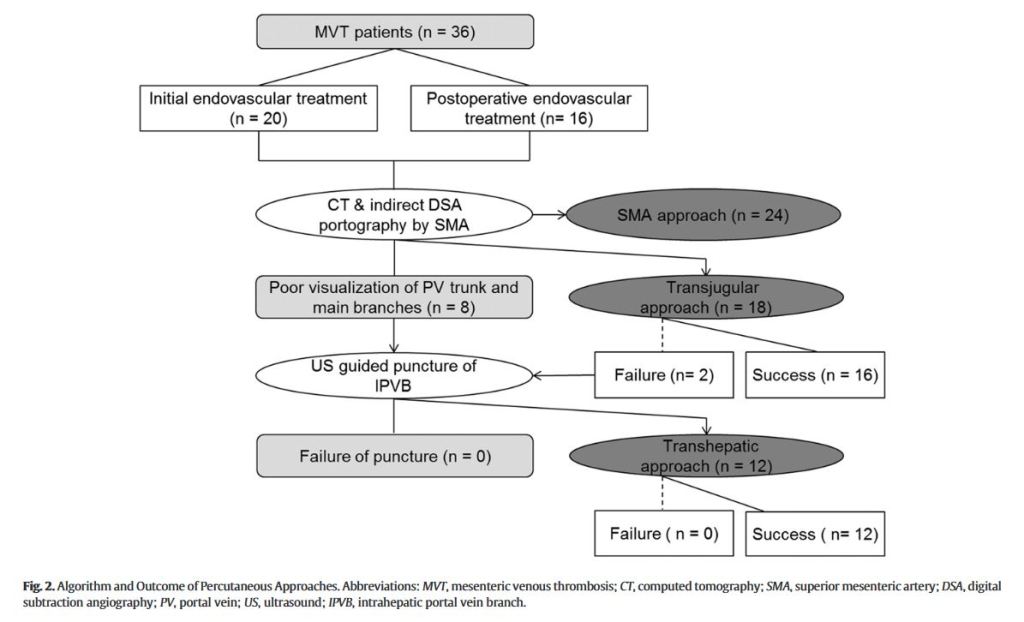
Multidisciplinary Stepwise Management Strategy for Acute Superior Mesenteric Venous Thrombosis

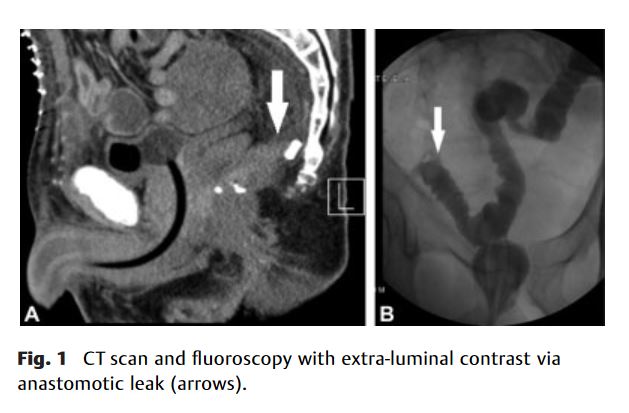
“Acute mesenteric ischemia (AMI) is a rare but catastrophic abdominal vascular emergency associated with a daunting mortality comparable to myocardial infarction or cerebral stroke. Mesenteric vein thrombosis (MVT) is the least common form, accounting for 6% to 9%, of AMI, mainly involving the superior mesenteric vein (SMV). Despite the lack of specific biomarker and insidious symptomatology profile, incidence of acute superior mesenteric venous thrombosis (ASMVT) has been increasing worldwide due to the raised awareness
as well as widespread use of contrast-enhanced computed tomography (CT) portography, which facilitates early diagnosis with sensitivity of over 90%.”

Continue reading

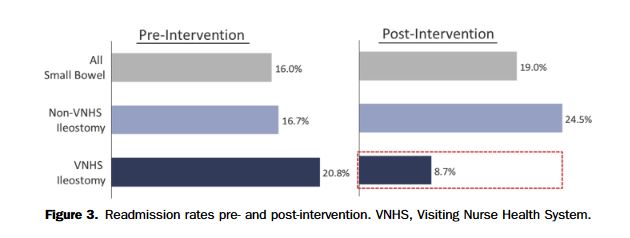
Association between language discordance and unplanned hospital readmissions or emergency department revisits

“Patients and families who are language discordant with their clinical teams report lower
patient satisfaction, worse health status, and lower rates of having a regular healthcare
provider and obtaining preventive care services. When patients and parents with
a non-dominant language preference access care, they report difficulty communicating
and understanding medical information from providers, comprehending written medical
information, reading prescription bottles, and accessing interpretation services.
Individuals with non-dominant language preferences have also been shown to experience
more medical errors and adverse health events.”

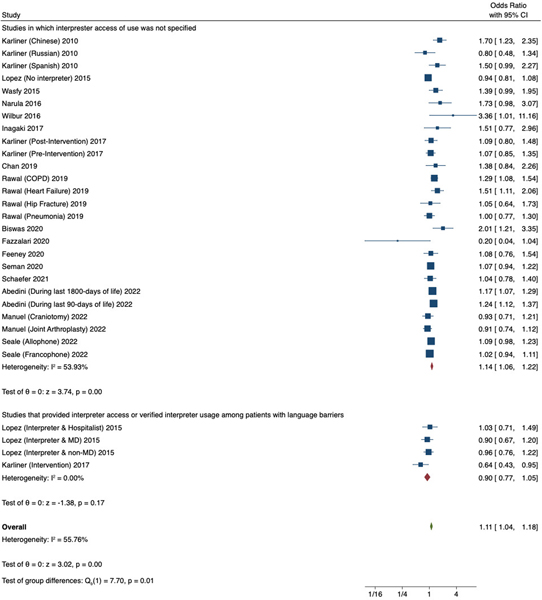
Figure 2.
Meta-analysis of studies that evaluated differences in 28-day or 30-day hospital readmission
rate among adult patients with versus without a dominant langauge preference, stratified
by studies that provided interpreter access or verified interpreter usage among patients with
non-dominant language preference versus studies in which interpreter access or use was not
specified. COPD, chronic obstructive pulmonary disease.
Continue reading

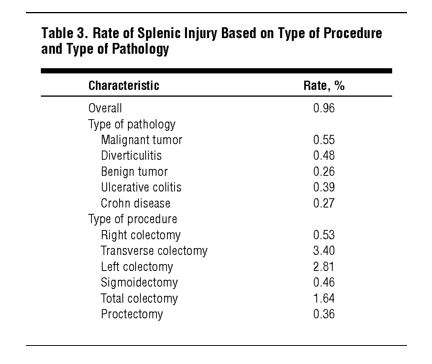
Morbidity and mortality of inadvertent enterotomy during adhesiotomy

“Postoperative intra-abdominal adhesions are a major concern in modern surgery. Intestinal obstruction is an important and well known clinical consequence of adhesions, resulting in significant morbidity and mortality rates, and high financial costs. Secondary infertility in women and chronic abdominal and pelvic pain are other, frequently cited, adhesion-related problems. Furthermore, intraabdominal adhesions render reoperation dif®cult and may
increase the complication rate of the intended surgical procedure. Prolonged operating time, unfeasibility of the laparoscopic approach and inadvertent enterotomy are known drawbacks of reoperative abdominal surgery, directly related to adhesions.”

Continue reading

Perioperative protocol for pancreatic resections in patients who refuse blood transfusions.

“The refusal of blood transfusion for surgical procedures at high risk of bleeding, such as pancreatic resection, forces surgeons to face ethical challenges and raises concerns about appropriate perioperative management. In the last two decade the rate of transfusion in high volume centers has gradually decreased thanks to the application of patient blood management (PBM) protocols.”

“In our single-institution experience, patients that categorically refused transfusion were Jehovah’s Witnesses (JW). JW is a religious movement, membership in which accounts for about 0.3% of Western countries’ populations, with USA and Italy having the highest percentages of followers. JW followers believe neither whole blood nor its four major components, namely red cells, white cells, platelets and plasma, should be donated, stored, or accepted in any circumstance, even in life-threatening situations. Advances in transfusion medicine have led the JW’s denomination to modify its position about what is deemed acceptable.”

Continue reading

Strategies To Reduce Postoperative Pulmonary Complications after Noncardiothoracic Surgery

“Postoperative pulmonary complications are as common as cardiac complications for patients undergoing non-cardiothoracic surgery. Further, these complications
have similar mortality rates and length of stay after elective abdominal surgery or hip fracture repair. This current systematic review synthesizes the evidence on preventive strategies and focuses on atelectasis, pneumonia, and respiratory failure.”

Continue reading

Preoperative pulmonary risk stratification for noncardiothoracic surgery

“Postoperative pulmonary complications contribute importantly to the risk for surgery and anesthesia. The most important and morbid postoperative pulmonary complications are atelectasis, pneumonia, respiratory failure, and exacerbation of underlying chronic lung disease. Clinicians who care for patients in the perioperative period may be surprised to learn that postoperative pulmonary complications are equally prevalent and contribute similarly to morbidity, mortality, and length of stay.”

Continue reading

Starting early enteral nutrition safely in patients with shock on vasopressors

“Shock is a common critical illness characterized by microcirculatory disorders and insufficient tissue perfusion. Patients with shock and hemodynamic instability generally require vasopressors to maintain the target mean arterial pressure. Enteral nutrition (EN) is an important therapeutic intervention in critically ill patients and has unique benefits for intestinal recovery. However, the initiation of early EN in patients with shock receiving vasopressors remains controversial.”
“It remains a therapeutic challenge in critical care nutrition therapy to determine the initiation time of EN in patients with shock receiving vasopressors and the safe threshold region for initiating EN with vasopressors. Therefore, the current review aimed to summarize the evidence on the optimal and safe timing of early EN initiation in patients with shock receiving vasopressors to improve clinical practice.”

Continue reading