Laparoscopic entry techniques

“Laparoscopy is a surgical procedure commonly used in gynaecology whereby a laparoscope is used to gain intra-abdominal access via less extensive incisions. Evidence suggests that laparoscopy provides significant benefits compared to laparotomy in terms of surgical outcomes for patients and costs for healthcare providers. Unlike in conventional open surgery, the surgeon is usually unable to visualise the initial entry into the peritoneal cavity. Most laparoscopic complications occur during the initial entry. These may happen
at several stages including Veress needle insertion, creation of a pneumoperitoneum, and primary trocar insertion. Opinion is divided as to the safest entry technique, and clinical practice is varied. Although gynaecologists commonly use a closed method of entry, other surgical specialties routinely use open methods of entry.”

Continue reading

The Importance of Abdominal Wall Closure After DefinitiveSurgery for Enterocutaneous Fistula

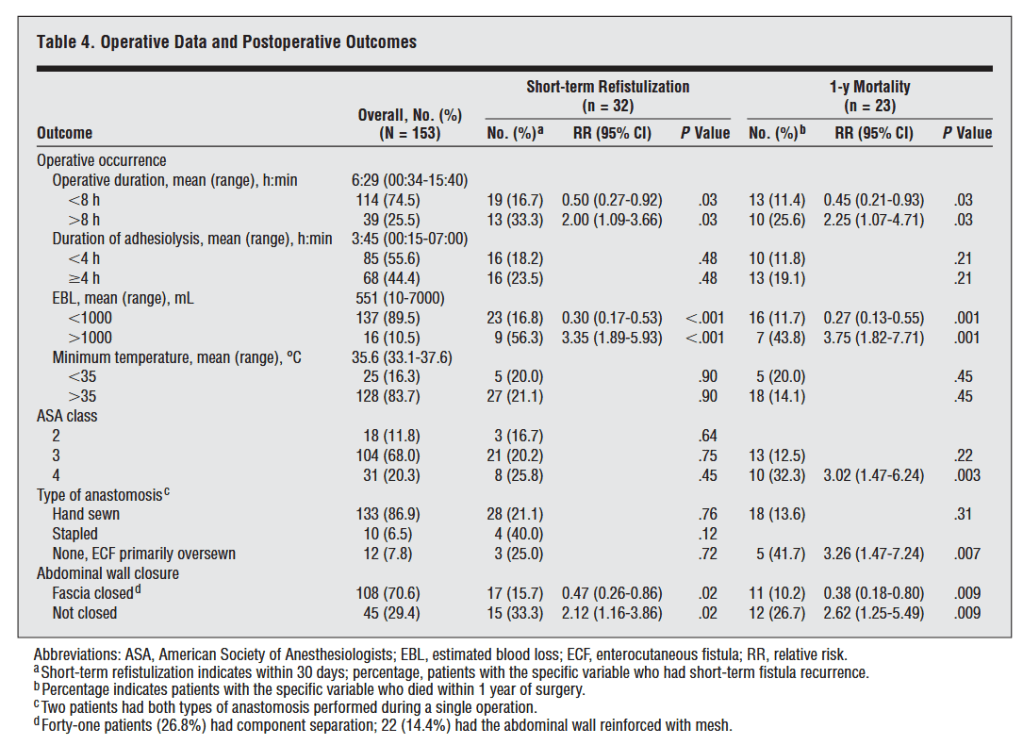
“In the case of enterocutaneous fistula (ECF) initial medical therapy aims to stabilize the patient, optimize the nutritional status and control of infections and fistula output. When surgery is required, extensive adhesiolysis, bowel resection and anastomosis along with abdominal wall reconstruction are necessary. The primary endpoint in patients undergoing surgical treatment with ECF as well as in the case of intestinal stomas, is to solve the intestinal defect, thus leaving in secondary terms other problems such as ventral hernias.
The simultaneous treatment of fistula/stoma closure with abdominal wall defect closure has been widely debated since some argue that the risk of complications such as anastomotic leakage is increased due to prolonged surgery and anesthetic time. However, various studies are reporting good results in patients undergoing simultaneous stoma with giant wall defect correction surgery, without increased risks and rates of complications.”

Continue reading

Adult intussusception. Determining the appropriate surgical procedure.

“Although surgery is the recommended treatment for adult intussusception, the optimal surgery remains controversial. Although abdominal computed tomography (CT) scan has
proven useful in diagnosing intussusception, it has limited value in discriminating whether a lead point is malignant, benign, or idiopathic. Reduction at surgery may avoid excessive bowel resection, although it can theoretically increase the risk of potential intraluminal seeding or venous tumor dissemination.
The aim of this study was to determine what the appropriate surgical procedure for adult intussusception is, depending on location of the intussusception or other specific situations.”

Continue reading

Subtotal Cholecystectomye“Fenestrating” vs“Reconstituting” Subtypes and the Prevention ofBile Duct Injury

“Laparoscopic cholecystectomy is a well-established procedure with clear benefits for patients over open cholecystectomy. However, it is associated with an increased rate of
bile duct injury. Biliary injuries occur more commonly when operations are made more difficult due to the presence of severe acute and/or chronic inflammation. Under these conditions, secure ductal identification by the critical view of safety (CVS) may be very challenging because CVS requires clearing of the inflamed hepatocystic triangle in
order to demonstrate the cystic duct, cystic artery, and the cystic plate. It is a rigorous method, but as we have previously stressed, this is actually one of the strengths of the
CVS method of identification. The infundibular technique, in which the funnel-shaped infundibular-cystic duct junction is the rationale for identification, is much easier to achieve than CVS.”

Continue reading

Laparoscopic Lavage vs Primary Resection for Acute Perforated Diverticulitis

“Acute perforated diverticulitis with peritonitis is a feared complication of diverticular disease. The incidence in Western countries is estimated to be 1.85 per 100 000 population per year for purulent peritonitis. Even with optimal treatment, perforated diverticulitis has a high morbidity and mortality. Traditionally, the standard treatment has been emergency surgery with resection of the diseased bowel, often with colostomy creation. Studies have indicated that laparoscopic lavage with drainage and antibiotics might be a treatment option in perforated diverticulitis. So far, 3 European randomized clinical trials have shown somewhat different results, and no clear advantages have been demonstrated with laparoscopic lavage, except a lower stoma rate at 1-year follow-up. Nine meta-analyses and systematic reviews of the short-term and 1-year results of these trials have been published in the last 4 years, with divergent conclusions. No long-term results on laparoscopic lavage have yet been published.”

Continue reading

Patient controlled opioid analgesia versus non-patient controlled opioid analgesia for postoperative pain

“Patients may control pain after surgery by self administration of analgesics (pain killers) using devices designed for this purpose (patient controlled analgesia or PCA). PCA involves self administration (by pushing a button) of small doses of opioids (such as morphine)
intravenously by means of a programmable pump. Previous studies have shown that often patients prefer PCA to traditional methods of pain management, such as a nurse administering an analgesic upon a patient’s request. This review demonstrated moderate to low quality evidence that PCA provided slightly better pain control and increased patient satisfaction when compared with non-patient controlled methods. Patients tended to use slightly higher doses of medication with PCA and suffered a higher occurrence of itching, but otherwise side effects were similar between groups.”

Continue reading

Mesh Suture and Mesh Strips to Prevent Incisional Hernia Following Abdominal Wall Closure or Ventral Hernia Repair

“Incisional hernias are an increasingly common complication encountered by surgeons and their patients, as survival rates from major abdominal surgery continue to improve. The
incidence of incisional hernia after midline laparotomy is estimated to be 9%–20% after 1 year, resulting in approximately 8000 UK repairs annually. While patient factors such as obesity, smoking and diabetes certainly contribute, excessive suture tension during the critical wound healing period causes local ischaemia at the suture-tissue interface and may initiate incisional hernia. Subsequent suture “cheese-wiring” through fascia creates small linear defects that enlarge over time with repeated abdominal wall straining. The clinical
and economic implications of incisional hernia have precipitated preventative research, including Jenkins rule, small-bite closure, and prophylactic mesh implantation which are
discussed in recent high-profile international guidelines. However, many surgeons continue to adopt suture closure over prophylactic planar mesh since this prolongs surgery and risks
infection in a contaminated field.”

Nip, Lawrence et al. “Mesh Suture and Mesh Strips to Prevent Incisional Hernia Following Abdominal Wall Closure or Ventral Hernia Repair: Systematic Review.” Journal of abdominal wall surgery : JAWS vol. 4 14573. 14 May. 2025 Free Full Text