Management of complicated duodenal diverticula

“Despite their frequent occurrence, DD are asymptomatic in 95% of cases, while 1 to 5% eventually become symptomatic. Intervention is indicated only for symptomatic duodenal diverticula(DD). Complications related to DD are rare but may be very severe; they include biliary or pancreatic obstruction, duodenal obstruction, perforation, or hemorrhage.
Endoscopic treatment is usually the first-line approach to biliopancreatic complications related to juxtapapillary DD and also for hemorrhagic complications. Indirect surgical
treatments include bilio-enteric bypasses and even duodenal exclusion. Direct surgical treatment consists of duodenal diverticulectomy, which has significant morbidity and mortality; prophylactic excision of asymptomatic DD is therefore not recommended.”

Continue reading

Anticoagulant bridging in left-sided mechanical heart valve patients

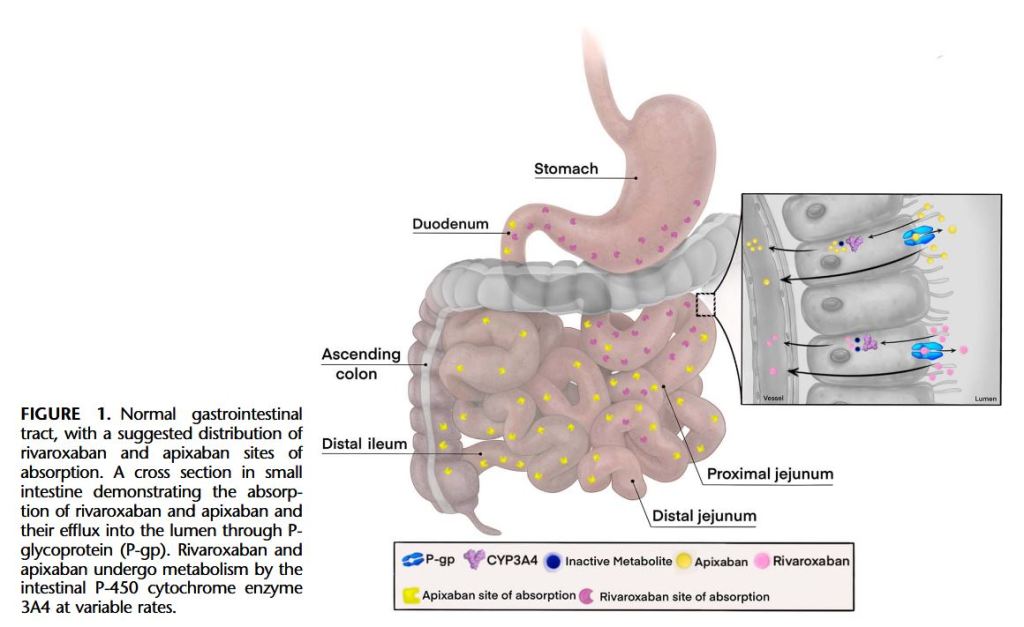
“There are two strategies for heparin bridging; administration of intravenous unfractionated heparin (UFH), and subcutaneous low-molecular-weight heparin (LMWH). While both strategies reduce the risk of valve thrombus formation, they have distinct biomedical, financial, and logistical profiles. UFH is administered intravenously according to a nomogram and hence requires peri-procedural hospital admission and continuous monitoring of
activated partial thromboplastin time (aPTT). In contrast, LMWH is administered subcutaneously once or twice daily in an outpatient setting and usually does not require continuous blood monitoring of anti-Xa levels.”

Continue reading

Mucormycosis. Therapy and guidelines

“Mucormycosis is an infection caused by a group of filamentous molds within the orders Mucorales and Entomophthorales. Mucorales occupy environmental niches including soil, decaying vegetable matter, bread, and dust. Infections due to Mucorales may result from inhalation of spores into the respiratory tract, ingestion of contaminated foods, or
inoculation of disrupted skin or wounds. In developed countries, mucormycosis occurs primarily in severely immunocompromised hosts. In contrast, in developing countries, a substantial number of cases of mucormycosis occur in patients with poorly controlled diabetes mellitus (DM) or persons who have sustained trauma. Mucormycosis exhibits a marked propensity to invade blood vessels, leading to thrombosis, necrosis, and infarction of tissue, and mortality is high.”

Continue reading

Management of anticoagulation in patients with human immunodeficiency virus/acquired immunodeficiency virus

“There is evidence of endothelial dysfunction and a dysregulation of coagulation and fibrinolysis in individuals with HIV. In a study of 109 HIV-infected patients with advanced disease, 10% developed venous thrombosis and 6% developed arterial thrombosis. A variety of laboratory abnormalities were reported, including protein C deficiency, increased factor VIII concentrations, high fibrinogen concentrations, and free protein S deficiency. HIV infection is also associated with an increased D-dimer level, which suggests that HIV infection might be associated with a pro-thrombotic state. HIV disease is theorized to produce a pro-thrombotic state through mechanisms related to activation of the innate and adaptive immune system by low level HIV replication, co-pathogens, and microbial products trans-located from the gastrointestinal tract,”

“The impact of HAART on coagulation is unclear. Protease inhibitors (PI) have been associated with higher fibrinogen levels and lipodystrophy. PIs are also thought to interfere with cytochrome P (CYP) 450 metabolism and regulation of thrombotic proteins. This may
cause a pro-thrombotic state in HIV-infected individuals”

Continue reading

Multi-Institutional Analysis of Pancreaticoduodenectomy for Nonfamilial Periampullary Adenoma

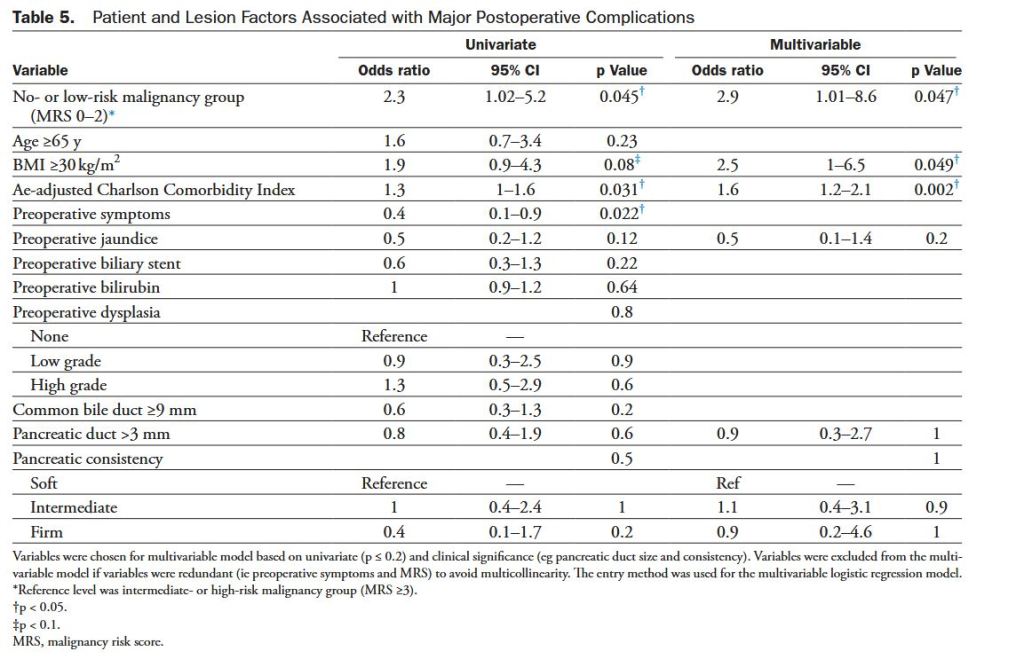
“Preoperative assessment of underlying malignancy in non-FAP-related PAs requiring PD may be difficult, as endoscopic biopsy carries a false-negative rate as high as 50%. Although PD aims at preempting malignant transformation through complete removal of DA, it comes with significant morbidity and mortality risks. This is particularly relevant in patients with benign or premalignant pathology due to soft pancreatic parenchymal texture and small pancreatic duct diameter.”

Continue reading

Guideline for Perioperative Cardiovascular Management for Noncardiac Surgery: A Report of the American College of Cardiology/American Heart Association Joint Committee on Clinical Practice Guidelines

“Top Take-Home Messages

1.A stepwise approach to perioperative cardiac assessment assists clinicians in determining when surgery should proceed or when a pause for further evaluation is warranted.
2.Cardiovascular screening and treatment of patients undergoing noncardiac surgery should adhere to the same indications as nonsurgical patients, carefully timed to avoid delays in surgery and chosen in ways to avoid overscreening and overtreatment.
3.Stress testing should be performed judiciously in patients undergoing noncardiac surgery, especially those at lower risk, and only in patients in whom testing would be appropriate independent of planned surgery.
4.Team-based care should be emphasized when managing patients with complex anatomy or unstable cardiovascular disease.
5.New therapies for management of diabetes, heart failure, and obesity have significant perioperative implications. Sodium-glucose cotransporter 2 inhibitors should be discontinued 3 to 4 days before surgery to minimize the risk of perioperative ketoacidosis associated with their use.
6.Myocardial injury after noncardiac surgery is a newly identified disease process that should not be ignored because it portends real consequences for affected patients.
7.Patients with newly diagnosed atrial fibrillation identified during or after noncardiac surgery have an increased risk of stroke. These patients should be followed closely after surgery to treat reversible causes of arrhythmia and to assess the need for rhythm control and long-term anticoagulation.
8.Perioperative bridging of oral anticoagulant therapy should be used selectively only in those patients at highest risk for thrombotic complications and is not recommended in the majority of cases.
9.In patients with unexplained hemodynamic instability and when clinical expertise is available, emergency focused cardiac ultrasound can be used for perioperative evaluation; however, focused cardiac ultrasound should not replace comprehensive transthoracic echocardiography.”
Stepwise Approach to Perioperative Cardiac Assessment
∗Cardiovascular risk factors: hypertension, smoking, high cholesterol, diabetes, women age >65 y, men age >55 y, obesity, family history of premature CAD. †Determining elevated calculated risk depends on the calculator used. Traditionally, RCRI >1 or a calculated risk of MACE with any perioperative risk calculator >1% is used as a threshold to identify patients at elevated risk. §Abnormal biomarker thresholds: troponin >99th percentile URL for the assay; BNP >92 ng/L, NT-proBNP ≥300 ng/L. ‡Conditions that pose additional risk for MACE. ‖Noninvasive stress testing or CCTA suggestive of LM or multivessel CAD. Colors correspond to Class of Recommendation in Table 3. BNP indicates B-type natriuretic peptide; CABG, coronary artery bypass grafting; CAD, coronary artery disease; CCTA, coronary computed tomography angiography; CIED, cardiovascular implantable electronic device; CVD, cardiovascular disease; DASI, Duke Activity Status Index; ECG, electrocardiogram; GDMT, guideline-directed management and therapy; ICD, implantable cardioverter-defibrillator; LM, left main; MACE, major adverse cardiovascular event; METs, metabolic equivalents; NCS, noncardiac surgery; NT-proBNP, N-terminal pro b-type natriuretic peptide; RCRI, Revised Cardiac Risk Index; and URL, upper reference limit.
Continue reading

Cardiac Evaluation and Monitoring of Patients Undergoing Noncardiac Surgery

“The main purpose of perioperative cardiac evaluation involves answering few basic questions. What are the underlying cardiac risk factors which a patient might have before
s/he undergoes noncardiac surgery? Will such cardiac evaluation change the management of the patient? Will it defer surgery altogether in favor of resolving the patient’s cardiac disease and hence reducing perioperative mortality? What will be the course of management in the postoperative period?
Communication among the complete medical team involved in patient care, including the internist, cardiologist, anesthesiologist, surgeon, and ancillary staff, is of utmost importance,
along with the facilitation of shared decision making by the patient.”

Algorithm for perioperative cardiac risk assessment prior to noncardiac surgery.
Continue reading