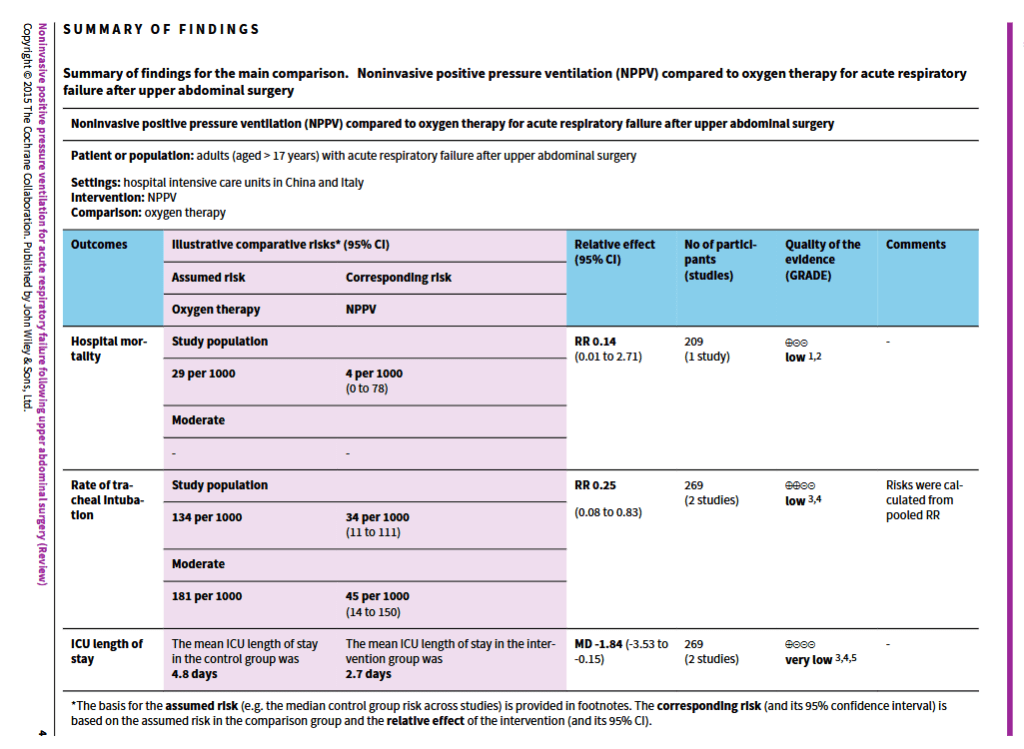
Noninvasive positive pressure ventilation for acute respiratory failure following upper abdominal surgery

“More than four million abdominal surgeries are performed in the US every year and in England about 250,000 abdominal operations are performed per year. Adults undergoing upper abdominal surgery are at an increased risk of postoperative pulmonary complications.
Acute respiratory failure is a relatively common complication after abdominal surgery and is associated with significant morbidity and mortality. According to Michelet 2010, the development of respiratory complication may be explained by two pathological mechanisms.
The first is linked to surgical complications, notably with the occurrence of anastomotic leakage leading to mediastinitis, septic shock, and acute respiratory distress. The second is of medical origin, with multifactorial impairment of respiratory function.”
Continue reading

Prophylactic nasogastric decompression after abdominal surgery

“The prophylactic use of nasogastric tubes after abdominal operations, flexible tubes inserted through the nose, pharynx, oesophagus and into the stomach, has happened only in the last century, becoming so prevalent that it has been variously described as “the standard of care” (Montgomery 1996), “traditionally used by most surgeons” (Lee 2002), “common practice” (Cunningham 1992, Sakadamis 1999, Manning 2001), “unquestioned” (Savassi-Rocha 1992), and “routine” (Wolff 1989). What is to be achieved by this prophylaxis is gastric decompression, decreased likelihood of nausea and vomiting, decreased distention, less chance of pulmonary aspiration and pneumonia, less chance of wound separation and infection, less chance of fascial dehiscence and hernia, earlier return of bowel function, and earlier hospital discharge.”

Continue reading

Non-Hepatic Abdominal Surgery in Patients with Cirrhotic Liver Disease

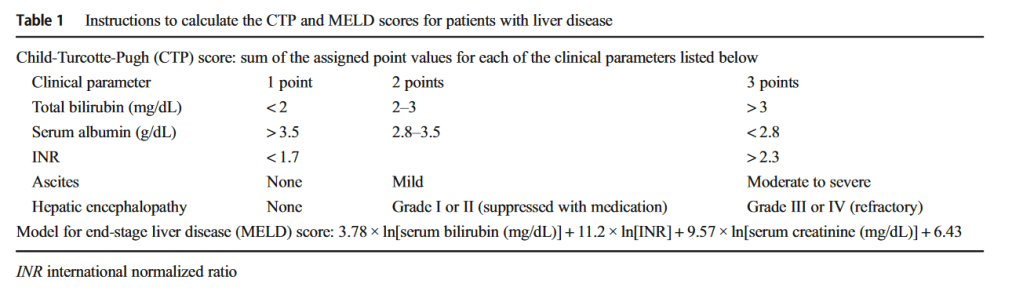
Cirrhotic liver disease is an important cause of peri-operative morbidity and mortality in general surgical patients. Early recog-nition and optimization of liver dysfunction is imperative before any elective surgery. Patients with MELD <12 or classified asChild A have a higher morbidity and mortality than matched controls without liver dysfunction, but are generally safe for electiveprocedures with appropriate patient education.

Continue reading

Adhesiolysis-related morbidity in abdominal surgery

ten Broek RP, et al. Adhesiolysis-related morbidity in abdominal surgery. Ann Surg. 2013 Jul;258(1):98-106. 

Full-text for Emory users.

Results: A total of 755 (out of 844) surgeries in 715 patients were included. Adhesiolysis was required in 475 (62.9%) of operations. Median adhesiolysis time was 20 minutes (range: 1-177). Fifty patients (10.5%) undergoing adhesiolysis inadvertently incurred bowel defect, compared with 0 (0%) without adhesiolysis (P < 0.001). In univariate and multivariate analyses, adhesiolysis was associated with an increase of sepsis incidence [odds ratio (OR): 5.12; 95% confidence interval (CI): 1.06-24.71], intra-abdominal complications (OR: 3.46; 95% CI: 1.49-8.05) and wound infection (OR: 2.45; 95% CI: 1.01-5.94), longer hospital stay (2.06 ± 1.06 days), and higher hospital costs [$18,579 (15,204-21,954) vs $14,063 (12,471-15,655)]. Mortality after adhesiolysis complicated by a bowel defect was 4 out of 50 (8%), compared with 7 out of 425 (1.6%) after uncomplicated adhesiolysis (OR: 5.19; 95% CI: 1.47-18.41).

Continue reading