Differential diagnosis in inflammatory bowel disease colitis

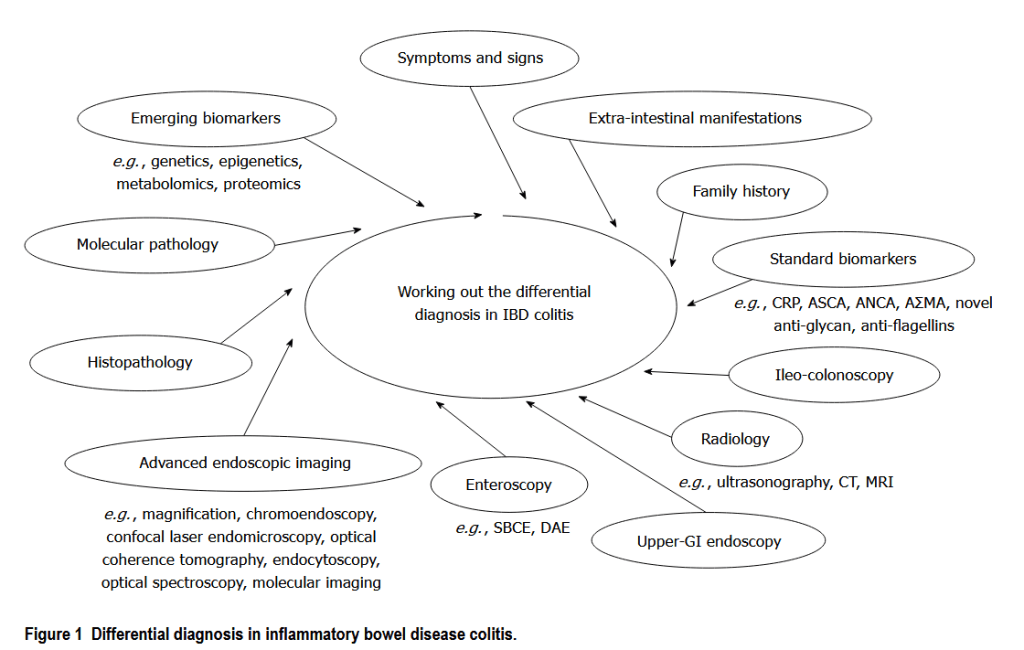
“Distinction between Crohn’s disease of the colon-rectum and ulcerative colitis or inflammatory bowel disease (IBD) type unclassified can be of pivotal importance for a tailored clinical management, as each entity often involves specific therapeutic strategies and prognosis. Nonetheless, no gold standard is available and the uncertainty of diagnosis may frequently lead to misclassification or repeated examinations. Hence, we have performed a literature search to address the problem of differential diagnosis in IBD colitis, revised current and emerging diagnostic tools and refined disease classification strategies. Nowadays, the differential diagnosis is an untangled issue, and the proper diagnosis
cannot be reached in up to 10% of patients presenting with IBD colitis.”
Continue reading

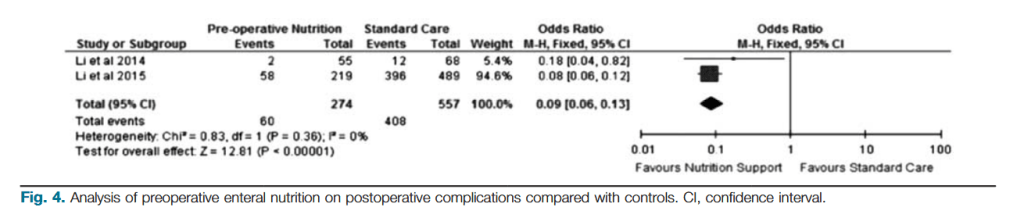
Does preoperative enteral or parenteral nutrition reduce postoperative complications in Crohn’s disease patients?

“Surgery is frequently needed in Crohn’s Disease (CD) patients who have malnutrition. Patients with CD are at a risk of malnutrition secondary to decreased oral intake, malabsorption, and inflammation. The prevalence of malnutrition in IBD patients is profound: 60–80% of IBD patients are anemic, 39–81% are iron deficient, 20–60% are vitamin B12
deficient, 36–54% are folate deficient, and 25–80% have hypoalbuminemia. This high prevalence of malnutrition presents a challenge in the surgical management of CD patients because poor preoperative nutritional status has been linked to increase postoperative complications.
Therefore, nutritional optimization using enteral nutrition (EN) and total parenteral nutrition (TPN) have been used for many years to improve the nutritional status of CD patients in hopes of decreasing postoperative complications.”

Continue reading

Chronic intestinal failure and short bowel syndrome in Crohn’s disease

“Chronic intestinal failure (CIF) is a rare but feared severe complication of
Crohn’s disease, with 60% of patients permanently dependent on parenteral nutrition.
This review aims to summarize the knowledge available in the current literature
describing recent advances in the management and treatment of adult patients with
CIF, with emphasis on patients with Crohn’s disease. Moreover, it aims to further
understanding of modern approaches to CIF complications such as catheter-related
bloodstream infections and intestinal failure-associated liver disease.”

Continue reading

Postoperative Inflammatory Response in Crohn’s Patients

“Crohn’s Disease is an inflammatory bowel disease with a multifactorial pathophysiology. Genetic, immune, gut microbiota, and other environmental factors play a role in the occurrence and maintenance of bowel inflammation. Unfortunately, despite the development of new drugs, about half of all CD patients will need surgery during their disease course.”

Continue reading

Histological Margin Positivity in the Prediction of Recurrence After Crohn’s Resection

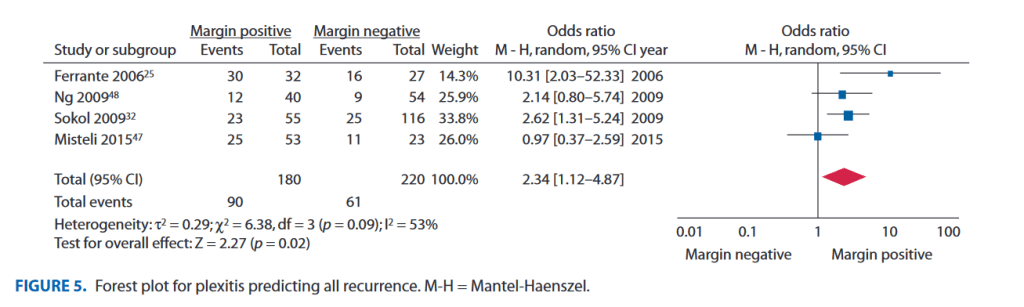
The presence of involved histological margins at the time of index resection in Crohn’s disease is associated with recurrence, and plexitis shows promise as a marker of more aggressive disease. Further studies with homogeneity of histopathological and recurrence reporting are required.“”The presence of involved histological margins at the time of index resection in Crohn’s disease is associated with recurrence, and plexitis shows promise as a marker of more aggressive disease. Further studies with homogeneity of histopathological and recurrence reporting are required.

Continue reading

Tumor Necrosis Factor (TNF) Antagonists in Treatment of Internal Fistulizing Crohn’s Disease

Bouguen G, et al.; GETAID. Efficacy and Safety of Tumor Necrosis Factor Antagonists in Treatment of Internal Fistulizing Crohn’s Disease. Clin Gastroenterol Hepatol. 2020 Mar; 18(3):628-636.

Results: After a median follow-up period of 3.5 years, 68 patients (43.6%) underwent a major abdominal surgery. The cumulative probabilities for being surgery-free were 83%, 64%, and 51% at 1, 3, and 5 years, respectively. A concentration of C-reactive protein >18 mg/L, an albumin concentration <36 g/L, the presence of an abscess at the fistula diagnosis, and the presence of a stricture were associated independently with the need for surgery. The cumulative probabilities of fistula healing, based on imaging analyses, were 15.4%, 32.3%, and 43.9% at 1, 3, and 5 years, respectively. Thirty-two patients (20.5%) developed an intestinal abscess and 4 patients died from malignancies (3 intestinal adenocarcinomas). One patient died from septic shock 3 months after initiation of anti-TNF therapy.

Conclusions: In a retrospective analysis of data from a large clinical trial, we found that anti-TNF therapy delays or prevents surgery for almost half of patients with CD and luminal fistulas. However, anti-TNF therapy might increase the risk for sepsis-related death or gastrointestinal malignancies.

Continue reading