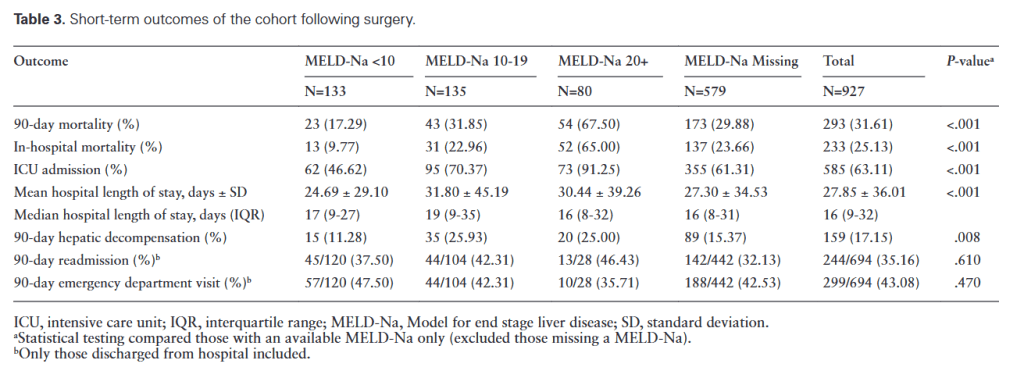
Emergency Colorectal Surgery in Those with Cirrhosis: Outcomes and predictors of mortality

“Individuals with cirrhosis have higher post-operative morbidity and mortality following major abdominal surgery compared to those without cirrhosis. To quantify this added risk, observational studies and prediction models have been described; however, the majority were derived from historic cohorts and may not reflect the changing epidemiology of
liver disease or advances in both the medical management of cirrhosis and perioperative practices in this high-risk group.”

Continue reading

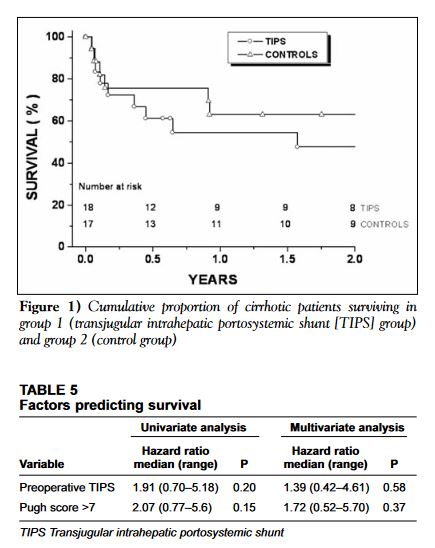
Transjugular intrahepatic portosystemic shunt before abdominal surgery in cirrhotic patients

“Abdominal surgery is occasionally needed in cirrhotic patients and is associated with high morbidity and mortality rates. It has been suggested that the main determinant of short- and long-term survival is the degree of liver failure, as evaluated by the presence of ascites, low serum albumin level and coagulation disorders. In addition, the degree of portal
hypertension may be an independent predictor for operative bleeding, postoperative ascites leakage or variceal rupture; this may also influence survival. Transjugular intrahepatic portosystemic shunt (TIPS) placement is much less invasive than surgical shunts and can be performed in patients with a significant degree of liver insufficiency. Therefore, it has been suggested that preoperative TIPS placement may improve the prognosis of cirrhotic patients, submitted to abdominal surgery.”

Continue reading

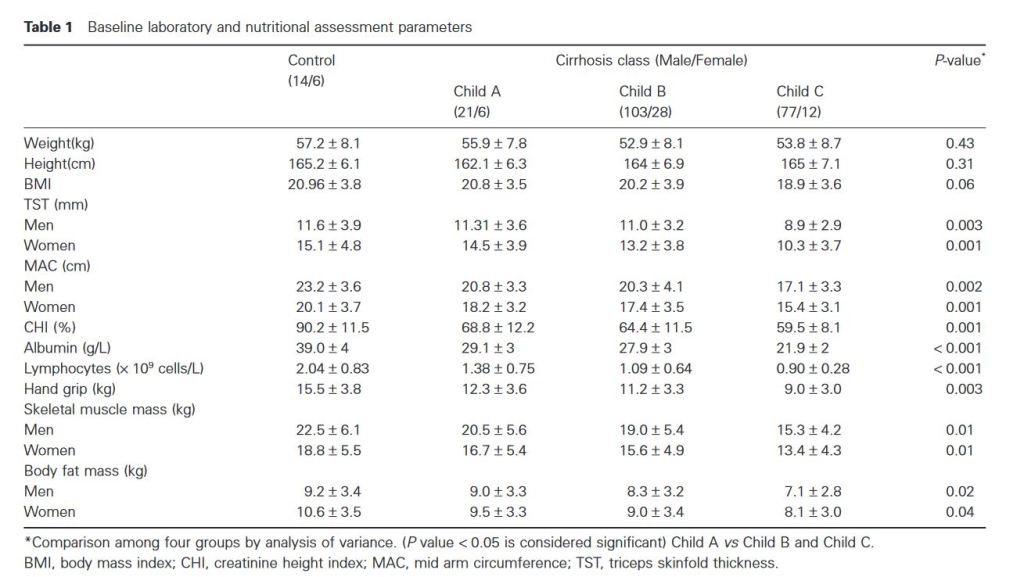
Cirrhotic nutritional management

“Prevalence of malnutrition in chronic liver disease ranges between 10% and 100%, depends on severity of liver disease. Prevalence is more in patients with alcoholic cirrhosis compared to nonalcoholic cirrhotics. 3 Malnutrition is seen in all clinical stages but is easier to detect in advanced stages of liver cirrhosis. Many patients have subtle changes such as fat soluble vitamin deficiency, anemia from iron, folate or pyridoxine deficiency, altered cell-mediated immune functions and minimal loss of muscle mass, while patients with end-stage liver disease have muscle wasting, decreased fat stores, and cachexia.”

Continue reading

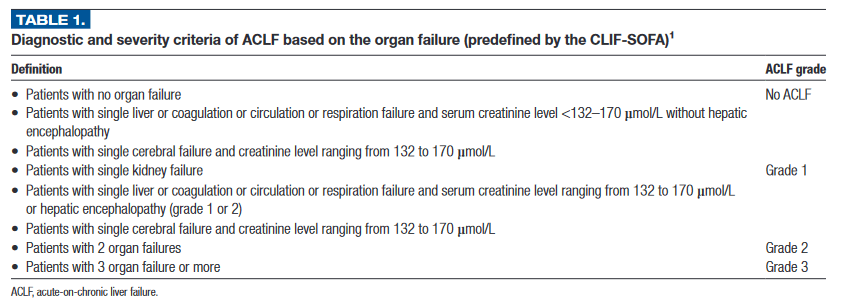
Liver Transplantation in Acute-on-chronic Liver Failure

“Liver transplantation (LT) has revolutionized the treatment of cirrhotic patients. However, access to transplant is limited as demand for organs exceeds availability. Current allocation gives the highest priority to patients with the highest mortality risk. Hence, several
patients awaiting LT may deteriorate while waiting for LT.”

Continue reading

Non-Hepatic Abdominal Surgery in Patients with Cirrhotic Liver Disease

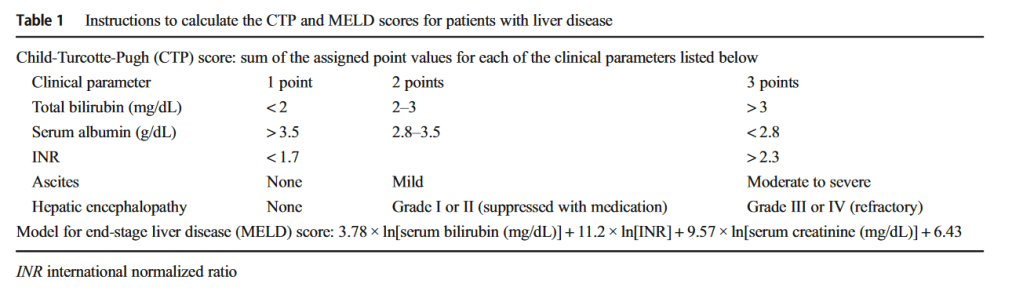
Cirrhotic liver disease is an important cause of peri-operative morbidity and mortality in general surgical patients. Early recog-nition and optimization of liver dysfunction is imperative before any elective surgery. Patients with MELD <12 or classified asChild A have a higher morbidity and mortality than matched controls without liver dysfunction, but are generally safe for electiveprocedures with appropriate patient education.

Continue reading

Colorectal surgery in cirrhotic patients

Paolino J, Steinhagen RM. Colorectal surgery in cirrhotic patients. ScientificWorldJournal. 2014 Jan 15;2014:239293. Free full-text.

Patients with cirrhosis have a greater risk of morbidity and mortality following colorectal surgery. Therefore, preoperative medical optimization and risk assessment using criteria such as the MELD score are vital in preventing complications. Some risk factors include age, urgency of surgery, and ASA score. Postoperative morbidity and mortality are related to portal hypertension, ascites, infection, and anastomotic and stomal complications. This review highlights the assessment of risk and perioperative management of cirrhotic patients undergoing colorectal surgery.

Laparoscopic cholecystectomy and cirrhosis

Gad EH, et al. Laparoscopic cholecystectomy in patients with liver cirrhosis: 8 years experience in a tertiary center. A retrospective cohort study. Ann Med Surg (Lond). 2020 Jan 15;51:1-10. Free full-text.

Results: The most frequent Child-Turcotte-Pugh (CTP) score was A, The most frequent cause of cirrhosis was hepatitis C virus (HCV), while biliary colic was the most frequent presentation. The harmonic device was used in 39.9% of patients, with a significant correlation between it and lower operative bleeding, lower blood and plasma transfusion rates, higher operative adhesions rates, lower conversion to open surgery and 30-day complication rates, shorter operative time and post-operative hospital stays where operative adhesions and times were independently correlated. The 30-day morbidity and mortality were 22.1% and 2.3% respectively while overall survival was 91.5%, higher CTP, and model for end-stage liver disease (MELD) scores, higher mean international normalization ratio (INR) value, lower mean platelet count, higher operative bleeding, higher blood, and plasma transfusion rates, longer mean operative time and postoperative hospital stays were significantly correlated with all conversion to open surgery, 30-day morbidities and mortalities.

Conclusion: LC can be safely performed in cirrhotic patients. However, higher CTP and MELD scores, operative bleeding, more blood and plasma transfusion units, longer operative time, lower platelet count, and higher INR values are predictors of poor outcome that can be improved by proper patient selection and meticulous peri-operative care and by using Harmonic scalpel shears.

Continue reading