ACG Clinical Guideline: Focal Liver Lesions

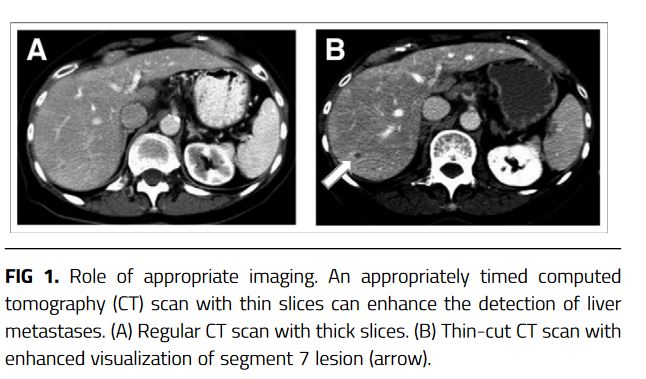
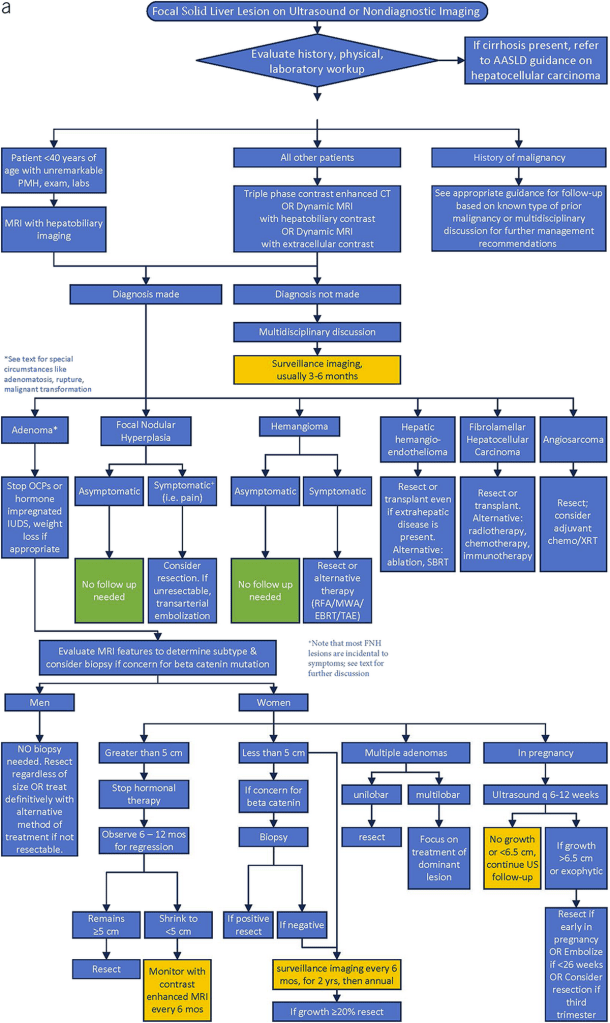
“With the continued dramatic rise in the widespread role of imaging in diagnosis and management of patients, there is a resultant rise in detection of asymptomatic incidental liver lesions. Common imaging modalities in which incidental liver lesions are detected include ultrasonography (US) with or without contrast agent (CEUS), computed tomography (CT), and magnetic resonance imaging (MRI) for abdominal or nonabdominal indications (breast and spine). Studies show a continued upward trend in utilization of CT/MRI/US imaging in adults in the United States and Canada, inevitably resulting in increased detection of incidental FLLs within the liver. In fact, some studies show that up to 52% of patients without cancer have a benign liver lesion at autopsy. The American College of Radiology reports that up to 15% of patients have an incidental liver lesion detected
on routine nonsurveillance imaging. Therefore, it is critical to understand appropriate management of incidentally detected benign FLLs because they have differing clinical implications from malignant lesions such as hepatocellular carcinoma (HCC), intrahepatic cholangiocarcinoma (iCCA), and metastatic disease.”
Continue reading

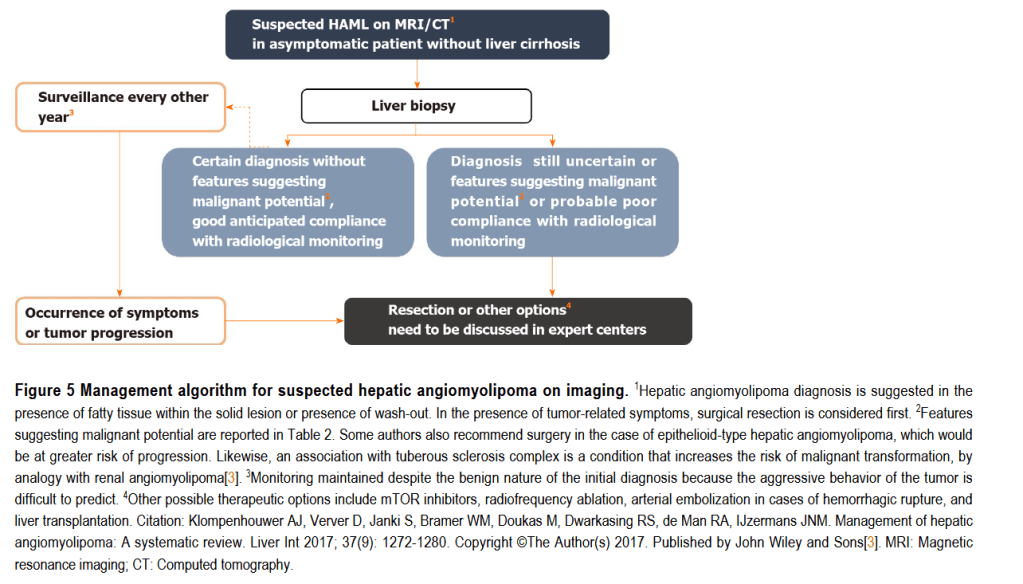
Clinical characteristics and outcomes of patients with hepaticangiomyolipoma

“Angiomyolipoma (AML) is a solid mesenchymal tumor, mainly described in the
kidney, and belongs to the group of perivascular epithelioid cell tumors
(PEComas). Hepatic localization of AML, described for the first time in 1976, is
rare, since only around 600 cases were reported after an exhaustive search of the
literature up to the year 2017. Hepatic AML (HAML) poses a veritable diagnostic
challenge in radiological terms, especially when fat content is low, because this type of
tumor may appear as a hypervascular tumor associated with a washout phase that
mimics other, more common hypervascular hepatic tumors, such as hepatocellular
carcinoma”

Continue reading

Hepatic Arterial Infusion Pump Chemotherapy for Unresectable Intrahepatic Cholangiocarcinoma

“Because most patients die from progressive disease in the liver, hepatic arterial infusion pump (HAIP) chemotherapy with floxuridine is an attractive treatment option for unresectable [Intrahepatic cholangiocarcinoma] iCCA. The rationale for HAIP chemotherapy is that iCCA relies mostly on arterial blood supply. Moreover, floxuridine, also known as FUDR, is characterized by its high first-pass effect; approximately 95% is directly metabolized in the liver. Hence, this allows for an up to 400-fold dose increase in subsequent intratumoral exposure compared with systemic treatment, with minimal systemic exposure and side effects”

Continue reading

Simultaneous resection of primary colorectal cancer and synchronous liver metastases

Kleive D, et al. Simultaneous Resection of Primary Colorectal Cancer and Synchronous Liver Metastases: Contemporary Practice, Evidence and Knowledge Gaps. Oncol Ther. 2021 Jun;9(1):111-120. Free full-text.

Key Summary Points

  • High-level evidence in simultaneous resection of colorectal cancer and colorectal liver metastasis remains scarce.
  • Simultaneous resections may be considered in patients with good performance status and limited liver tumour burden.
  • Simultaneous resections should be avoided when requiring major liver resection and major colorectal resection.
  • Treatment strategies should be made by a multidisciplinary team.
  • Simultaneous resections should be performed as part of a clinical trial.
Continue reading

Surgical Management of Liver Metastases From Colorectal Cancer

“Surgical resection remains one of the major curative treatment options available to patients
with colorectal liver metastases. Surgery and chemotherapy form the backbone of the
treatment in patients with colorectal liver metastases. With more effective chemotherapy
regimens being available, the optimal timing and sequencing of treatments are important. A
multidisciplinary approach with the involvement of medical oncologists and surgical
oncologists from the beginning is crucial.”

Continue reading

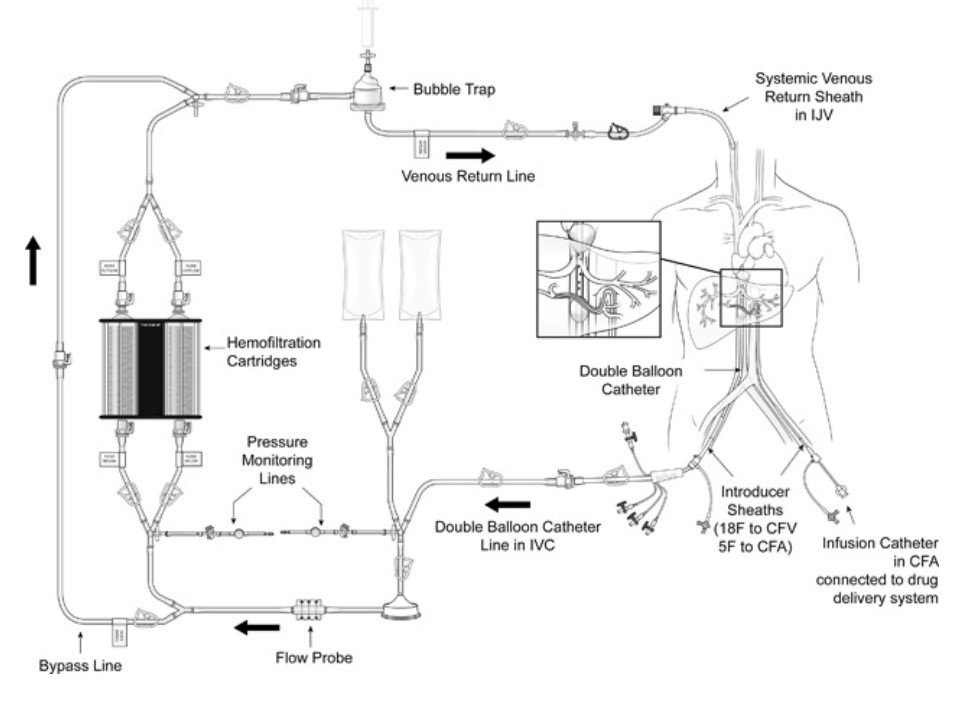
Percutaneous Hepatic Perfusion (PHP) with Melphalan

Karydis I, Gangi A, Wheater MJ, et al. Percutaneous hepatic perfusion with melphalan in uveal melanoma: A safe and effective treatment modality in an orphan disease. J Surg Oncol. 2018 May;117(6):1170-1178.

Figure 1. Melphalan percutaneous hepatic perfusion (M-PHP) circuit.

Click to enlarge.

Results: A total of 51 patients received 134 M‐PHP procedures (median of 2 M‐PHPs). 25 (49%) achieved a partial (N = 22, 43.1%) or complete hepatic response (N = 3, 5.9%). In 17 (33.3%) additional patients, the disease stabilized for at least 3 months, for a hepatic disease control rate of 82.4%. After median follow‐up of 367 days, median overall progression free (PFS) and hepatic progression free survival (hPFS) was 8.1 and 9.1 months, respectively and median overall survival was 15.3 months. There were no treatment related fatalities. Non‐hematologic grade 3‐4 events were seen in 19 (37.5%) patients and were mainly coagulopathic (N = 8) and cardiovascular (N = 9).

Continue reading

Rate of postoperative biliary complications during major liver resection reduced by intraoperative air leak test

Zimmitti G, Vauthey JN, et al. Systematic use of an intraoperative air leak test
at the time of major liver resection reduces the rate of postoperative biliary
complications. J Am Coll Surg. 2013 Dec;217(6):1028-37.

Free full-text.

STUDY DESIGN: Rates of postoperative biliary complications were compared among 103 patients who underwent ALT and 120 matched patients operated on before ALT was used. All study patients underwent major hepatectomy without bile duct resection at 3 high-volume hepatobiliary centers between 2008 and 2012. The ALT was performed by placement of a transcystic cholangiogram catheter to inject air into the biliary tree, the upper abdomen was filled with saline, and the distal common bile duct was manually occluded. Uncontrolled bile ducts were identified by localization of air bubbles at the transection surface and were directly repaired.

RESULTS: The 2 groups were similar in diagnosis, chemotherapy use, tumor number and size, resection extent, surgery duration, and blood loss (all, p > 0.05). Single or multiple uncontrolled bile ducts were intraoperatively detected and repaired in 62.1% of ALT vs 8.3% of non-ALT patients (p < 0.001). This resulted in a lower rate of postoperative bile leaks in ALT (1.9%) vs non-ALT patients (10.8%; p = 0.008). Independent risk factors for postoperative bile leaks included extended hepatectomy (p = 0.031), caudate resection (p = 0.02), and not performing ALT (p = 0.002) (odds ratio = 3.8; 95% CI, 1.3-11.8; odds ratio = 4.0; 95% CI, 1.1-14.3; and odds ratio = 11.8; 95% CI, 2.4-58.8, respectively).


More forthcoming…