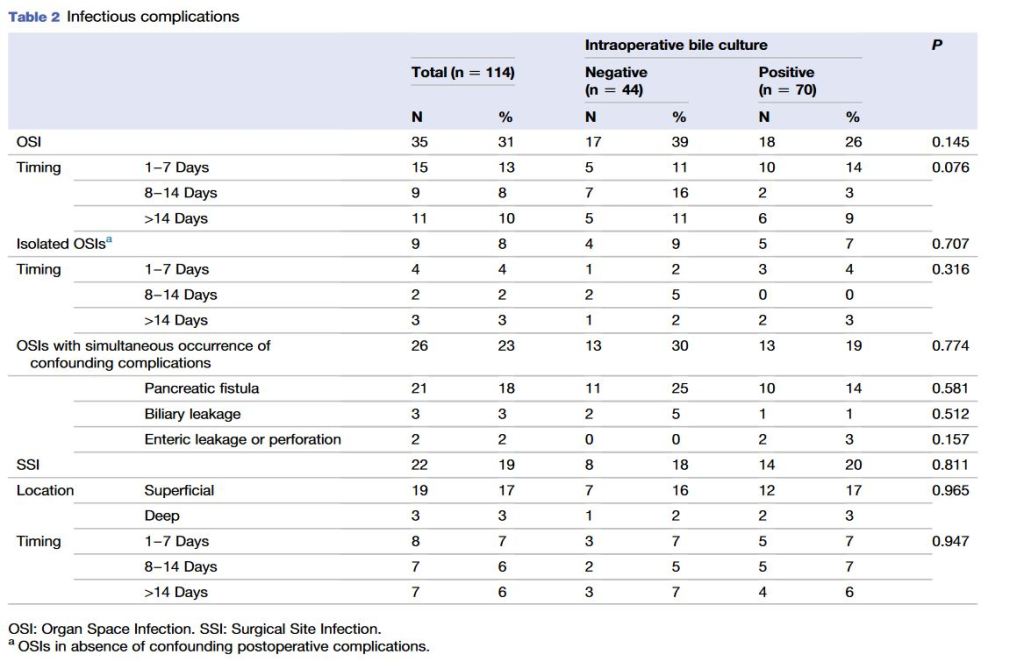
Association between positive intra-operative bile cultures during Whipple procedures and subsequent organ space infections

“The association between intraoperative bile cultures and infectious complications after
pancreatoduodenectomy remains unclear. Pancreatoduodenectomy remains a complex and technically demanding procedure with high rates of morbidity (25–52%) and mortality (1–3%). Infectious complications, such as surgical site infections (SSIs) and organ space infections (OSIs), are reported as the most common complications following pancreatoduodenectomy besides pancreatic fistula and delayed gastric emptying.”

Continue reading

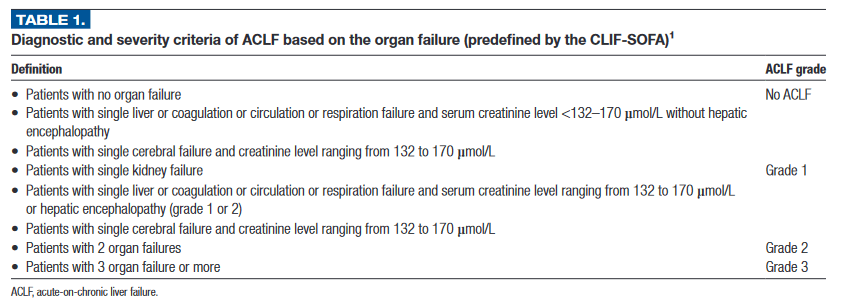
Liver Transplantation in Acute-on-chronic Liver Failure

“Liver transplantation (LT) has revolutionized the treatment of cirrhotic patients. However, access to transplant is limited as demand for organs exceeds availability. Current allocation gives the highest priority to patients with the highest mortality risk. Hence, several
patients awaiting LT may deteriorate while waiting for LT.”

Continue reading

Life-threatening pelvis sepsis

“Although extremely uncommon, severe sepsis does occur post-treatment for haemorrhoids and all surgeons who treat such patients should be aware of the potential complications and alert to their presenting features. Early presentation without evidence of tissue necrosis may be managed conservatively, although most cases are managed by means of surgery.”

“Treatments for haemorrhoids can be divided in to conservative measures such as anal hygiene and topical ointments or suppositories, and interventions.

These are either office-based such as:
-injection sclerotherapy
-rubber band ligation (RBL)
-surgical procedures.

Haemorrhoidectomy has long been the mainstay of surgical therapy, but recently new techniques have been described, principally the stapled haemorrhoidopexy or procedure for prolapsing haemorrhoids (PPH).”

Continue reading

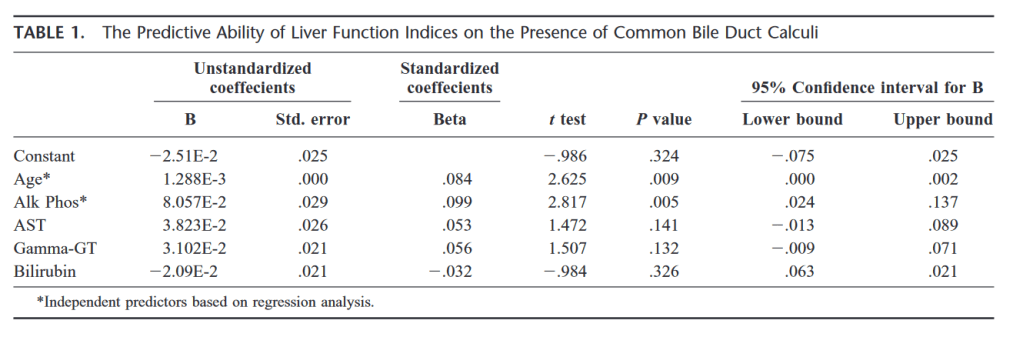
Incidence of problematic common bile duct calculi in patients undergoing laparoscopic cholecystectomy.

“Choledocholithiasis occurs in 3.4% of patients undergoing laparoscopic cholecystectomy but more than one third of these pass the calculi spontaneously within 6 weeks of operation and may be spared endoscopic retrograde cholangiopancreatography.” (Collins)

(Collins)
Continue reading

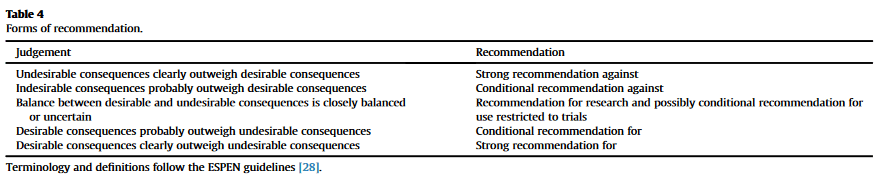
Clinical Nutrition in surgery guidelines

Early oral feeding is the preferred mode of nutrition for surgical patients. Avoidance of any nutritional therapy bears the risk of underfeeding during the postoperative course after major surgery. Considering that malnutrition and underfeeding are risk factors for postoperative complications, early enteral feeding is especially relevant for any surgical patient at nutritional risk, especially for those undergoing upper gastrointestinal surgery.

Continue reading

Urinary retention in thoracic epidural patients

Choi S, Mahon P, Awad IT. Neuraxial anesthesia and bladder dysfunction in the perioperative period: a systematic review. Can J Anaesth. 2012 Jul;59(7):681-703. Erratum in: Can J Anaesth. 2017 Dec 18. Full-text for Emory users.

Principal findings: Our search yielded 94 studies, and in 16 of these studies, the authors reported time to micturition after intrathecal anesthesia of varying local anesthetics and doses. Intrathecal injections were performed in 41 of these studies, epidural anesthesia/analgesia was used in 39 studies, and five studies involved both the intrathecal and epidural routes. Meta-analysis was not possible because of the heterogeneity of interventions and reported outcomes. The duration of detrusor dysfunction after intrathecal anesthesia is correlated with local anesthetic dose and potency. The incidence of urinary retention displays a similar trend and is further increased by the presence of neuraxial opioids, particularly long-acting variants. Urinary tract infection secondary to catheterization occurred rarely.

Conclusions: Neuraxial anesthesia/analgesia results in transient detrusor dysfunction. The duration of dysfunction depends on the potency and dose of medication used; however, it does not appear to result in significant morbidity.


Allen MS, et al. Optimal Timing of Urinary Catheter Removal After Thoracic Operations: A Randomized Controlled Study. Ann Thorac Surg. 2016 Sep;102(3):925-930. Full-text for Emory users.

Results: The study enrolled 374 patients, 217 men (58%) and 157 women (42%). The 247 eligible and evaluated patients, 141 (57.1%) men and 106 (42.9%) women, were a median age of 61.5 years (range, 21 to 87 years). There were no statistically significant differences in any of the preoperative or operative categories between the two groups. Median length of stay was 5 days (range, 2 to 42 days) for all patients, and there was no difference between the two groups. Postoperatively, 19 patients (7.7%) required urinary catheter reinsertion after it was removed. A significantly greater number of patients in the early removal group required reinsertion of the urinary catheter (15 [12.4%] vs 4 [3.2%]); p = 0.0065). Patients whose urinary catheter was removed within 48 hours of the operation had a much higher rate of bladder scans postoperatively (59.5% [n = 72]) and required more in-and-out catheterization than those whose urinary catheter was removed 6 hours after the epidural analgesia was discontinued (31.0% [n = 39]; p < 0.0001). The only documented urinary tract infection in the entire cohort occurred in a patient whose urinary catheter was removed within 48 hours after the operation. No urinary tract infections developed in the 126 patients whose urinary catheter remained in place until the epidural catheter was removed.

Conclusions: In a randomized control trial, patients with an epidural catheter in place after a general thoracic surgical operation have a higher rate of urinary problems when the urinary catheter is removed early, while the epidural catheter is still in place, compared with patients whose urinary catheter is removed after the epidural analgesia is discontinued.

Continue reading

Postoperative complications of patients during the COVID-19 pandemic.

Deng JZ, et al. The Risk of Postoperative Complications After Major Elective Surgery in Active or Resolved COVID-19 in the United States. Ann Surg. 2022 Feb 1;275(2): 242-246.

Results: Of the 5479 patients who met study criteria, patients with peri-Covid-19 had an elevated risk of developing postoperative pneumonia [adjusted odds ratio (aOR), 6.46; 95% confidence interval (CI): 4.06-10.27], respiratory failure (aOR, 3.36; 95% CI: 2.22-5.10), pulmonary embolism (aOR, 2.73; 95% CI: 1.35-5.53), and sepsis (aOR, 3.67; 95% CI: 2.18-6.16) when compared to pre-Covid-19 patients. Early post-Covid-19 patients had an increased risk of developing postoperative pneumonia when compared to pre-Covid-19 patients (aOR, 2.44; 95% CI: 1.20-4.96). Late post-Covid-19 patients did not have an increased risk of postoperative complications when compared to pre-Covid-19 patients.

Conclusions: Major, elective surgery 0 to 4 weeks after SARS-CoV-2 infection is associated with an increased risk of postoperative complications. Surgery performed 4 to 8 weeks after SARS-CoV-2 infection is still associated with an increased risk of postoperative pneumonia, whereas surgery 8 weeks after Covid-19 diagnosis is not associated with increased complications.

Continue reading