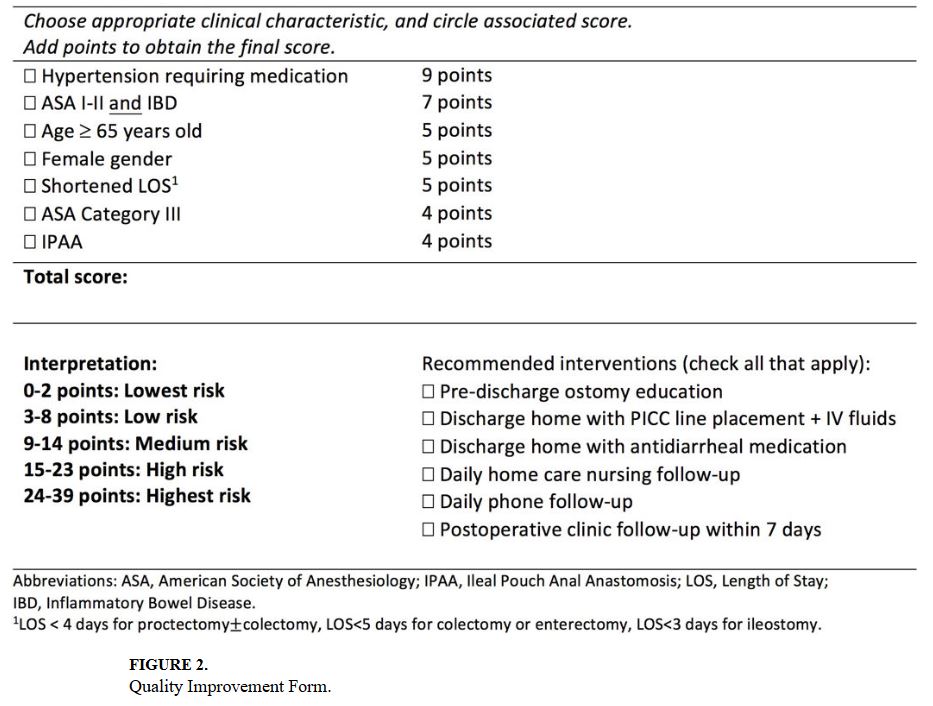
Predicting the Risk of Readmission From Dehydration After Ileostomy Formation

“Readmission within 30-days of hospital discharge has received widespread attention as a
potential healthcare quality indicator. In 2013, the Center for Medicare and Medicaid
Services established the Hospital Readmission Reduction Program (HRRP), a cost-
containment strategy that financially penalizes hospitals with higher than expected 30-day
readmission. Though conditions targeted by the HRRP have been predominately medical, it
is anticipated that readmission after surgical procedures will be used to structure financial
incentives and hospital compensation in the near future.”

Continue reading

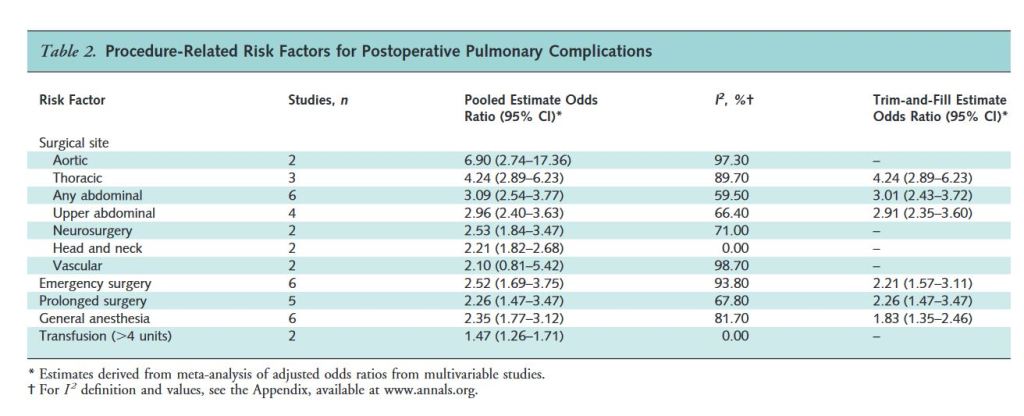
Preoperative pulmonary risk stratification for noncardiothoracic surgery

“Postoperative pulmonary complications contribute importantly to the risk for surgery and anesthesia. The most important and morbid postoperative pulmonary complications are atelectasis, pneumonia, respiratory failure, and exacerbation of underlying chronic lung disease. Clinicians who care for patients in the perioperative period may be surprised to learn that postoperative pulmonary complications are equally prevalent and contribute similarly to morbidity, mortality, and length of stay.”

Continue reading

Management of Postoperative Complications Following Operations for Breast Cancer

At bottom of post Surgical Clinics of North America issue on postoperative complications.

“The reported complication rates after breast cancer surgery are low, with rates ranging
from 2% to 50%, and are reportedly more common when performed in conjunction with axillary surgery and immediate breast reconstruction. A breakdown by procedure type has shown morbidity rates between 5% and 50% after mastectomy and from 3% to 35% after lumpectomy with or without reconstruction.”

Hilli
Continue reading

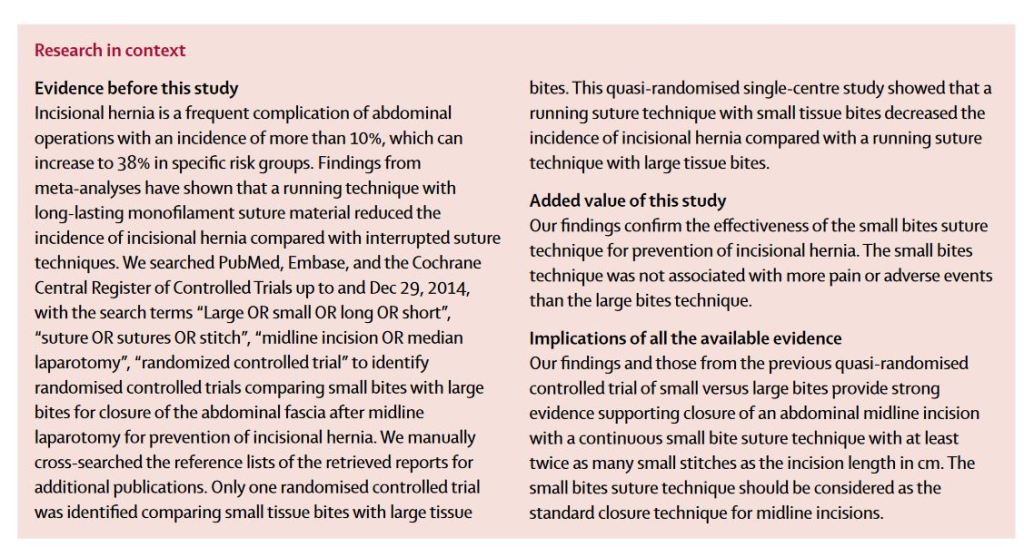
The STITCH Trial. Small bites versus large bites for closure of abdominal midline incisions.

“Incisional hernia is a frequent complication of abdominal operations with an incidence of 10–23%, which can increase to 38% in specific risk groups. In the USA 4 million to 5 million laparotomies are done annually, suggesting that at least 400 000–500 000 incisional hernias can be expected to occur every year. Incisional hernia is associated with pain and discomfort, resulting in a decreased quality of life. Moreover, incarceration and strangulation of abdominal contents can take place, for which emergency surgery is indicated, with associated morbidity and mortality. About 348 000 operations for incisional hernia are done every year in the USA with US$3·2 billion in annual associated costs. Prevention of
incisional hernia is therefore of paramount importance.”

Continue reading

Post-op GI bleed after Frey procedure for chronic pancreatitis. 

“Chronic pancreatitis (CP) is a progressive fibro-inflammatory disease of the pancreas leading to irreversible parenchymal damage with gradual loss of exocrine and endocrine functions. The most common and debilitating manifestation of this disease is intractable pain which may lead to loss of work, unemployment, narcotic dependence, and impairment of the quality of life (QOL). About 30–50% of patients with CP will require surgery during their life time.2,3 Several surgical procedures have been described in the literature, and these are broadly classified as drainage, resectional or a combination of the two. Each respective
procedure is chosen based on the degree of pancreatic ductal dilatation, glandular morphology, local complications, and to some extent on the experience and preference of the surgeon. The Frey procedure (FP) has emerged over the past 30 years as one of the most commonly performed operations for painful CP associated with enlarged pancreatic head. The procedure results in substantial and sustained pain relief in the majority of patients. Like other major operations, FP also is associated with several post operative complications.”

Continue reading

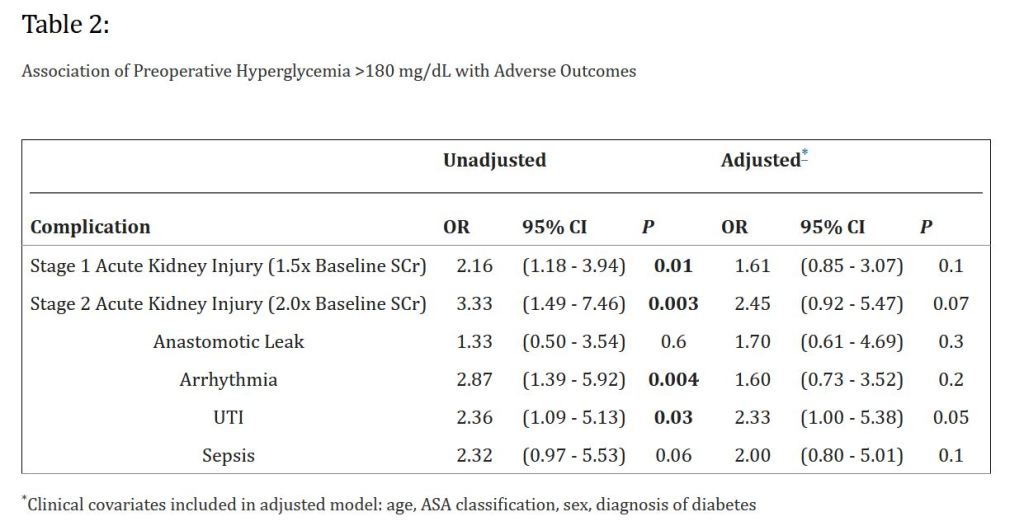
Pre versus post operative hyperglycemia as a risk for complications

“Hyperglycemia has emerged as a modifiable mediator of adverse events after surgery. Potential mechanisms for these outcomes include the vascular, inflammatory, and hemodynamic derangements that occur as a result of persistently elevated glucose levels, all of which can contribute to the risk of morbidity and mortality after surgery.” (Chen)

“Postoperative hyperglycemia was more significantly associated with adverse clinical outcomes after elective colorectal surgery than was preoperative hyperglycemia. However, preoperative hyperglycemia was associated with postoperative hyperglycemia, suggesting that improved glycemic management preoperatively may help reduce hyperglycemic events after surgery.” (Chen)

Chen
Continue reading

Evaluation of pre- and post- operative cognitive function and neurodegenerative markers

“One of the largest controversies in perioperative medicine over the last quarter century has been whether anesthesia and surgery contribute to long-term cognitive decline and/or the development of dementia in older adults. This question has major public health implications, since approximately half of adults over 65 will undergo at least one surgery, and over 120,000 Americans will die of Alzheimer’s disease (AD) per year.”

“Neurocognitive changes after non-cardiac, non-neurologic surgery in the majority of cognitively healthy, community-dwelling older adults are unlikely to be related to postoperative changes in AD neuropathology (as assessed by CSF Aβ, tau or p-tau-181p levels or the p-tau-181p/Aβor tau/Aβratios).”

Continue reading