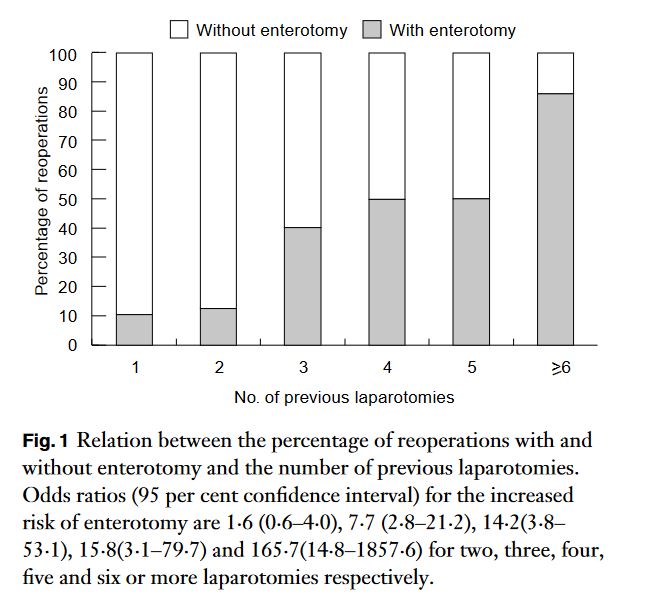
Morbidity and mortality of inadvertent enterotomy during adhesiotomy

“Postoperative intra-abdominal adhesions are a major concern in modern surgery. Intestinal obstruction is an important and well known clinical consequence of adhesions, resulting in significant morbidity and mortality rates, and high financial costs. Secondary infertility in women and chronic abdominal and pelvic pain are other, frequently cited, adhesion-related problems. Furthermore, intraabdominal adhesions render reoperation dif®cult and may
increase the complication rate of the intended surgical procedure. Prolonged operating time, unfeasibility of the laparoscopic approach and inadvertent enterotomy are known drawbacks of reoperative abdominal surgery, directly related to adhesions.”
Continue reading

Perioperative protocol for pancreatic resections in patients who refuse blood transfusions.

“The refusal of blood transfusion for surgical procedures at high risk of bleeding, such as pancreatic resection, forces surgeons to face ethical challenges and raises concerns about appropriate perioperative management. In the last two decade the rate of transfusion in high volume centers has gradually decreased thanks to the application of patient blood management (PBM) protocols.”

“In our single-institution experience, patients that categorically refused transfusion were Jehovah’s Witnesses (JW). JW is a religious movement, membership in which accounts for about 0.3% of Western countries’ populations, with USA and Italy having the highest percentages of followers. JW followers believe neither whole blood nor its four major components, namely red cells, white cells, platelets and plasma, should be donated, stored, or accepted in any circumstance, even in life-threatening situations. Advances in transfusion medicine have led the JW’s denomination to modify its position about what is deemed acceptable.”

Continue reading

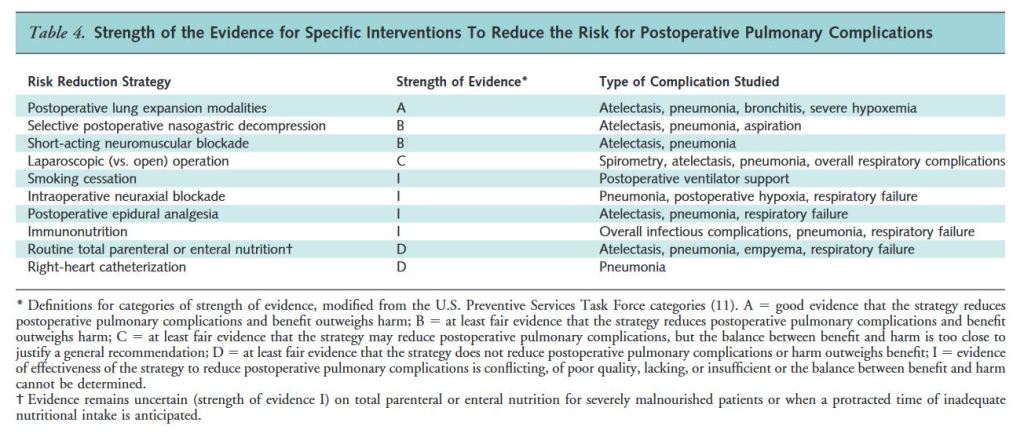
Strategies To Reduce Postoperative Pulmonary Complications after Noncardiothoracic Surgery

“Postoperative pulmonary complications are as common as cardiac complications for patients undergoing non-cardiothoracic surgery. Further, these complications
have similar mortality rates and length of stay after elective abdominal surgery or hip fracture repair. This current systematic review synthesizes the evidence on preventive strategies and focuses on atelectasis, pneumonia, and respiratory failure.”

Continue reading

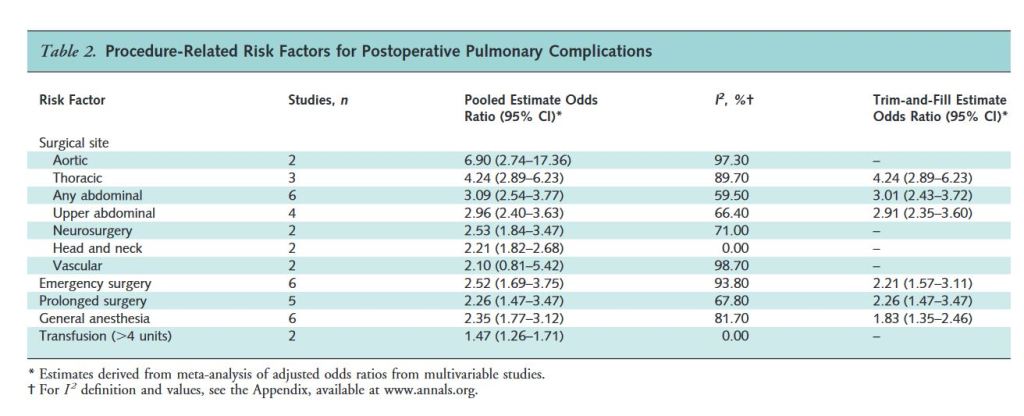
Preoperative pulmonary risk stratification for noncardiothoracic surgery

“Postoperative pulmonary complications contribute importantly to the risk for surgery and anesthesia. The most important and morbid postoperative pulmonary complications are atelectasis, pneumonia, respiratory failure, and exacerbation of underlying chronic lung disease. Clinicians who care for patients in the perioperative period may be surprised to learn that postoperative pulmonary complications are equally prevalent and contribute similarly to morbidity, mortality, and length of stay.”

Continue reading

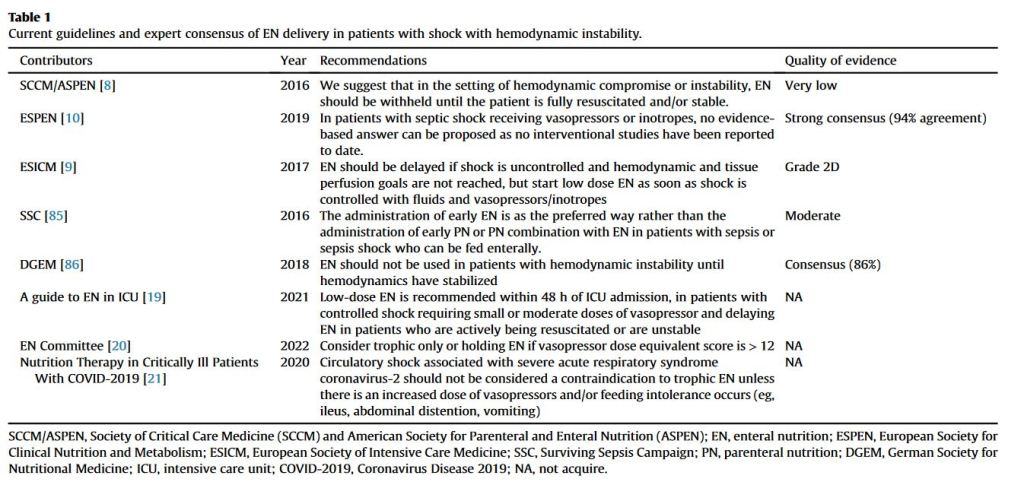
Starting early enteral nutrition safely in patients with shock on vasopressors

“Shock is a common critical illness characterized by microcirculatory disorders and insufficient tissue perfusion. Patients with shock and hemodynamic instability generally require vasopressors to maintain the target mean arterial pressure. Enteral nutrition (EN) is an important therapeutic intervention in critically ill patients and has unique benefits for intestinal recovery. However, the initiation of early EN in patients with shock receiving vasopressors remains controversial.”
“It remains a therapeutic challenge in critical care nutrition therapy to determine the initiation time of EN in patients with shock receiving vasopressors and the safe threshold region for initiating EN with vasopressors. Therefore, the current review aimed to summarize the evidence on the optimal and safe timing of early EN initiation in patients with shock receiving vasopressors to improve clinical practice.”

Continue reading

Prophylactic nasogastric decompression after abdominal surgery

“The prophylactic use of nasogastric tubes after abdominal operations, flexible tubes inserted through the nose, pharynx, oesophagus and into the stomach, has happened only in the last century, becoming so prevalent that it has been variously described as “the standard of care” (Montgomery 1996), “traditionally used by most surgeons” (Lee 2002), “common practice” (Cunningham 1992, Sakadamis 1999, Manning 2001), “unquestioned” (Savassi-Rocha 1992), and “routine” (Wolff 1989). What is to be achieved by this prophylaxis is gastric decompression, decreased likelihood of nausea and vomiting, decreased distention, less chance of pulmonary aspiration and pneumonia, less chance of wound separation and infection, less chance of fascial dehiscence and hernia, earlier return of bowel function, and earlier hospital discharge.”

Continue reading

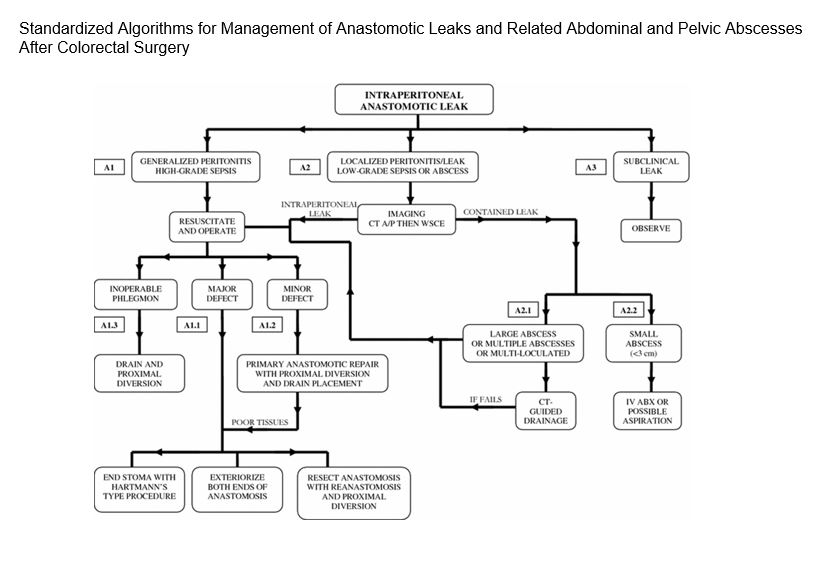
Standardized Algorithms for Management of Anastomotic Leaks and Related Abdominal and Pelvic Abscesses After Colorectal Surgery

“The risk factors and incidence of anastomotic leak following colorectal surgery are well reported in the literature. However, the management of the multiple clinical scenarios that may be encountered has not been standardized.”
In this study, “management scenarios were divided into those for intraperitoneal anastomoses, extraperitoneal (low pelvic) anastomoses, and anastomoses with proximal diverting stomas. Management options were then based on the clinical presentation and radiographic findings and organized into three interconnected algorithms.”

Recommendations for the management of intraperitoneal anastomotic leak with references to the pertinent sections of this article for more information. KEY: IV ABX=intravenous antibiotics; CT=computed tomographic; WSCE=water soluble contrast enema; CT A/P=computed tomographic scan of the abdomen and pelvis
Continue reading