The evaluation of risk factors in fascia dehiscence after abdominal surgeries

“Fascial dehiscence (FD), a serious complication of open surgical procedures, is regarded as a significant concern after abdominal surgeries. Its prevalence is reported to be 0.4–1.2% in elective laparotomies and up to 12% in emergency laparotomies. The mortality rate associated with it exceeds 21%. FD leads to an increase in hospitalization costs, prolonged hospital stays, a higher likelihood of re-operation, and an increase in subsequent
medical visits.
FD is described as the separation of sutured edges of the abdominal fascia following surgery. Four main mechanisms lead to FD, suture breakage, knot failure, suture loosening, or fascial disruption due to a hematoma. The latter is considered the most common. FD can be subclinical, and detectable only through radiology.”

able 1.

Frequency of studied variables in patients with and without fascia dehiscence.

The group without fascia dehiscence (control group), n (%)Group with fascia dehiscence (case group), n (%)
Variables(n=40)(n=20)P
Age
 40–6519 (47.5)14 (70)0.09
 65–8021 (52.2)6 (30)
Sex
 Male22 (55)11 (55)1
 Female18 (45)9 (45)
CRP>10 at the beginning of hospitalization8 (20)3 (15)0.6
Hb <10 (anemia)9 (22.5)3 (15)0.4
Pr<61 (2.5)2 (10)0.2
Smoking
 Type of surgery
  Elective22 (55)8 (40)0.2
  Emergency18 (45)12 (60)
History of abdominal surgery8 (20)5 (25)0.6
History of cancer20 (50)8 (40)0.4
Chemotherapy, immunodeficiency and corten use10 (25)8 (40)0.2
Pack cell injection before surgery10 (25)2 (10)0.1
Death6 (15)14 (70)<0.001
Surgery more than 3 h4 (10)4 (20)0.2
Bleeding more than 200 ml1 (2.5)2 (10)0.2
history of diabetes5 (12.5)2 (10)0.7
Chronic lung disease1 (2.5)1 (5)0.6
Stoma10 (25)7 (35)0.4
Drain installation16 (40)14 (70)0.02
Anastomosis30 (75)12 (60)0.2
Using stapler7 (17.5)6 (30)0.2
Preoperative preparation
 Yes22 (55)7 (35)0.14
 No18 (45)13 (65)
Alb
 3>2 (5)13 (65)<0.001
 3<38 (95)7 (35)
Type of surgery
 Small intestine10 (25)5 (25)1
 Colon and rectom30 (75)15 (75)

Alb, albumin; CRP, C-reactive protein; Hb, hemoglobin; Pr, platelet count.

Continue reading

Variations in practice of thromboprophylaxis across general surgical subspecialties: a multicentre (PROTECTinG) study of elective major surgeries

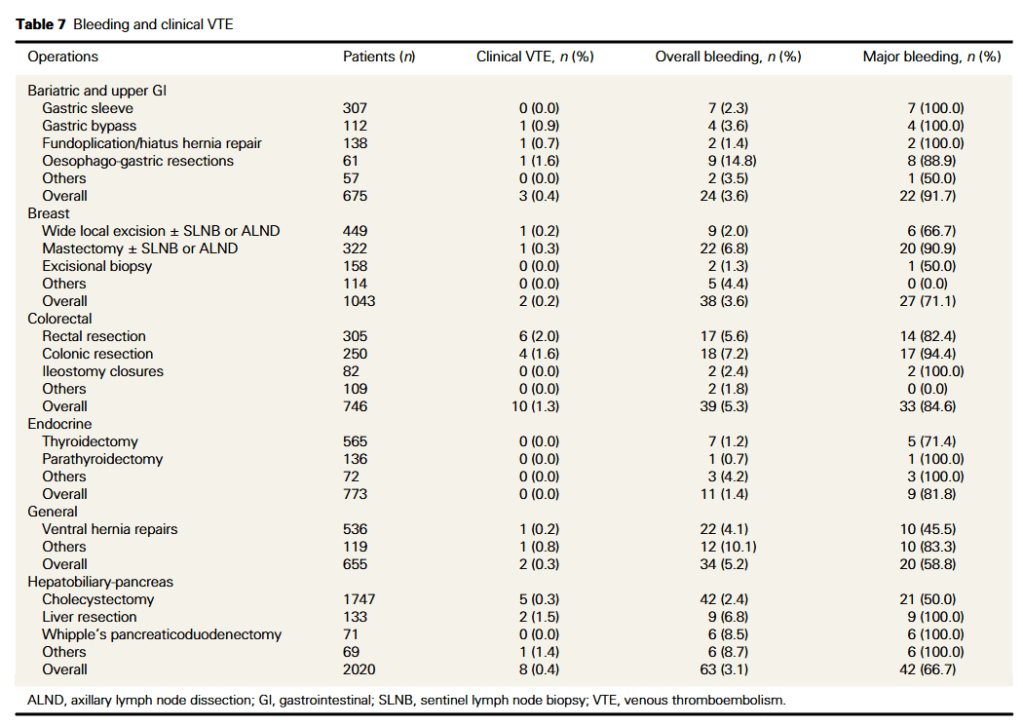
“General surgical patients who undergo major operations are at risk of venous thromboembolism (VTE). This incurs significant morbidity and healthcare costs. Therefore, the Royal Australasian College of Surgeons and other regulatory bodies recommend routine thromboprophylaxis. Moreover, considerations for thromboprophylaxis is an integral part of theatre timeout performed prior to any operation.”

“In this study, we extend the observations made from our multicentre survey by quantifying the heterogeneity of perioperative thromboprophylaxis across all major general surgical operations, and placing them in context of their bleeding and VTE risk. Findings from this study will highlight areas of practice with the greatest variability, allow surgeons to benchmark their practices against that of their colleagues and focus future research to optimize perioperative thromboprophylaxis.”

Continue reading

Outcome of ligation of the inferior vena cava in the modern era

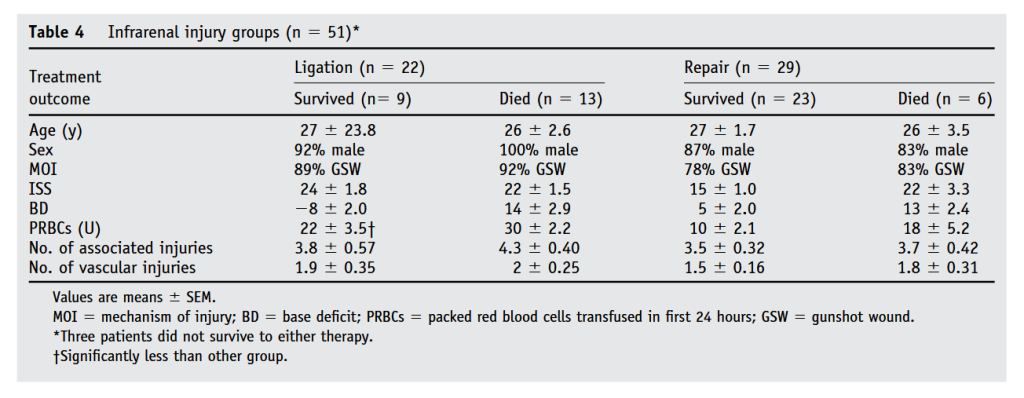
“Injury to the inferior vena cava (IVC) is a relatively rare event occurring more commonly after penetrating trauma (.5%–5%) than after blunt trauma (.6%–1%). The incidence of IVC injuries, however, has been increasing in civilian trauma centers, with these injuries accounting for up to 40% of abdominal vascular injuries in recent series.
Because of the increasing frequency and persistently high mortality associated with these injuries, perioperative management of the IVC remains a focus of interest. Indeed, while ligation of the significantly injured IVC is an acceptable practice in the era of damage control surgery, little long-term follow-up data are available in survivors of this technique.”

Continue reading

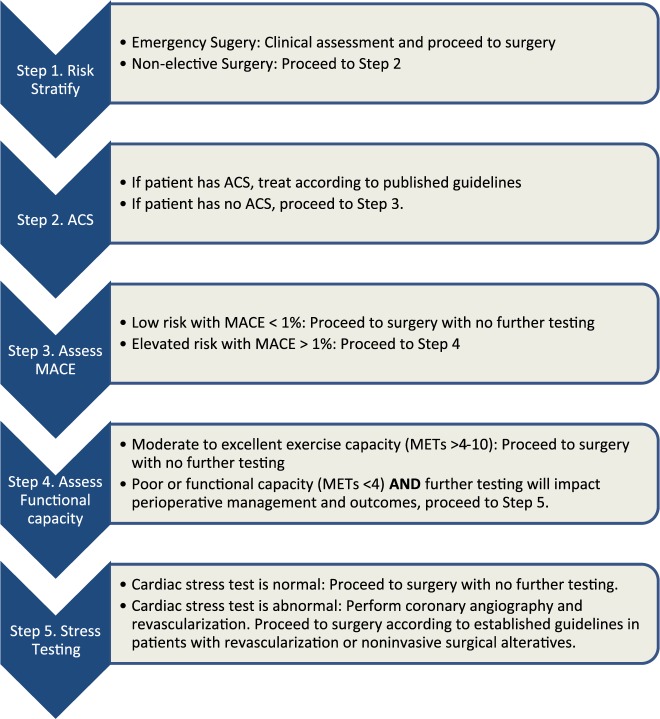
Cardiac Evaluation and Monitoring of Patients Undergoing Noncardiac Surgery

“The main purpose of perioperative cardiac evaluation involves answering few basic questions. What are the underlying cardiac risk factors which a patient might have before
s/he undergoes noncardiac surgery? Will such cardiac evaluation change the management of the patient? Will it defer surgery altogether in favor of resolving the patient’s cardiac disease and hence reducing perioperative mortality? What will be the course of management in the postoperative period?
Communication among the complete medical team involved in patient care, including the internist, cardiologist, anesthesiologist, surgeon, and ancillary staff, is of utmost importance,
along with the facilitation of shared decision making by the patient.”

Algorithm for perioperative cardiac risk assessment prior to noncardiac surgery.
Continue reading

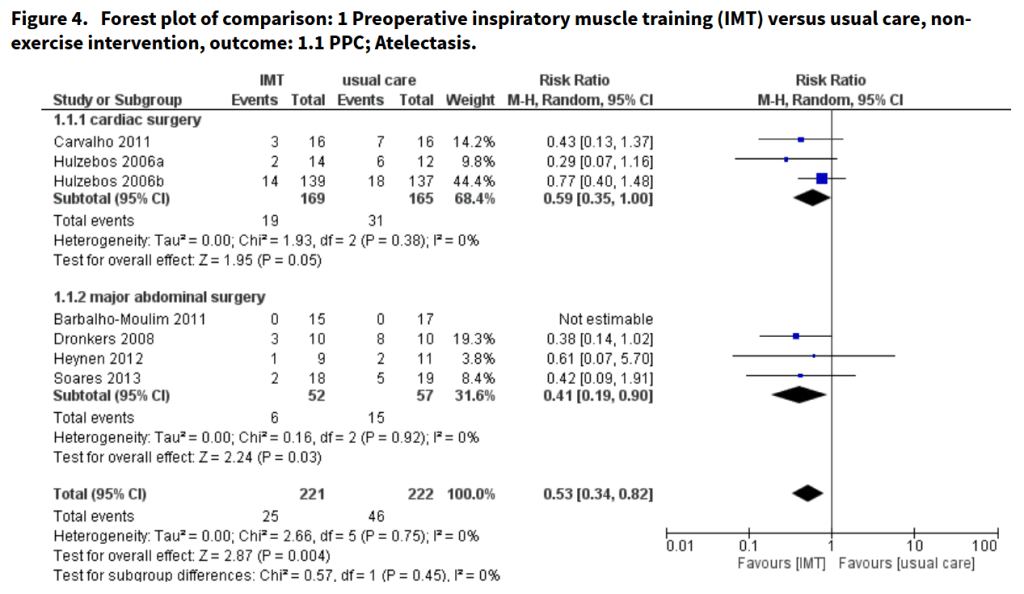
Preoperative inspiratory muscle training for postoperative pulmonary complications in adults undergoing cardiac and major abdominal surgery

“Despite advances in perioperative care in the last few decades, postoperative pulmonary complications (PPCs) are probably the leading cause of morbidity and mortality in adults undergoing chest and abdominal surgery. PPCs and cardiac complications are commonly regarded as the two major causes of perioperative problems in selected groups of patients undergoing these high-risk surgical procedures. However, PPCs are more common than postoperative cardiac complications and play a bigger role in mortality and healthcare costs. Despite these factors, the natural history of PPCs and the necessity of preventive strategies have not been well recognized in studies to date.”

Continue reading

Risk Factors for Chronic Pain after Open Ventral Hernia Repair by Underlay Mesh Placement

“Incisional hernia is one of the most frequent long-term complications after abdominal surgery (11%–20%). After primary repair, rates of recurrence range from 24% to 54%. It has been clearly demonstrated that the use of prostheses for a tension-free repair allows for a
significant reduction in recurrence rate, and even for the treatment of small defects. However, the type and position of the mesh and the mesh fixation technique used are still a matter of debate. The underlay position of the mesh allows for easy treatment of major parietal defects with limited dissection and potentially lower rates of mesh infection, but this position exposes the patient to the risk of small bowel occlusion and enterocutaneous fistula.”

Continue reading

Retained surgical sponges: occurrences and contributing factors.

“Unintended retentions of a foreign object after surgery (e.g. sponge, needle, and instrument) (URFO) remain the sentinel events most frequently reported to The Joint
Commission (TJC). Although these events have happened in other invasive procedures, URFOs are estimated to occur in 1:5500 surgeries. These serious adverse events have resulted in patient harm involving reoperation, readmission/prolonged hospital stay, infection or sepsis, fistulas/ bowel obstructions, visceral perforation, and death.”

Continue reading