Management of leakage and fistulas after bariatric surgery

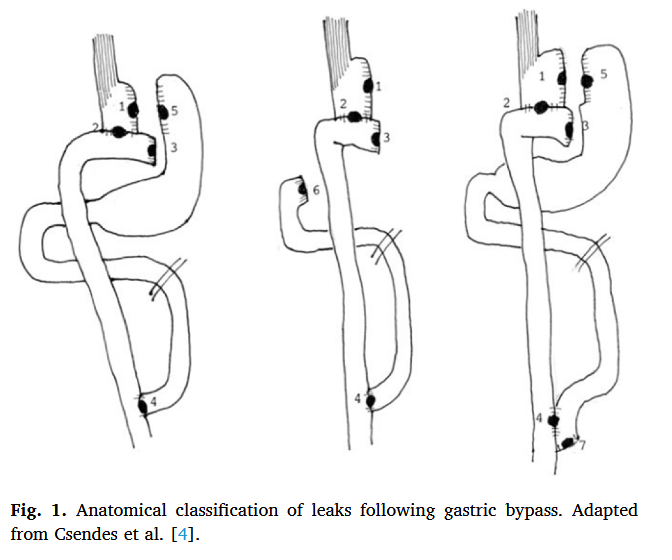
“Leaks and fistulas are among the most feared complications of bariatric surgery. Variable in presentation, acuity, and severity, these often require multimodal and multispecialty management strategies for optimal outcomes. Recent advancements in the realm of endoscopic therapies have made these integral to the treatment algorithm of post-operative leaks and fistulas. In this review, we will discuss the epidemiology, pathophysiology and classification of post-bariatric surgery defects and provide an in-depth assessment of current management strategies, with a focus on endoscopic therapies.”
Continue reading

Postoperative CD4 counts predict anastomotic leaks in patients withpenetrating abdominal trauma

“Survival following penetrating abdominal trauma has improved significantly, nonetheless despite enhanced resuscitation and surgical intervention strategies the immune mediated systemic inflammatory response syndrome (SIRS) continues to result in organ dysfunction and potential death. Posttraumatic lymphopenia or altered cell-mediated immunity as a result of decreased lymphocyte subsets may affect SIRS severity; however in penetrating trauma it is uncertain which factors may result in decreased CD4 counts and whether or not these changes affect postoperative outcomes, in particular anastomotic complications.”

Continue reading

Influence of diabetes on postoperative complications following colorectal surgery

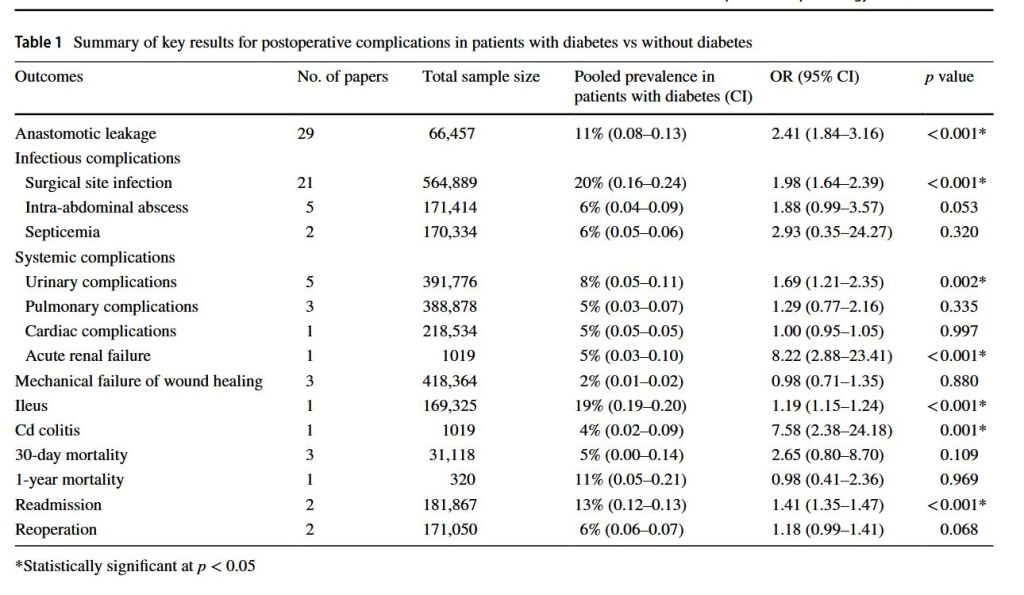
“Diabetes continues to be a significant comorbidity that needs to be accounted for during surgical planning. Furthermore, undiagnosed diabetes or ‘pre-diabetes’ results in an underestimation of the true number of patients with diabetes having colorectal
surgery, with studies reporting that the true prevalence of diabetes in hospitalised patients has been understated by up to 40%. In the existing literature, poor glycemic control and hyperglycemia has been associated with impaired wound healing and increased susceptibility to infections,leading to an elevated risk of postoperative complications.”

Continue reading

Mouse study: polyphosphate administration may be an alternative approach to prevent anastomotic leak induced by collagenolytic bacteria

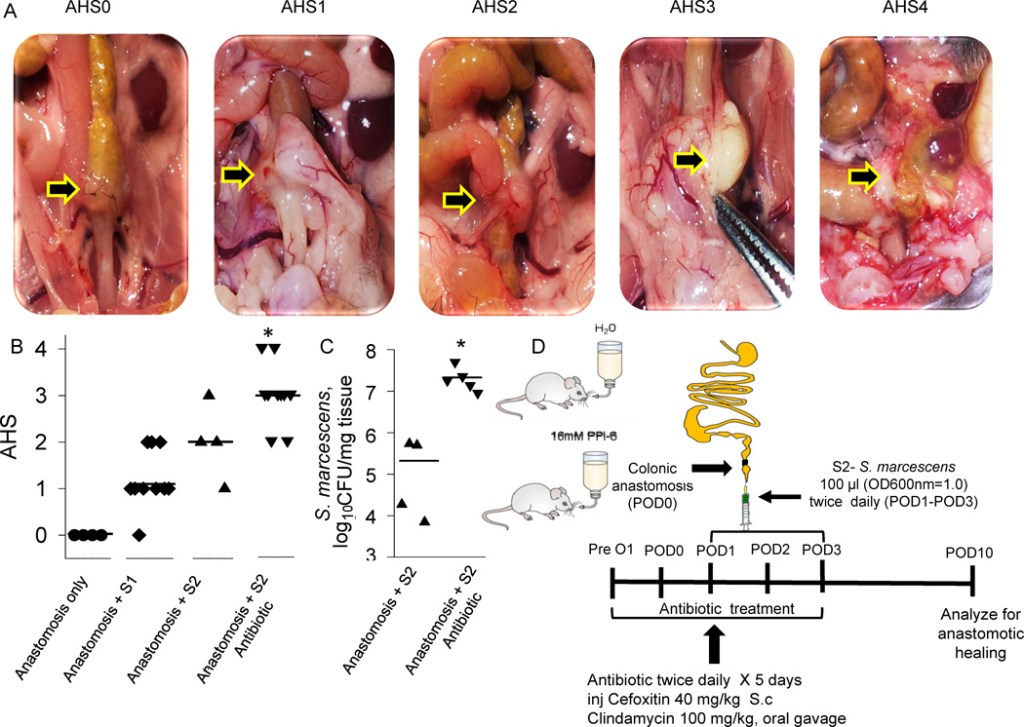
“Despite decades of descriptive research, the etiology and pathogenesis of AL remains unknown. Although there is compelling evidence that microbes are the primary drivers of the pathogenesis of anastomotic leak, few efforts have been aimed at understanding and controlling the microbes that may complicated anastomotic healing.”

“A microbial cause for anastomotic leak was first proposed over 60 years ago and has been confirmed in multiple studies. The main clinical evidence for a microbial cause of anastomotic leak is indirect and is based on clinical trials in which the use of oral non-absorbable antibiotics significantly reduce the incidence of anastomotic leak”

Continue reading

ketorolac use and the risk of anastomotic leak after colorectal surgery.

“This meta-analysis included seven studies with 400,822 patients. Our results demonstrated that ketorolac administration after surgery increases the risk of anastomotic leak [OR = 1.41, 95% CI: 0.81–2.49, Z = 1.21, P = 0.23].”

(Chen)

“Anastomotic leak is a serious complication that occurs after colorectal surgery, which can lead to increased morbidity and mortality. Non-selective NSAIDs (such as ketorolac) may affect the healing of the intestine by inhibiting the action of cyclooxygenase. NSAIDs have been shown to weaken granulocyte function, which is an essential part of the acute phase of wound healing. NSAIDs may also inhibit epithelial cell migration and mucosal recovery, which are important in the pathophysiology of intestinal ulcer healing. These findings suggest a potential biological mechanism that may explain the association identified in this study.”

Chen W, et al Administration After Colorectal Surgery Increases Anastomotic Leak Rate: A Meta-Analysis and Systematic Review. Front Surg. 2022 Feb 9;9:652806. Free Full Text

Article of interest: Serum C-reactive protein is a useful marker to exclude anastomotic leakage after colorectal surgery

Messias BA, et al. Serum C-reactive protein is a useful marker to exclude anastomotic leakage after colorectal surgery. Sci Rep. 2020 Feb 3;10(1):1687.

Abstract: Anastomotic leakage is a complication of colorectal surgery. C-reactive protein (CRP) is an acute-phase marker that can indicate surgical complications. We determined whether serum CRP levels in patients who had undergone colorectal surgery can be used to exclude the presence of anastomotic leakage and allow safe early discharge. We included 90 patients who underwent colorectal surgery with primary anastomosis. Serum CRP levels were measured retrospectively on postoperative days (PODs) 1 – 7. Patients with anastomotic leakage (n = 11) were compared to those without leakage (n = 79). We statistically analysed data and plotted receiver operating characteristic curves. The incidence of anastomotic leakage was 12.2%. Diagnoses were made on PODs 3 – 24. The overall mortality rate was 3.3% (18.2% in the leakage group, 1.3% in the non-leakage group; P < 0.045). CRP levels were most accurate on POD 4, with a cutoff level of 180 mg/L, showing an area under the curve of 0.821 and a negative predictive value of 97.2%. Lower CRP levels after POD 2 and levels <180 mg/L on POD 4 may indicate the absence of anastomotic leakage and may allow safe discharge of patients who had undergone colorectal surgery with primary anastomosis.

Continue reading