Definitive surgical treatment of enterocutaneous fistula

“Enterocutaneous Fistula (ECF) is defined as an abnormal connection between the gastrointestinal tract and the skin, and it requires labor-intensive medical management and surgical expertise. Complex wound management, severe malnutrition, frequent infectious complications, chronic pain, and depression require significant investment of health care resources and make the short-term and longterm care of these patients difficult. The
subsequent operative management often requires lengthy procedures in hostile abdomens with abundant adhesions and surrounding inflammation. In addition to the significant risk of mortality, morbidity can be equally as devastating.”

Continue reading

Surgical Treatment of Enterocutaneous Fistula

“Enterocutaneous Fistula (ECF) is defined as an abnormal connection between the gastrointestinal tract and the skin, and it requires labor-intensive medical management and surgical expertise. Complex wound management, severe malnutrition, frequent infectious complications, chronic pain, and depression require significant investment of health care resources and make the short-term and long-term care of these patients difficult.”

Continue reading

Management of enterocutaneous fistulas

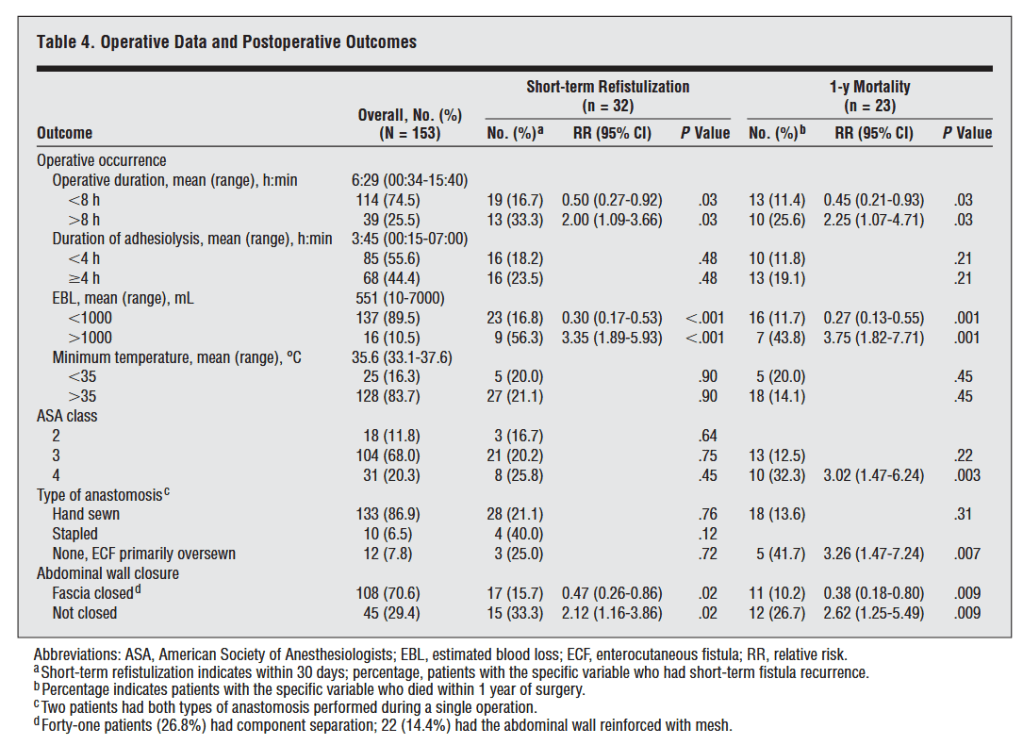
Owen RM, Love TP, Perez SD, Srinivasan JK, Sharma J, Pollock JD, Haack CI, Sweeney JF, Galloway JR. Definitive surgical treatment of enterocutaneous fistula: outcomes of a 23-year experience. JAMA Surg. 2013 Feb;148(2):118-26.

Full-text for Emory users.

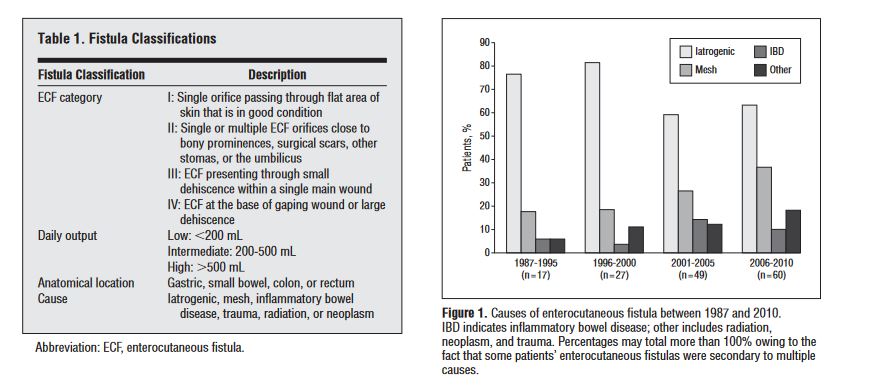
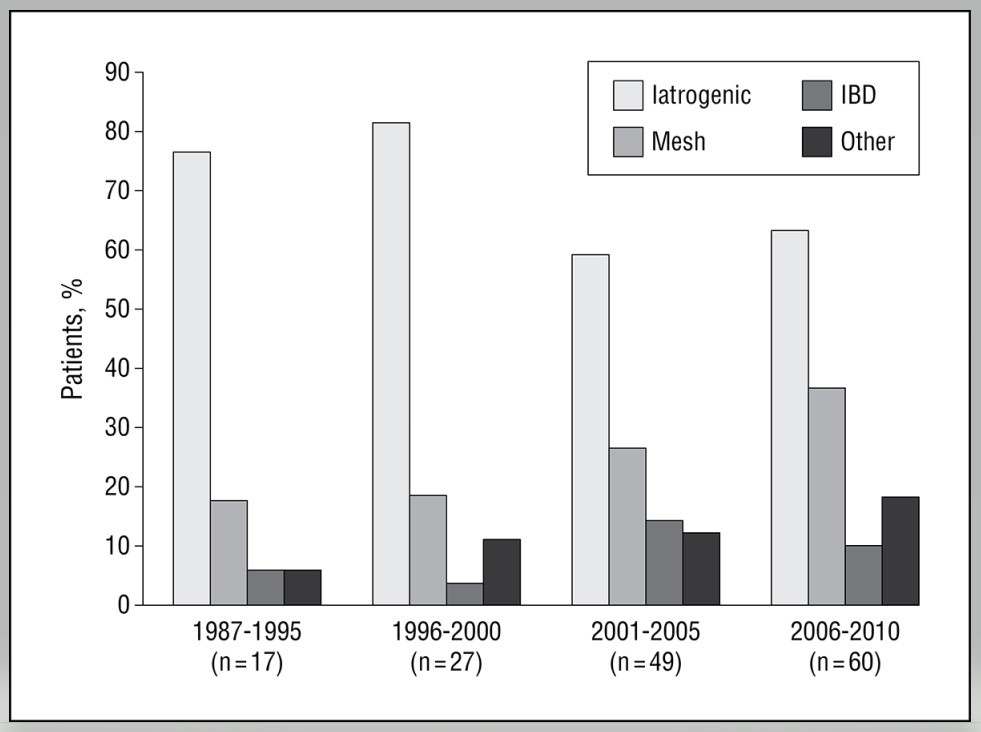
Figure 1. Causes of enterocutaneous fistula between 1987 and 2010. IBD indicates inflammatory bowel disease; other includes radiation, neoplasm, and trauma. Percentages may total more than 100% owing to the fact that some patients’ ECFs were secondary to multiple causes.

Continue reading

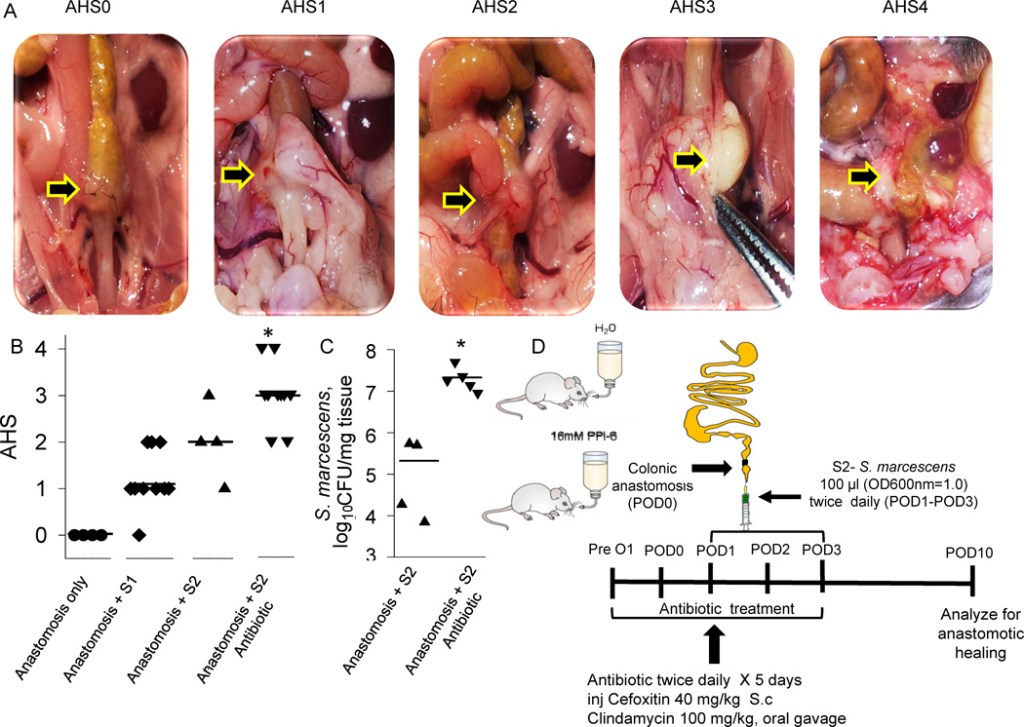
Mouse study: polyphosphate administration may be an alternative approach to prevent anastomotic leak induced by collagenolytic bacteria

“Despite decades of descriptive research, the etiology and pathogenesis of AL remains unknown. Although there is compelling evidence that microbes are the primary drivers of the pathogenesis of anastomotic leak, few efforts have been aimed at understanding and controlling the microbes that may complicated anastomotic healing.”

“A microbial cause for anastomotic leak was first proposed over 60 years ago and has been confirmed in multiple studies. The main clinical evidence for a microbial cause of anastomotic leak is indirect and is based on clinical trials in which the use of oral non-absorbable antibiotics significantly reduce the incidence of anastomotic leak”

Continue reading

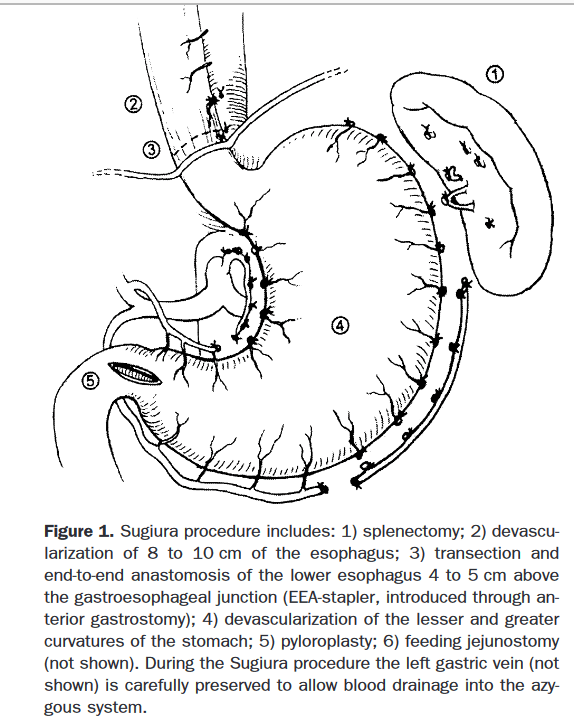
Indication of a Modified Sugiura Procedurein the Management of Variceal Bleeding

“Study results indicate that the modified Sugiura procedure is an effective rescue therapy in patients who are not candidates for selective shunts, transhepatic porto-systemic shunt, or transplantation. Emergency settings and decreased liver function are associated with an increased morbidity.”

Continue reading

Intraoperative perfusion assessment in mesenteric ischemia

Bryski MG, et al. Techniques for intraoperative evaluation of bowel viability in mesenteric ischemia: A review. Am J Surg. 2020 Aug;220(2):309-315. Full-text for Emory users.

“Comparison studies in animal models and clinical experience featuring fluorescein flowmetry have consistently demonstrated the superiority of dye-based perfusion monitoring for intraoperative bowel assessment as compared to standard clinical criteria, DUS, and pulse oximetry/PPG. (45,46,47,53,54) However, these results are not universal, with some large animal models demonstrating no difference between fluorescein, DUS, and PPG, and an additional study showing that DUS actually outperforms fluorescein for intraoperative bowel assessment. (13,18,43)” (p. 312)

Continue reading

Step-up vs open necrosectomy for necrotizing pancreatitis

Here are recent publications on the management of necrotizing pancreatitis.


BACKGROUND: The 2010 randomized PANTER trial in (infected) necrotizing pancreatitis found a minimally invasive step-up approach to be superior to primary open necrosectomy for the primary combined endpoint of mortality and major complications, but long-term results are unknown.

NEW FINDINGS: With extended follow-up, in the step-up group, patients had fewer incisional hernias, less exocrine insufficiency and a trend towards less endocrine insufficiency. No differences between groups were seen for recurrent or chronic pancreatitis, pancreatic endoscopic or surgical interventions, quality of life or costs.

IMPACT: Considering both short and long-term results, the step-up approach is superior to open necrosectomy for the treatment of infected necrotizing pancreatitis.

Continue reading