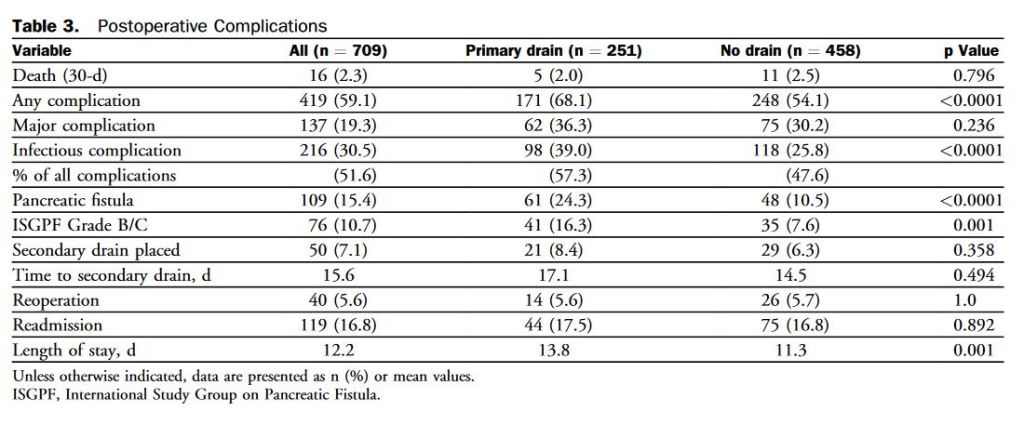
Is it time to abandon routine operative drain use?

“Postoperative pancreatic fistula (POPF) is a potentially devastating complication after pancreatic resection, seen in 5% to 30% of patients. Depending on severity, POPF may be associated with infectious complications, reoperation, increased length of hospital stay, readmission, and even death. Historically, surgeons placed drains routinely for many abdominal procedures to control potential leaks from various anastomoses. However, this practice has been abandoned by many surgeons over the last 2 decades because no benefit to routine abdominal drainage has been observed from several randomized controlled trials for resections of the colon and rectum, gallbladder, and liver.”
Continue reading

Management of pancreatic pseudocysts

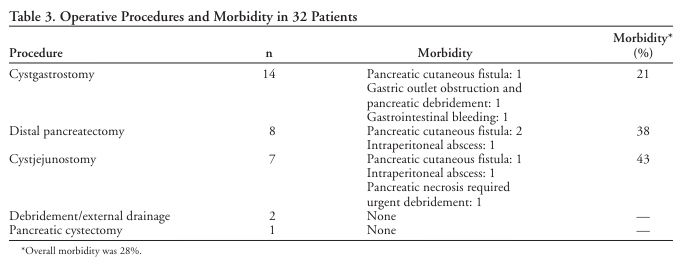
“Operative internal drainage has been standard treatment for chronic unresolved pancreatic pseudocysts (PPs). Recently, percutaneous external drainage (PED) has become the primary mode of treatment at many medical centers.”

“ Operative management for PPs appears to be superior to CT-guided PED. Although the later was often successful, it required major salvage procedures in one third of the patients. An expectant management protocol may be suitable for selected patients.”

Continue reading

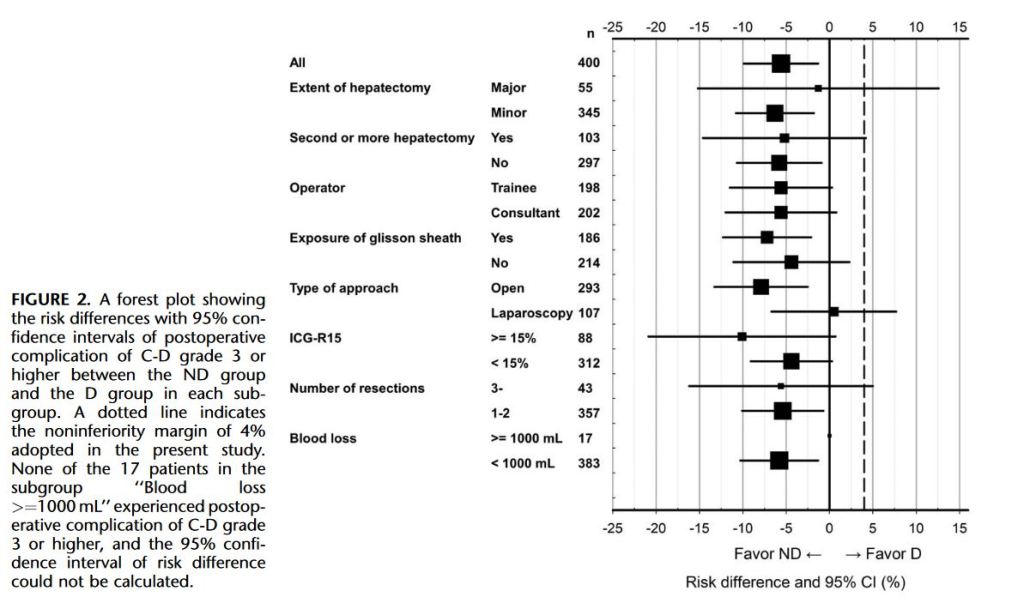
Drain Placement After Uncomplicated Hepatic Resection Increases Severe Postoperative Complication Rate

“Advances in surgical techniques and perioperative management over the last 2–3 decades have enabled the safe performance of hepatic resections. In the 1980s, when the perioperative mortality was reported to be as high as around 10%, drain placement was
considered to be necessary so as to provide information about intraabdominal adverse events promptly and for prophylactic drainage. However, as the necessity of drain placement in other surgical fields has been ruled out and as the incidence of life-threatening adverse
events after hepatic resection decreased, several randomized controlled trials (RCTs) were performed; the conclusions of these trials were that drain placement was not necessary. However, some of them lacked a primary endpoint and calculation of sample size; in
the other studies, the primary endpoint was the incidence of wound-related complication, most of which could be resolved using antibiotics or bed-side opening of the wound, corresponding to Clavien-Dindo (C-D) grade 11 2 or even 1.”

Continue reading

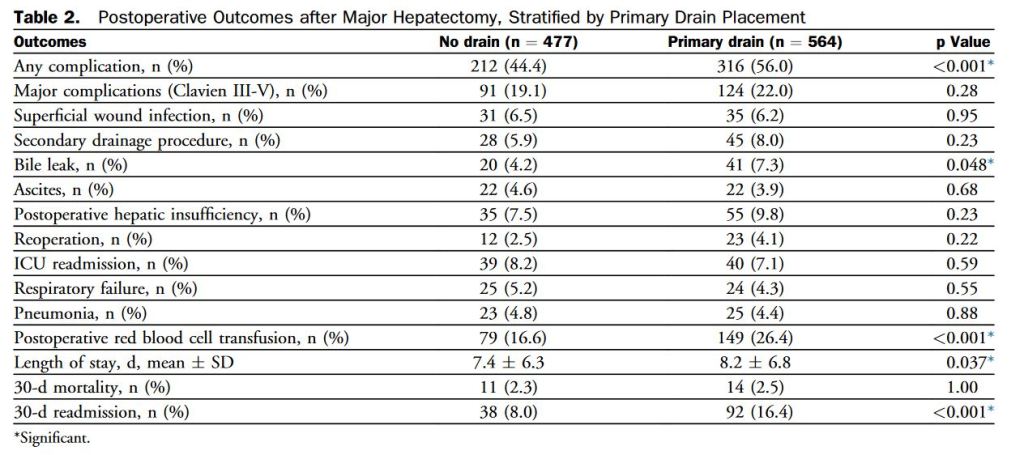
Value of primary operative drain placement after major hepatectomy

“Historically, prophylactic intraoperative peritoneal drain placement has been advocated after hepatectomy in order to identify and drain bile leaks and decrease the risk of potential perihepatic fluid collections and abscess formation postoperatively. Several small randomized trials have suggested, however, that routine abdominal drainage after elective liver resection may not be necessary.”

Continue reading

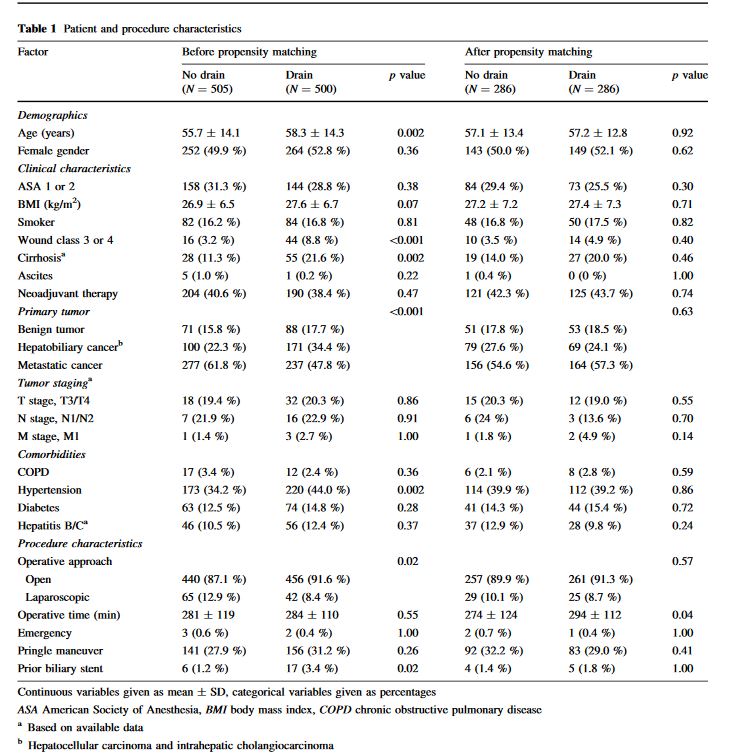
Role of Drain Placement in Major Hepatectomy

“The use of drains in surgery has been practiced for many years. Prophylactic drainage of the abdominal cavity is employed to prevent the formation of collections and abscesses and for early detection of complications. For years, there has been debate as to whether the use of prophylactic drains has more advantages than disadvantages. For many procedures such as routine colon resection, cholecystectomy, and appendectomy, the use of prophylactic drains has been abandoned as studies have shown that drains do not lower the rate of postoperative complications. However, there is still debate of whether to leave a drain routinely after major liver resection.”

Continue reading

WHO Global Guidelines for the Prevention of SSIs: Antimicrobial prophylaxis in the presence of a drain and wound drain removal

Global Guidelines for the Prevention of Surgical Site Infection. Geneva: World Health Organization; 2018. Web Appendix 27, Summary of a systematic review on antimicrobial prophylaxis in the presence of a drain and wound drain removal.

In conclusion, the available evidence can be summarized as follows:

Prolonged antibiotic prophylaxis in the presence of a wound drain vs. perioperative prophylaxis alone (PICO question 1, comparison 1)

Overall, a low quality of evidence shows that prolonged antibiotic prophylaxis in the presence of a wound drain has neither benefit nor harm in reducing the SSI rate when compared to perioperative prophylaxis alone (single dose before incision and possible intraoperative additional dose/s according to the duration of the operation).

Continue reading

Step-up vs open necrosectomy for necrotizing pancreatitis

Here are recent publications on the management of necrotizing pancreatitis.


BACKGROUND: The 2010 randomized PANTER trial in (infected) necrotizing pancreatitis found a minimally invasive step-up approach to be superior to primary open necrosectomy for the primary combined endpoint of mortality and major complications, but long-term results are unknown.

NEW FINDINGS: With extended follow-up, in the step-up group, patients had fewer incisional hernias, less exocrine insufficiency and a trend towards less endocrine insufficiency. No differences between groups were seen for recurrent or chronic pancreatitis, pancreatic endoscopic or surgical interventions, quality of life or costs.

IMPACT: Considering both short and long-term results, the step-up approach is superior to open necrosectomy for the treatment of infected necrotizing pancreatitis.

Continue reading