Management and Morbidity of Major Pelvic Hemorrhage in Complex Abdominopelvic Surgery

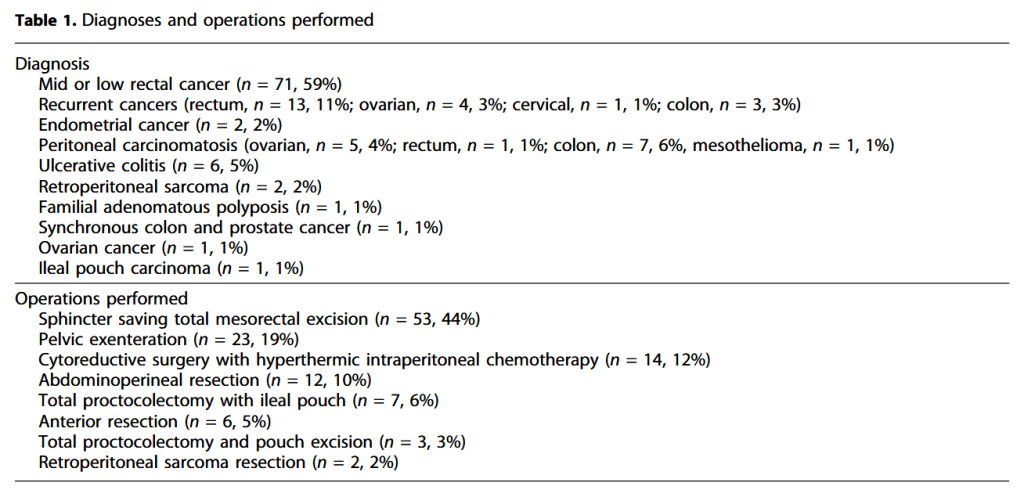
“Complex abdominopelvic surgery (CAPS) includes a wide variety of difficulties related to primary disease and hostile intrapelvic environment. Any radical abdominopelvic operation which is not standardized is complex. Hence, radical oncologic operations for the primary advanced or recurrent carcinoma of pelvic organs, revisional operations for failed restorative operations for maintaining intestinal continuity are considered as CAPS.”

Continue reading

Management of pericannular bleeding after peritoneal dialysis catheter placement

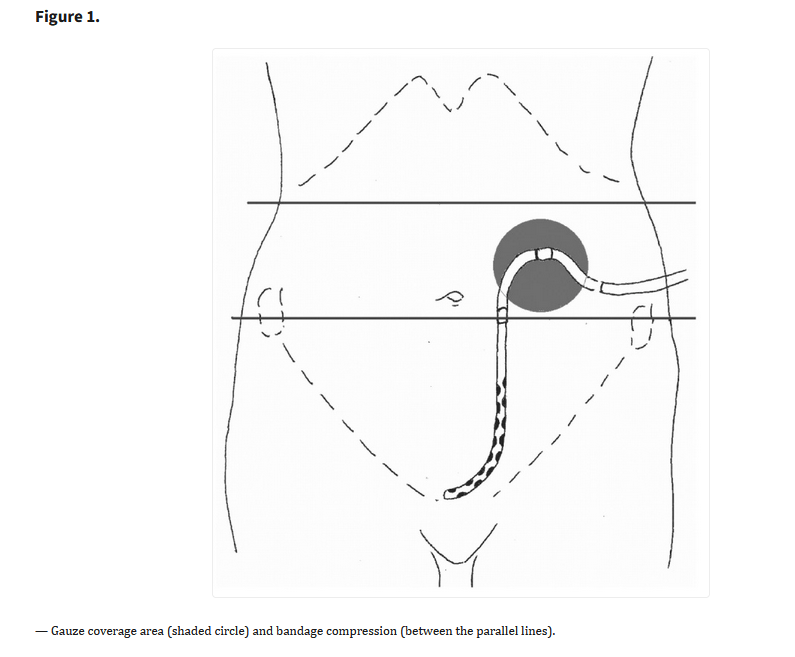
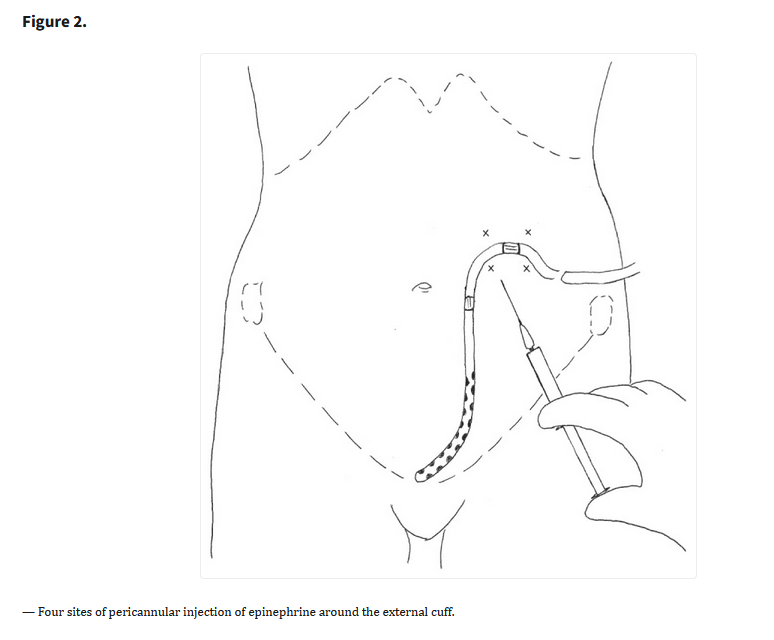
“Pericannular bleeding is a common acute complication developed within 1 month after peritoneal dialysis (PD) catheter insertion, especially in patients subjected to long subcutaneous tunneling. We designed a protocol for the management of acute postoperative pericannular bleeding.
Acute pericannular bleeding is defined as the need to change the dressing more than twice daily within 2 weeks of the operation.”

Continue reading

Bleeding After Hemorrhoidectomy in Patients on Anticoagulation Medications

“It has been estimated that approximately 4.4% of the United States population has symptomatic hemorrhoids, contributing to as many as 2.5 million ambulatory visits annually. Excisional hemorrhoidectomy is the preferred treatment for grade 3-4 hemorrhoids and patients unresponsive to non-operative treatment. Despite being a relatively quick, outpatient procedure, one potential serious complication includes post-hemorrhoidectomy bleeding. Reported rates of this complication have varied. Studies suggest that .4-10% of hemorrhoidectomy cases will be complicated by bleeding and many requiring a second intervention. Among risk factors that have been associated with delayed bleeding are male sex, post-operative constipation, and the use of laxatives. Scarce data exist on the association of baseline oral anticoagulation or antiplatelet medications with delayed bleeding.”

Continue reading

Hemorrhage in Essential Thrombocythemia orPolycythemia Vera

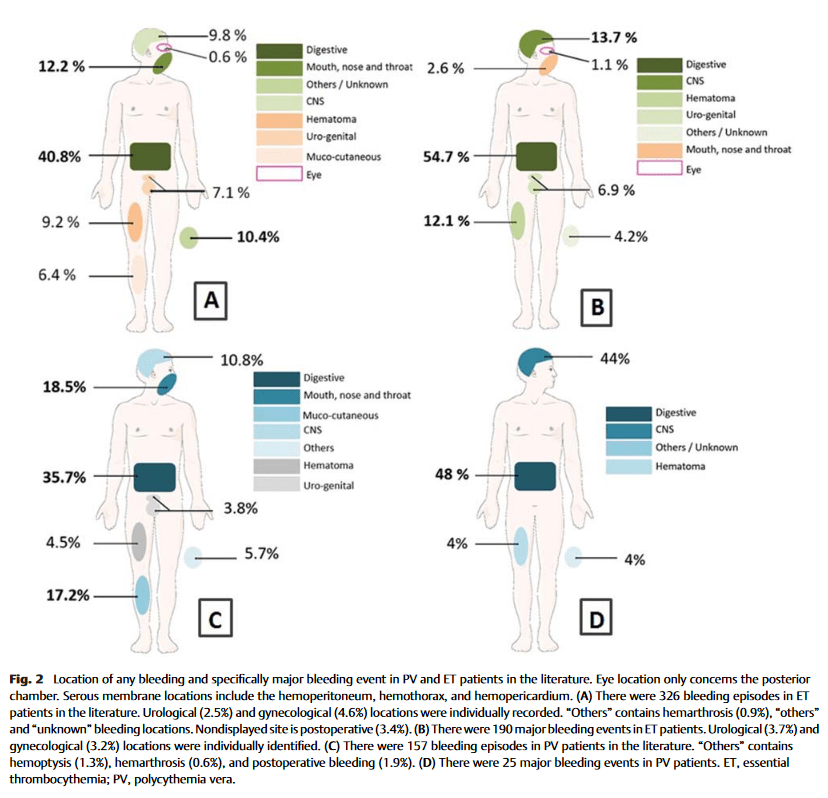
“Hemorrhage is a well-known complication of essential thrombocythemia (ET) and polycythemia vera (PV), but evidence-based data on its management and prevention are lacking to help inform clinicians”

“Myeloproliferative neoplasms (MPNs) are a group of hematological malignancies individualized in the 2016 World Health Organization (WHO) classification.1 They are subdivided into two groups: chronic myeloid leukemia and Philadelphia-negative MPNs, which are further divided into essential thrombocythemia (ET), polycythemia vera (PV), primitive myelofibrosis (PMF), and prefibrotic myelofibrosis.Philadelphia-negative MPNs are characterized by the chronic proliferation of myeloid cells in bone marrow and three main clonal mutations.”

Continue reading

Periprocedural bridging anticoagulation

Rechenmacher SJ, Fang JC. Bridging Anticoagulation: Primum Non Nocere. J Am Coll Cardiol. 2015 Sep 22;66(12):1392-403.

Full-text for Emory users.

Conclusions: Periprocedural anticoagulation management is a common clinical dilemma with limited evidence (but 1 notable randomized trial) to guide our practices. Although bridging anticoagulation may be necessary for those patients at highest risk for TE, for most patients it produces excessive bleeding, longer length of hospital stay, and other significant morbidities, while providing no clear prevention of TE. Unfortunately, contemporary clinical practice, as noted in physician surveys, continues to favor interruption of OAC and the use of bridging anticoagulation. While awaiting the results of additional randomized trials, physicians should carefully reconsider the practice of routine bridging and whether periprocedural anticoagulation interruption is even necessary.

Central Illustration. Bridging Anticoagulation: Algorithms for Periprocedural Interrupting and Bridging Anticoagulation. Decision trees for periprocedural interruption of chronic oral anticoagulation (top) and for periprocedural bridging anticoagulation (bottom). OAC = oral anticoagulation.

Continue reading

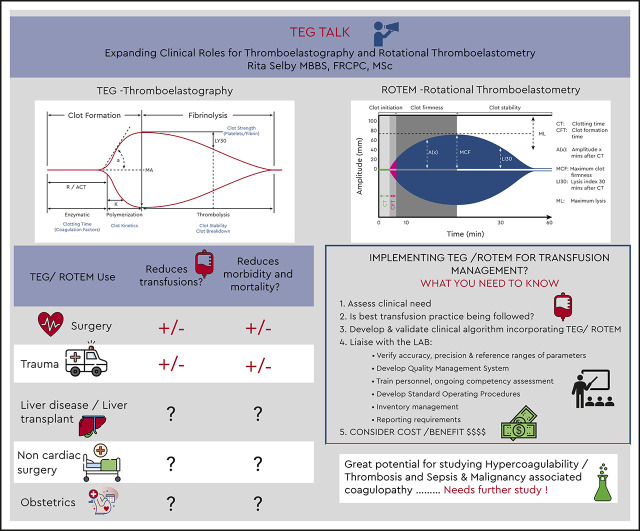
Utility of thromboelastography to guide blood product transfusion in surgical settings.

Selby R. “TEG talk”: expanding clinical roles for thromboelastography and rotational thromboelastometry. Hematology Am Soc Hematol Educ Program. 2020 Dec 4;2020(1): 67-75.

Free full-text.

Click to enlarge. 

“Viscoelastic assays (VEAs) that include thromboelastography and rotational thromboelastometry add value to the investigation of coagulopathies and goal-directed management of bleeding by providing a complete picture of clot formation, strength, and lysis in whole blood that includes the contribution of platelets, fibrinogen, and coagulation factors. Conventional coagulation assays have several limitations, such as their lack of correlation with bleeding and hypercoagulability; their inability to reflect the contribution of platelets, factor XIII, and plasmin during clot formation and lysis; and their slow turnaround times. VEA-guided transfusion algorithms may reduce allogeneic blood exposure during and after cardiac surgery and in the emergency management of trauma-induced coagulopathy and hemorrhage. However, the popularity of VEAs for other indications is driven largely by extrapolation of evidence from cardiac surgery, by the drawbacks of conventional coagulation assays, and by institution-specific preferences. Robust diagnostic studies validating and standardizing diagnostic cutoffs for VEA parameters and randomized trials comparing VEA-guided algorithms with standard care on clinical outcomes are urgently needed. Lack of such studies represents the biggest barrier to defining the role and impact of VEA in clinical care.”

Continue reading

The PAUSE study: Safety of perioperative DOAC management in patients with atrial fibrillation

A discussion during a previous conference included the perioperative management of patients with atrial fibrillation receiving a direct oral anticoagulant (DOAC).


Reference: Douketis JD, et al. Perioperative management of patients with atrial fibrillation receiving a direct oral anticoagulant. JAMA Internal Medicine. 2019 Aug 5; doi:10/1001/jamainternmed.2019.2431

Summary: Each year, 1 in 6 patients with AF, or an estimated 6 million patients worldwide, will require perioperative anticoagulant management. When DOAC regimens became available for clinical use in AF, starting in 2010, no studies had been conducted to inform the timing of perioperative DOAC therapy interruption and resumption, whether heparin bridging should be given, and whether preoperative coagulation function testing was needed. Uncertainty about the perioperative management of DOACs may be associated with unsubstantiated practices and increased harm to patients.

Continue reading