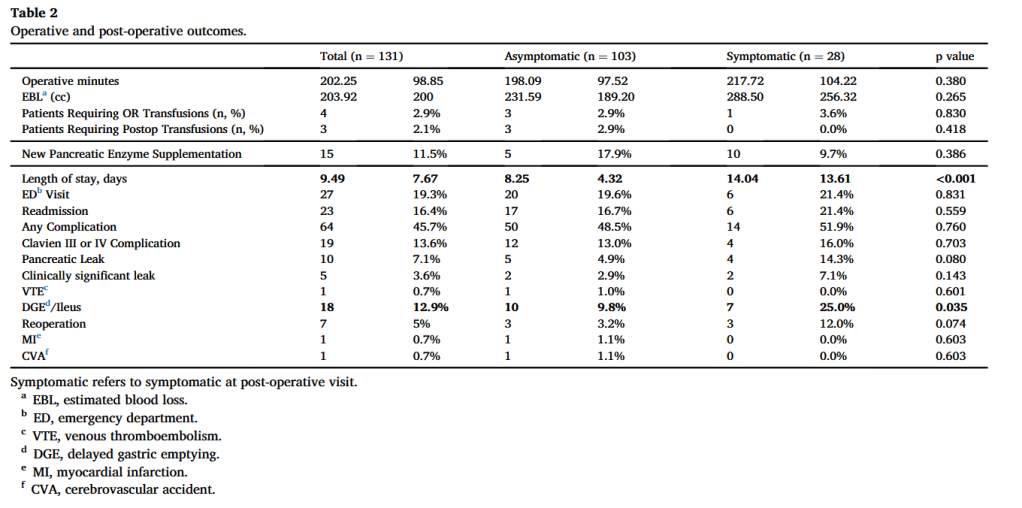
Long-term symptom resolution following the surgical management of chronic pancreatitis

“Chronic pancreatitis is characterized by recurrent inflammation and fibrosis, resulting in pervasive symptoms of abdominal pain, early satiety, nausea, malnutrition, and pancreatic insufficiency. Though there are limited data on the true prevalence of chronic pancreatitis, an
estimated 5 to 14 per 100,000 patients are diagnosed annually in the US. While the overall incidence and prevalence of chronic pancreatitis remain relatively low, it contributes a significant morbidity and financial burden, with an annual healthcare cost exceeding $3 billion, largely due to increased utilization and symptom palliating efforts. Furthermore,
disability secondary to chronic pancreatitis symptoms creates a substantial personal burden, with increased work absenteeism and reducedquality of life. Treatment efforts initially focus on symptom management and reversal of instigating factors, consisting primarily of medical
and endoscopic techniques; however, up to 50 % of all cases of chronic pancreatitis eventually require surgical intervention due to persistent symptoms, most commonly debilitating abdominal pain. Additionally, current data suggest that surgery is superior to endoscopy in maintaining symptom resolution and preserving pancreatic function.”
Continue reading

Implications of leukocytosis following distal pancreatectomy splenectomy (DPS) and association with postoperative complications

“Distal pancreatectomy with splenectomy (DPS) is performed to remove pathology of the body and/or tail of the pancreas. The spleen and the left side of the pancreas share blood supply, and often tumor involvement, thus splenectomy is often performed along with distal
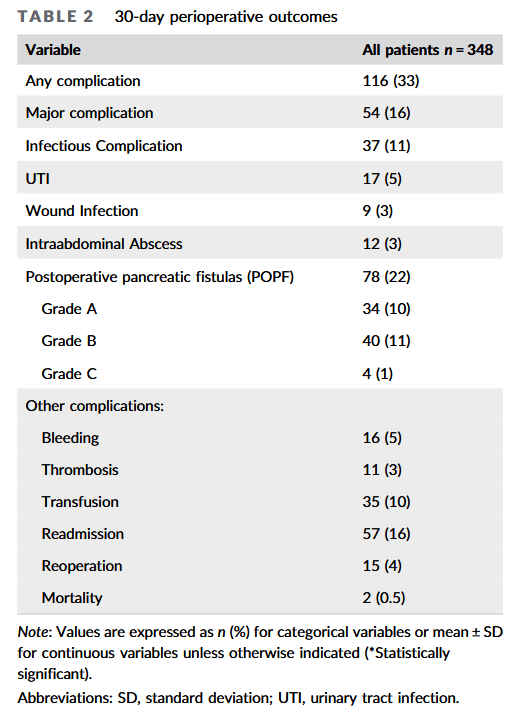
pancreatectomy. DPS is an operation that carries a greater than 30% risk of postoperative complications, including infection, postoperative pancreatic fistula (POPF), intraabdominal abscesses, and pneumonia, among others. In addition to these immediate postoperative
complications, splenectomy itself is known to confer long‐term susceptibility to infection, sepsis, thrombosis, and other sequelae. Our goal was to identify factors that could prompt early investigation and treatment of both infectious and major complications.”

Continue reading

Efficacy of stapler versus hand-sewn closure after distal pancreatectomy (DISPACT)

“Resections of the pancreas reaching to the left of the superior mesenteric vein are defined as distal pancreatectomy. Most distal pancreatectomies are done electively (84%) as a result of chronic pancreatitis (24%), other benign diseases (22%), malignant diseases (18%), neuroendocrine tumours (14%), and pancreatic pseudocysts (6%). The remaining 16% are emergency cases after abdominal trauma or miscellaneous pathological
diagnoses. A systematic review supports the evidence that postoperative pancreatic fistula formation represents a major source of postoperative morbidity (13–64%) and is associated with several further complications, such as intra-abdominal abscess, wound infection, sepsis, malabsorption, and haemorrhage.
A meta-analysis of the most favoured and reported techniques (stapler trans-section and closure vs scalpel trans-section and hand-sewn closure of the pancreatic remnant) did
not define the optimum surgical technique of pancreatic stump closure. Therefore, the multicentre randomised DISPACT trial was designed to assess the effect of stapler
versus hand-sewn closure on formation of postoperative pancreatic fistula after distal pancreatectomy.”

Continue reading

Post-pancreatectomy haemorrhage management stratified according to ISGPS grading

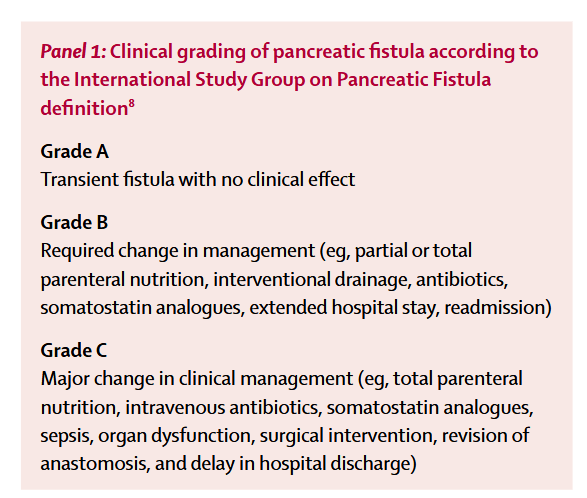
“Despite improvements in the perioperative care of patients undergoing pancreatic surgery, the risk of major complications including anastomotic leak (6–24%), post-operative pancreatic fistula (POPF) (10–40%) and delayed gastric emptying (20–34%) persist. Post-pancreatectomy haemorrhage (PPH) is a less common, but particularly hazardous complication with mortality rates of up to 40%. However, varying definitions and incidences of PPH have been previously reported, which have hindered comparison of optimal treatment modalities.”

Continue reading

Perioperative protocol for pancreatic resections in patients who refuse blood transfusions.

“The refusal of blood transfusion for surgical procedures at high risk of bleeding, such as pancreatic resection, forces surgeons to face ethical challenges and raises concerns about appropriate perioperative management. In the last two decade the rate of transfusion in high volume centers has gradually decreased thanks to the application of patient blood management (PBM) protocols.”

“In our single-institution experience, patients that categorically refused transfusion were Jehovah’s Witnesses (JW). JW is a religious movement, membership in which accounts for about 0.3% of Western countries’ populations, with USA and Italy having the highest percentages of followers. JW followers believe neither whole blood nor its four major components, namely red cells, white cells, platelets and plasma, should be donated, stored, or accepted in any circumstance, even in life-threatening situations. Advances in transfusion medicine have led the JW’s denomination to modify its position about what is deemed acceptable.”

Continue reading

Risk Factors for Pancreatic Fistula after Stapled Gland Transection

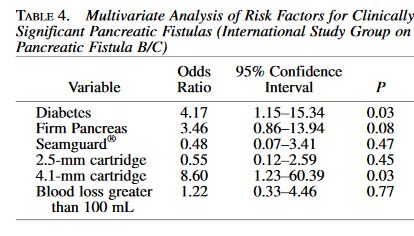
“Distal Pancreatectomy (DP) is performed for both benign and malignant conditions affecting the body and tail of the pancreas. DP is also performed for chronic pancreatitis and occasionally for abdominal trauma. With improvements in imaging, surgical technology and technique, and postoperative care, the mortality from DP at high-volume centers is approximately 1 per cent. Despite the low mortality rate from DP, the morbidity rate from this procedure remains high (24 to 64 per cent in some series) with pancreatic fistula (PF) as
a common concern. Even with the use of linear stapling devices, fibrin glue, somatostatin analogs, thermal sealing devices, and mesh staple line reinforcement, PF continues to be a burden to patient quality of life and healthcare resources for those patients undergoing DP.”

Continue reading

Predictors of Short-Term Readmission After Pancreaticoduodenectomy

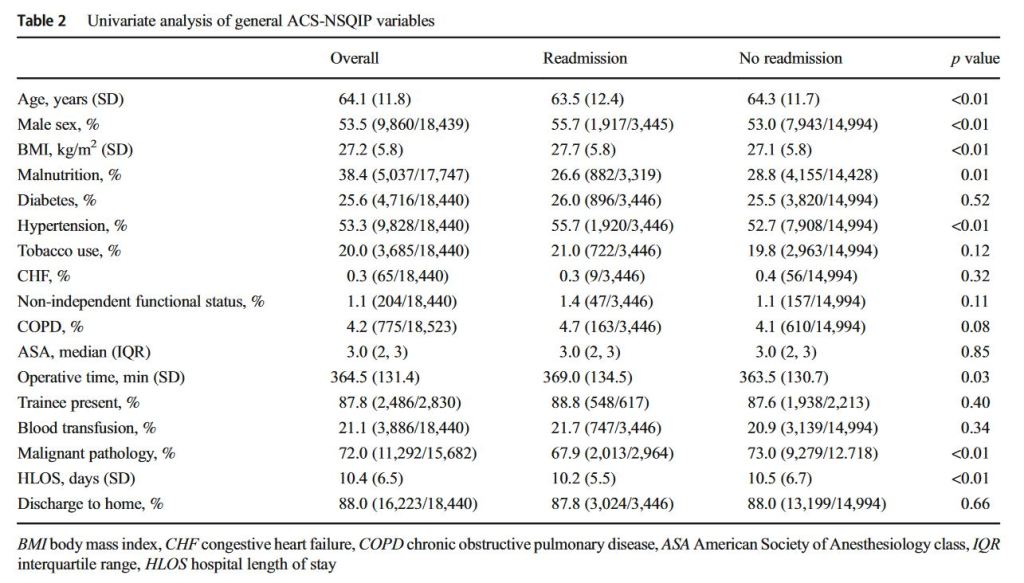
“Readmissions are a common complication after pancreaticoduodenectomy and are increasingly being used as a performance metric affecting quality assessment, public reporting, and reimbursement. This study aims to identify general and pancreatectomy-specific factors contributing to 30-day readmission after pancreaticoduodenectomy, and determine the additive value of incorporating pancreatectomy-specific factors into a large national dataset.”
“Large registry analyses of pancreatectomy outcomes are markedly improved by the incorporation of granular procedure-specific data. These data emphasize the need for prevention and careful management of perioperative infectious complications, fluid management, thromboprophylaxis, and pancreatic fistulae.”

Continue reading