Cancer risk in Peutz-Jeghers syndrome

Peutz-Jeghers syndrome (PJS) is an autosomally dominant disorder associated with mutations in tumor suppressor gene STK11, and characterized by gastrointestinal polyposis, mucocutaneous pigmentation, and cancer predisposition:

  • up to 93% lifetime risk of any cancer in affected individuals, and cancer often develops around age 40-49 years; associated cancers include cancers of the small bowel, stomach, pancreas, breast, ovary, cervix, lung, and testes
  • colon cancer risk is reported at 39%, and typical age of colorectal cancer diagnosis is 42-46 years in affected patients
  • rarely, PJS may be idiopathic and not associated with STK11 mutations
Continue reading

Percutaneous Hepatic Perfusion (PHP) with Melphalan

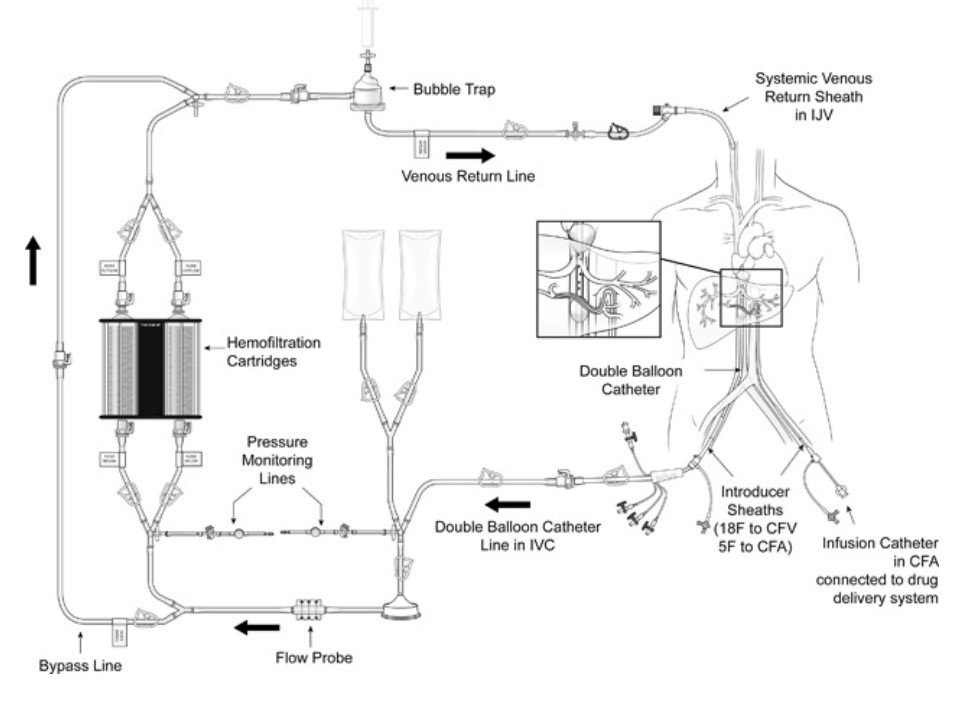
Karydis I, Gangi A, Wheater MJ, et al. Percutaneous hepatic perfusion with melphalan in uveal melanoma: A safe and effective treatment modality in an orphan disease. J Surg Oncol. 2018 May;117(6):1170-1178.

Figure 1. Melphalan percutaneous hepatic perfusion (M-PHP) circuit.

Click to enlarge.

Results: A total of 51 patients received 134 M‐PHP procedures (median of 2 M‐PHPs). 25 (49%) achieved a partial (N = 22, 43.1%) or complete hepatic response (N = 3, 5.9%). In 17 (33.3%) additional patients, the disease stabilized for at least 3 months, for a hepatic disease control rate of 82.4%. After median follow‐up of 367 days, median overall progression free (PFS) and hepatic progression free survival (hPFS) was 8.1 and 9.1 months, respectively and median overall survival was 15.3 months. There were no treatment related fatalities. Non‐hematologic grade 3‐4 events were seen in 19 (37.5%) patients and were mainly coagulopathic (N = 8) and cardiovascular (N = 9).

Continue reading

Article of interest: Comparison of three methods of liver retraction in laparoscopic Roux-en-Y gastric bypass

Goel R, et al. Randomized controlled trial comparing three methods of liver retraction in laparoscopic Roux-en-Y gastric bypass. Surg Endosc. 2013 Feb;27(2):679-84.

Full-text for Emory users.

Background: This study aimed to evaluate differences between three methods of liver retraction during laparoscopic Roux-en-Y Gastric bypass (LRYGB) and to compare novel liver retraction techniques with the traditional mechanical liver retractor in a randomized controlled trial.

Methods: In this study, 60 obese patients (26 males and 34 females) who underwent LRYGB between January and July 2010 were randomized to one of three groups (20 in each): group 1 (Nathanson liver retractor), group 2 (liver suspension tape), and group 3 (V-shaped liver suspension technique [V-LIST]). Data regarding demographics (age, sex, body mass index); liver function test (LFT) just before surgery; postoperative results immediately, then 18 h, 1 week, and 1 month after surgery; operative data, and visual analog scale (VAS) for pain on postoperative days (PODs) 1 and 2 were calculated and analyzed.

Continue reading

Article of interest: Management of the difficult duodenal stump in penetrating duodenal ulcer disease: a comparative analysis of duodenojejunostomy with “classical” stump closure (Nissen-Bsteh)

Vashist YK, et al. Management of the difficult duodenal stump in penetrating duodenal ulcer disease: a comparative analysis of duodenojejunostomy with “classical” stump closure (Nissen-Bsteh). Langenbecks Arch Surg. 2012 Dec;397(8):1243-9.

Full-text for Emory users.

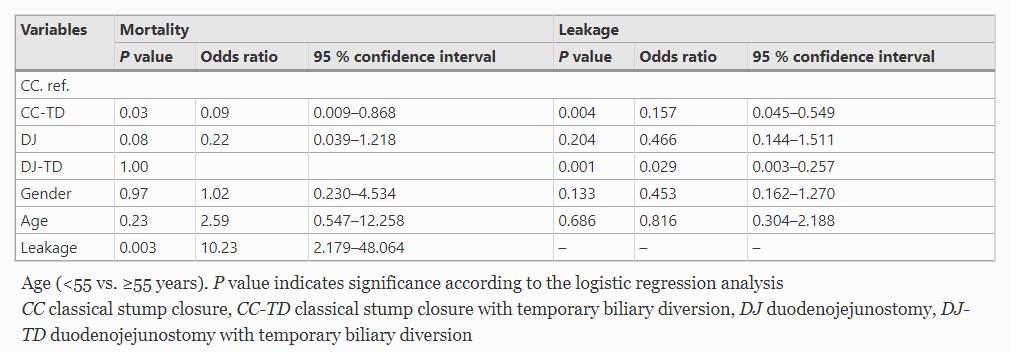
Table 4. Multivariable Analysis for Perioperative Mortality and Leakage in All 124 Patients

Background: Duodenal stump insufficiency after surgery for penetrating gastroduodenal ulcer is associated with substantial mortality. “Classical” technique of closing a difficult duodenal stump (Nissen-Bsteh) has, up to now, not been compared with duodenojejunostomy (DJ) in larger patient sets. This also refers to the potential benefit of a gastric and biliary diversion under such conditions. The aim of the present study was to compare classical duodenal closure (CC) with DJ and to evaluate the impact of gastric and biliary diversion on postoperative outcome after surgery for penetrating, high-risk duodenal ulcer in a matched control study.

Continue reading

Adhesiolysis-related morbidity in abdominal surgery

ten Broek RP, et al. Adhesiolysis-related morbidity in abdominal surgery. Ann Surg. 2013 Jul;258(1):98-106. 

Full-text for Emory users.

Results: A total of 755 (out of 844) surgeries in 715 patients were included. Adhesiolysis was required in 475 (62.9%) of operations. Median adhesiolysis time was 20 minutes (range: 1-177). Fifty patients (10.5%) undergoing adhesiolysis inadvertently incurred bowel defect, compared with 0 (0%) without adhesiolysis (P < 0.001). In univariate and multivariate analyses, adhesiolysis was associated with an increase of sepsis incidence [odds ratio (OR): 5.12; 95% confidence interval (CI): 1.06-24.71], intra-abdominal complications (OR: 3.46; 95% CI: 1.49-8.05) and wound infection (OR: 2.45; 95% CI: 1.01-5.94), longer hospital stay (2.06 ± 1.06 days), and higher hospital costs [$18,579 (15,204-21,954) vs $14,063 (12,471-15,655)]. Mortality after adhesiolysis complicated by a bowel defect was 4 out of 50 (8%), compared with 7 out of 425 (1.6%) after uncomplicated adhesiolysis (OR: 5.19; 95% CI: 1.47-18.41).

Continue reading

Pancreatic cystic neoplasms

Scholten L, et al. Pancreatic Cystic Neoplasms: Different Types, Different Management, New Guidelines. Visc Med. 2018 Jul;34(3):173-177.

Pancreatic cystic neoplasms (PCN) include different types of cysts with various biological behavior. The most prevalent PCN are intraductal papillary mucinous neoplasm (IPMN), mucinous cystic neoplasm (MCN), and serous cystic neoplasm (SCN). Management of PCN should focus on the prevention of malignant progression, while avoiding unnecessary morbidity of surgery. This requires specialized centers with dedicated multidisciplinary PCN teams. The malignant potential of PCN varies enormously between the various types of PCN. A combination of computed tomography, magnetic resonance imaging/magnetic resonance cholangiopancreatography, and endoscopic ultrasound with or without fine needle aspiration is typically needed before a reliable diagnosis can be made. Several guidelines discuss the management of PCN; however, most of these are non-evidence-based without clear consensus on the optimal treatment and follow-up strategy. The 2018 European guidelines on PCN are the first evidence-based guidelines to include IPMN, MCN, SCN, and all other PCN. This guideline advises a more conservative approach to side-branch IPMN and MCN smaller than 40 mm and more often a surgical approach in IPMN with a main duct dilatation beyond 5 mm. The goal of this review is to summarize the different types and management of the most common PCN based on the current literature and guidelines.

Continue reading

Bypass versus Angioplasty in Severe Ischaemia of the Leg

Bradbury AW, Adam DJ, Bell J, et al.; BASIL trial Participants. Bypass versus Angioplasty in Severe Ischaemia of the Leg (BASIL) trial: An intention-to-treat analysis of amputation-free and overall survival in patients randomized to a bypass surgery-first or a balloon angioplasty-first revascularization strategy. J Vasc Surg. 2010 May;51(5 Suppl):5S-17S.

Free full-text.

Summary of BASIL trial recommendations: The BASIL trial suggests that those SLI patients who are likely to live ≥2 years are probably better served by a BSX-first strategy, preferably with vein. [37] Those SLI patients who are unlikely to live 2 years, and possibly those in whom vein is not available for bypass, are probably better served by a BAP-first strategy because they are unlikely to survive to reap the longer-term benefits of surgery, they may be more likely to suffer surgical morbidity and mortality, and because angioplasty is significantly less expensive than surgery in the short-term.

Continue reading