Preoperative evaluation & perioperative management of coronary artery disease in patients undergoing vascular surgery

Bauer SM, Cayne NS, Veith FJ. New developments in the preoperative evaluation and perioperative management of coronary artery disease in patients undergoing vascular surgery. J Vasc Surg. 2010 Jan;51(1):242-51.

Free full-text. 

Conclusions: Routine stress testing should not be performed before VS. The Lee index should be used to stratify risk in patients undergoing VS. Patients with >or=3 risk factors or active cardiac conditions should undergo stress testing, if VS can be delayed. All VS patients, except those with 0 risk factors, should be considered for a beta-blocker (bisoprolol, 2.5-5 mg/d started 1 month before VS, titrated to a pulse <70 beats/min and a systolic blood pressure >or=120 mm Hg). Intermediate risk factors may not require aggressive heart rate control but simply maintenance on a low-dose beta-blocker. Statins should be started (ideally 30 days) before all VS using long-acting formulations such as fluvastatin (80 mg/d) for patients unable to take oral medication.

Continue reading

Immune thrombocytopenia (ITP)

Cooper N, Ghanima W. Immune Thrombocytopenia. N Engl J Med. 2019 Sep 5;381(10): 945-955. doi: 10.1056/NEJMcp1810479.

Full-text for Emory users.

Immune thrombocytopenia (ITP) is an autoimmune disease characterized by isolated thrombocytopenia. Patients may be asymptomatic at presentation or they may present with mild mucocutaneous to life-threatening bleeding. Although only 5% of patients with ITP present with severe bleeding, [1] bleeding leading to hospital admission within 5 years after diagnosis develops in approximately 15%. [2] Irrespective of bleeding problems, patients with ITP often report fatigue and impaired health-related quality of life. [3] The risk of venous thromboembolism is twice as high among patients with ITP as among persons in the general population; the management of venous thromboembolism may be especially problematic given the concomitant risk of bleeding. [4]

Continue reading

Surgical Grand Rounds: Patient Reported Outcomes in Thoracic Surgery – What are our patients really telling us?

Presented by: Onkar Khullar MD, Assistant Professor of Surgery
Division of Cardiothoracic Surgery, Emory University School of Medicine

This is a collection of articles, resources, and commentary from Dr. Khullar’s presentation on February 13, 2020. 


Articles:

Jensen RE, Rothrock NE, DeWitt EM, et al. The role of technical advances in the adoption and integration of patient-reported outcomes in clinical care. Med Care. 2015 Feb;53(2): 153-9. doi: 10.1097/MLR.0000000000000289. Free full-text.

Colt HG, Murgu SD, Korst RJ, et al. Follow-up and surveillance of the patient with lung cancer after curative-intent therapy: Diagnosis and management of lung cancer, 3rd ed: American College of Chest Physicians evidence-based clinical practice guidelines. Chest. 2013 May;143(5 Suppl):e437S-e454S. doi: 10.1378/chest.12-2365. Full-text for Emory users.

Khullar OV, Rajaei MH, Force SD, Binongo JN, Lasanajak Y, Robertson S, Pickens
A, Sancheti MS, Lipscomb J, Gillespie TW, Fernandez FG. Pilot Study to Integrate
Patient Reported Outcomes After Lung Cancer Operations Into The Society of
Thoracic Surgeons Database. Ann Thorac Surg. 2017 Jul;104(1):245-253. doi:
10.1016/j.athoracsur.2017.01.110. Full-text for Emory users.

Continue reading

Decreasing hospital readmission in ileostomy patients: Results of novel pilot program

Shaffer VO, Owi T, Kumarusamy MA, Sullivan PS, Srinivasan JK, Maithel SK, Staley CA, Sweeney JF, Esper G. Decreasing Hospital Readmission in Ileostomy Patients: Results of Novel Pilot Program. J Am Coll Surg. 2017 Apr;224(4):425-430.

Full-text for Emory users.

BACKGROUND: Nearly 30% of patients with newly formed ileostomies require hospital readmission from severe dehydration or associated complications. This contributes to significant morbidity and rising healthcare costs associated with this procedure. Our aim was to design and pilot a novel program to decrease readmissions in this patient population.

STUDY DESIGN: An agreement was established with Visiting Nurse Health System (VNHS) in March 2015 that incorporated regular home visits with clinical triggers to institute surgeon-supervised corrective measures aimed at preventing patient decompensation associated with hospital readmissions. Thirty-day readmission data for patients managed with and without VNHS support for 10.5 months before and after implementation of this new program were collected.

RESULTS: Of 833 patients with small bowel procedures, 162 were ileostomies with 47 in the VNHS and 115 in the non-VNHS group. Before program implementation, VNHS (n = 24) and non-VNHS patients (n = 54) had similar readmission rates (20.8% vs 16.7%). After implementation, VNHS patients (n = 23) had a 58% reduction in hospital readmission (8.7%) and non-VNHS patient hospital readmissions (n = 61) increased slightly (24.5%). Total cost of readmissions per patient in the cohort decreased by >80% in the pilot VNHS group.

CONCLUSIONS: Implementation of a novel program reduced the 30-day readmission rate by 58% and cost of readmissions per patient by >80% in a high risk for readmission patient population with newly created ileostomies. Future efforts will expand this program to a greater number of patients, both institutionally and systemically, to reduce the readmission-rate and healthcare costs for this high-risk patient population.

Legacy papers of portal hypertension surgery at Emory: Distal splenorenal shunts

Warren WD, Millikan WJ Jr, Henderson JM, Wright L, Kutner M, Smith RB 3rd, Fulenwider JT, Salam AA, Galambos JT. Ten years portal hypertensive surgery at Emory. Results and new perspectives. Ann Surg. 1982 May;195(5):530-42.

Smith RB 3rd, Warren WD, Salam AA, Millikan WJ, Ansley JD, Galambos JT, Kutner M, Bain RP. Dacron interposition shunts for portal hypertension. An analysis of morbidity correlates.Ann Surg. 1980 Jul;192(1):9-17.

Rikkers LF, Rudman D, Galambos JT, Fulenwider JT, Millikan WJ, Kutner M, Smith RB 3rd, Salam AA, Sones PJ Jr, Warren WD. A randomized, controlled trial of the distal splenorenal shunt. Ann Surg. 1978 Sep;188(3):271-82.

Galambos JT, Warren WD, Rudman D, Smith RB 3rd, Salam AA. Selective and total
shunts in the treatment of bleeding varices. A randomized controlled trial. N Engl J Med. 1976 Nov 11;295(20):1089-95.

Continue reading

Nutritional support of the enterocutaneous fistula patient

Kumpf VJ, et al. ASPEN-FELANPE Clinical Guidelines: Nutrition Support of Adult Patients With Enterocutaneous Fistula.JPEN J Parenter Enteral Nutr. 2017 Jan;41(1):104-112. doi: 10.1177/0148607116680792.

Free full-text. 

Questions addressed in these guidelines: 

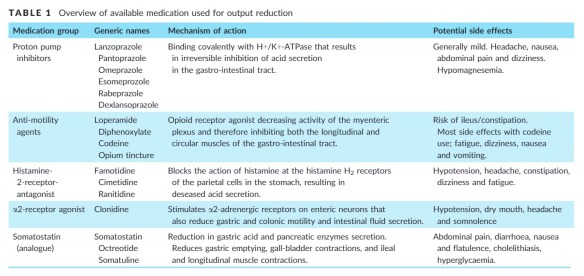
In adult patients with enterocutaneous fistula: (1) What factors best describe nutrition status? (2) What is the preferred route of nutrition therapy (oral diet, enteral nutrition, or parenteral nutrition)? (3) What protein and energy intake provide best clinical outcomes? (4) Is fistuloclysis associated with better outcomes than standard care? (5) Are immune-enhancing formulas associated with better outcomes than standard formulas?(6) Does the use of somatostatin or somatostatin analogue provide better outcomes than standard medical therapy? (7) When is home parenteral nutrition support indicated?

Continue reading