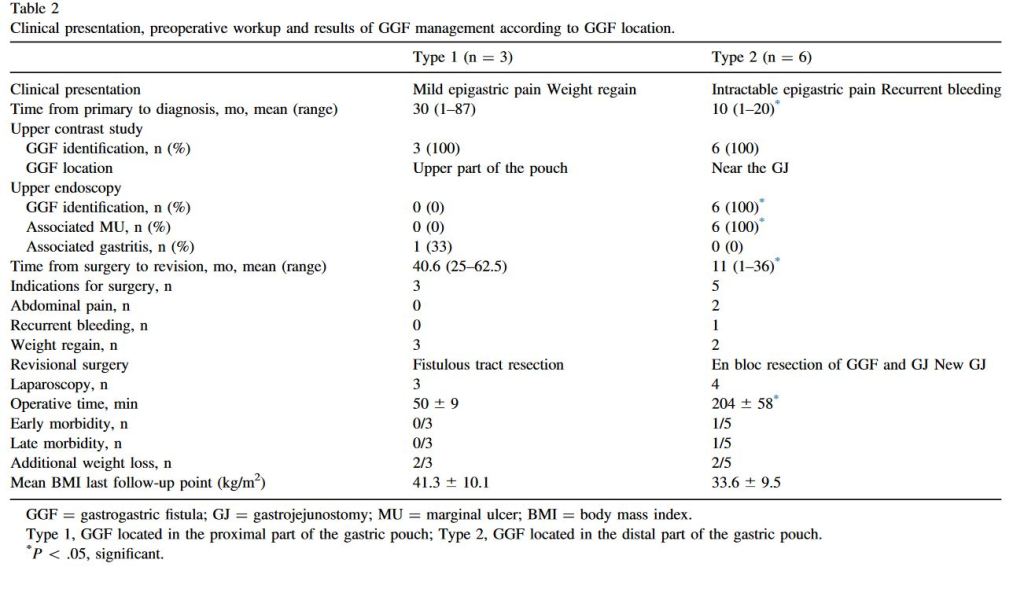
Classification, surgical management and outcomes of patients with gastrogastric fistula after Roux-En-Y gastric bypass

“Gastrogastric fistula (GGF) was a well-described complication after nondivided Roux-en-Y gastric bypass (RYGB), with a documented rate of up to 50%. Gastric transection with isolation of the gastric pouch (divided RYGB) reduces but does not eliminate this complication, which still occurs with a reported incidence ranging from 0% to 6%. Weight regain, epigastric pain, and marginal ulcer (MU) are the most common symptoms. Some GGF can be managed conservatively or by endoscopic approach, but surgery remains the standard of care.”

Continue reading

Decreasing Hospital Readmission in Ileostomy Patients

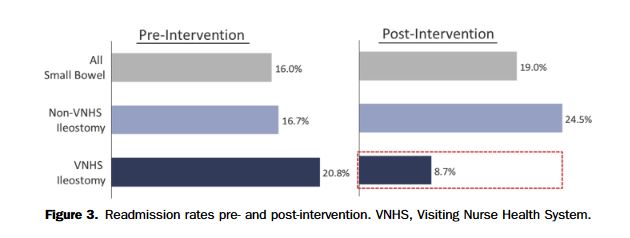
“Nearly 30% of patients with newly formed ileostomies require hospital readmission from severe dehydration or associated complications. This contributes to significant morbidity and rising healthcare costs associated with this procedure. The aim of this study was to design and pilot a novel program to decrease readmissions in this patient population.”

“Implementation of a novel program reduced the 30-day readmission rate by 58% and cost of readmissions per patient by >80% in a high risk for readmission patient population with newly created ileostomies. Future efforts will expand this program to a greater number of patients, both institutionally and systemically, to reduce the readmission-rate and healthcare
costs for this high-risk patient population.”

Continue reading

Morbidity and mortality of inadvertent enterotomy during adhesiotomy

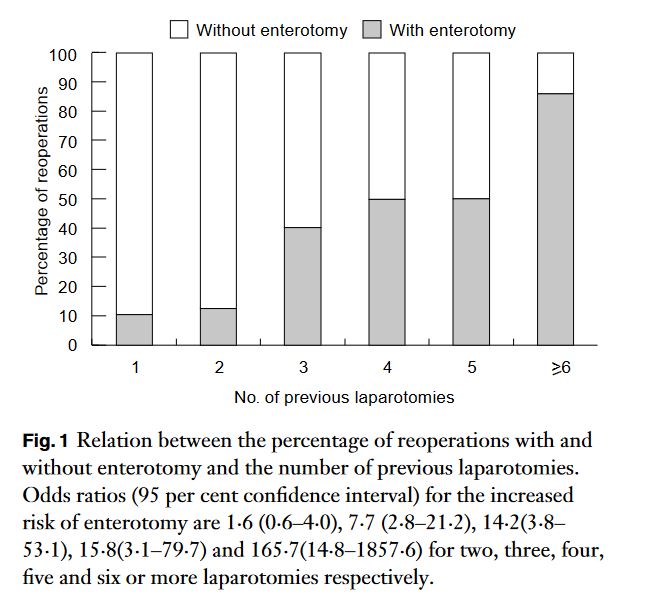
“Postoperative intra-abdominal adhesions are a major concern in modern surgery. Intestinal obstruction is an important and well known clinical consequence of adhesions, resulting in significant morbidity and mortality rates, and high financial costs. Secondary infertility in women and chronic abdominal and pelvic pain are other, frequently cited, adhesion-related problems. Furthermore, intraabdominal adhesions render reoperation dif®cult and may
increase the complication rate of the intended surgical procedure. Prolonged operating time, unfeasibility of the laparoscopic approach and inadvertent enterotomy are known drawbacks of reoperative abdominal surgery, directly related to adhesions.”

Continue reading

Left ventricular assist device infections resulting from gastrointestinal-tract fistulas

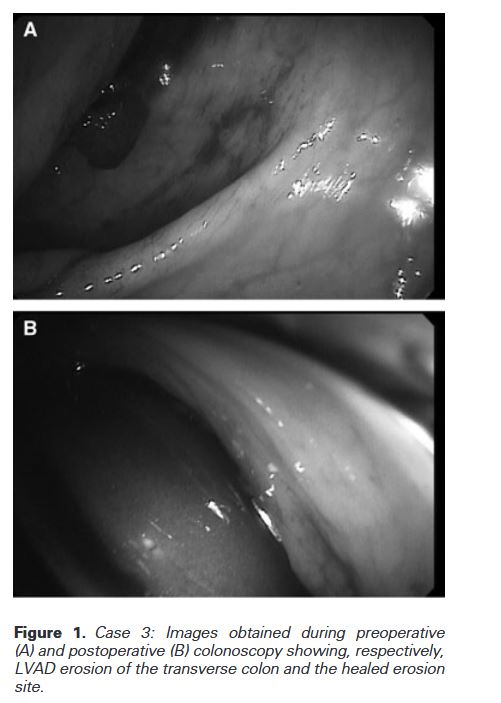
“Despite the benefits provided by continuous-flow left ventricular assist devices (LVADs), such as the HeartMate-II (HM-II), pump-related infection remains a potential complication of LVAD use. The following factors contribute to LVAD infection: malnutrition, diabetes, obesity,
prolonged hospitalization, postoperative bleeding, hematoma formation, reoperation, multiorgan failure, and sepsis.Device-related infection entails an increased hospital stay and increased risk of death. Therefore, bridge-to-transplant patients with LVAD-related infections are upgraded to status IA, classified as the highest level of urgency, on the transplant waiting list.”

Continue reading

Enterocutaneous Fistulas: Causes and Managemen

“Despite advances in medical technology and surgical care, the management of enterocutaneous fistulas remains one of the most challenging problems faced by physicians. Success depends on an expert multidisciplinary team, access to long-term enteral and parenteral nutrition support, advanced wound care, optimal medical management and meticulous, methodical, surgical decision-making and technique. Management is complex and multiphasic.Improved survival rates for many morbid problems have resulted in a growing population of patients with increasingly complex fistulas. This article reviews the etiologies as
well as classic and evolving management strategies for this problem.”

Continue reading

Risk Factors for Pancreatic Fistula after Stapled Gland Transection

“Distal Pancreatectomy (DP) is performed for both benign and malignant conditions affecting the body and tail of the pancreas. DP is also performed for chronic pancreatitis and occasionally for abdominal trauma. With improvements in imaging, surgical technology and technique, and postoperative care, the mortality from DP at high-volume centers is approximately 1 per cent. Despite the low mortality rate from DP, the morbidity rate from this procedure remains high (24 to 64 per cent in some series) with pancreatic fistula (PF) as
a common concern. Even with the use of linear stapling devices, fibrin glue, somatostatin analogs, thermal sealing devices, and mesh staple line reinforcement, PF continues to be a burden to patient quality of life and healthcare resources for those patients undergoing DP.”

Continue reading

Importance of duodenal stump reinforcement to prevent stump leakage after gastrectomy

“Duodenal stump leakage (DSL) is a postoperative complication specific to patients with the formation of a blind endof the duodenum, e.g., Roux-en-Y or Billroth-II reconstruction. The incidence of DSL after radical gastrectomy with a duodenal stump ranges between 1.8% and 7.7%, with a mortality rate of 7–67%.”
“Although manual reinforcement of the duodenal stump is equally effective in preventing DSL development in both laparoscopic and open surgeries, it may not be routinely performed because of its technical difficulty during laparoscopic gastrectomies.”

Continue reading