“Robotic cholecystectomy was independently associated with a lower risk of serious complications, lower rate conversion to open, and hospitalization ≥24 hours compared with laparoscopic cholecystectomy. These findings suggest that new technologies might enhance the safety of minimally invasive surgery.”
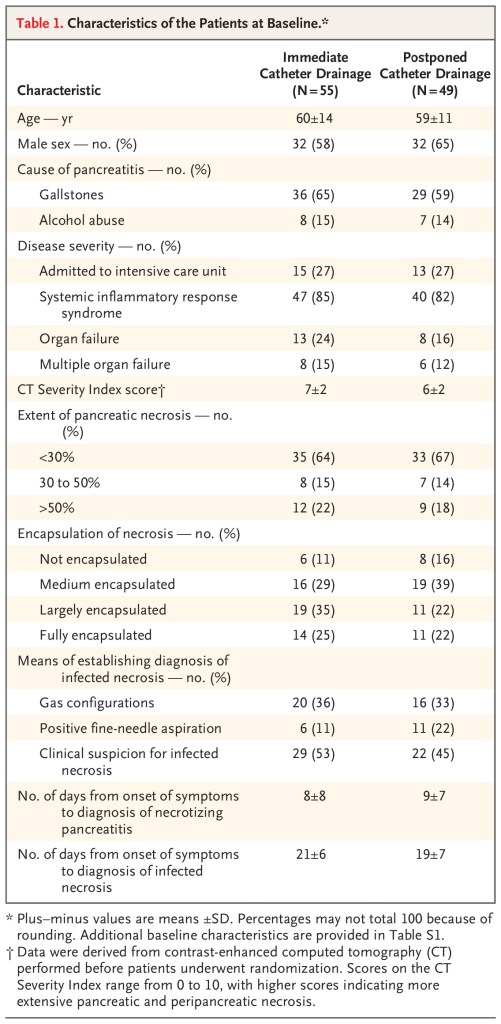
“Acute pancreatitis is the most common pancreatic disease worldwide. Necrotizing pancreatitis develops in approximately 20 to 30% of patients with acute pancreatitis. Pancreatic and peripancreatic necrosis that becomes infected nearly always leads to invasive intervention. The current standard approach for infected necrotizing pancreatitis is a minimally invasive step-up approach with catheter drainage as the first step. International guidelines advise postponement of catheter drainage and administration of antibiotics until the infected pancreatic and peripancreatic necrosis has become encapsulated; such walled-off necrosis usually takes 4 weeks to develop.”
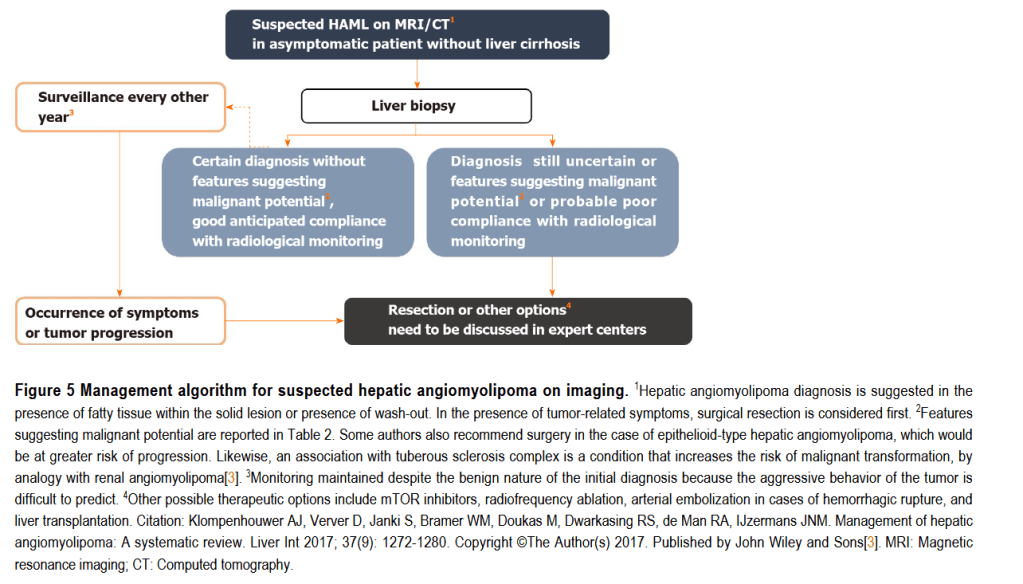
“Angiomyolipoma (AML) is a solid mesenchymal tumor, mainly described in the kidney, and belongs to the group of perivascular epithelioid cell tumors (PEComas). Hepatic localization of AML, described for the first time in 1976, is rare, since only around 600 cases were reported after an exhaustive search of the literature up to the year 2017. Hepatic AML (HAML) poses a veritable diagnostic challenge in radiological terms, especially when fat content is low, because this type of tumor may appear as a hypervascular tumor associated with a washout phase that mimics other, more common hypervascular hepatic tumors, such as hepatocellular carcinoma”
“Despite improvements in the perioperative care of patients undergoing pancreatic surgery, the risk of major complications including anastomotic leak (6–24%), post-operative pancreatic fistula (POPF) (10–40%) and delayed gastric emptying (20–34%) persist. Post-pancreatectomy haemorrhage (PPH) is a less common, but particularly hazardous complication with mortality rates of up to 40%. However, varying definitions and incidences of PPH have been previously reported, which have hindered comparison of optimal treatment modalities.”
“The refusal of blood transfusion for surgical procedures at high risk of bleeding, such as pancreatic resection, forces surgeons to face ethical challenges and raises concerns about appropriate perioperative management. In the last two decade the rate of transfusion in high volume centers has gradually decreased thanks to the application of patient blood management (PBM) protocols.”
“In our single-institution experience, patients that categorically refused transfusion were Jehovah’s Witnesses (JW). JW is a religious movement, membership in which accounts for about 0.3% of Western countries’ populations, with USA and Italy having the highest percentages of followers. JW followers believe neither whole blood nor its four major components, namely red cells, white cells, platelets and plasma, should be donated, stored, or accepted in any circumstance, even in life-threatening situations. Advances in transfusion medicine have led the JW’s denomination to modify its position about what is deemed acceptable.”
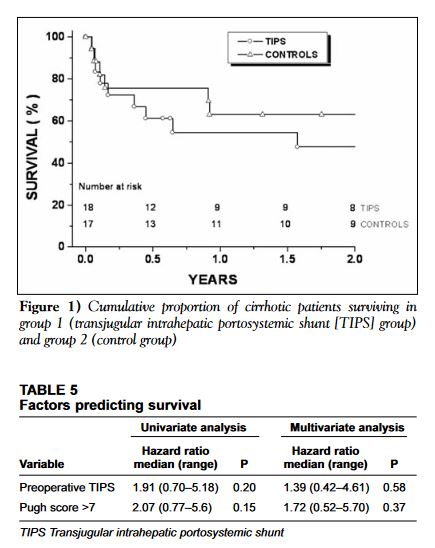
“Abdominal surgery is occasionally needed in cirrhotic patients and is associated with high morbidity and mortality rates. It has been suggested that the main determinant of short- and long-term survival is the degree of liver failure, as evaluated by the presence of ascites, low serum albumin level and coagulation disorders. In addition, the degree of portal hypertension may be an independent predictor for operative bleeding, postoperative ascites leakage or variceal rupture; this may also influence survival. Transjugular intrahepatic portosystemic shunt (TIPS) placement is much less invasive than surgical shunts and can be performed in patients with a significant degree of liver insufficiency. Therefore, it has been suggested that preoperative TIPS placement may improve the prognosis of cirrhotic patients, submitted to abdominal surgery.”
“Hypoglycemia associated with renal failure is more common than generally thought. Its occurrence is often a marker of multisystem failure and has an ominous prognostic implication. Its pathogenesis is frequently complex and involves one or several mechanisms. In the evaluation of uremic hypoglycemia, the first step should be the exclusion of obvious causes such as insulin, oral hypoglycemic agent therapy, and the use of drugs known to cause hypoglycemia. Propranolol, salicylates, and disopyramide are among the most commonly implicated agents.”



 Surgical Focus