Laparoscopic Entry Techniques and Injuries

“Recent reports by the Australian Safety and Efficacy Register for New interventions and Procedures (ASERNIP-S) and the Royal Australian and New Zealand College of Obstetricians and Gynaecologists (RANZCOG) concluded that insufficient evidence is available to assess the safety of the open versus closed laparoscopy in regard to major vascular and visceral injuries.” (Larobina & Nottle)

Major Vascular Injuries in Closed vs. Open Laparoscopy (Larobina & Nottle)

“Our case series shows that open laparoscopy can vastly reduce the incidence of access-related morbidity and mortality. Only a single visceral injury occurred in 5900 cases, and no major vascular injuries were reported.These figures are consistent with those of other reported series of open laparoscopy, which also show a zero rate of vascular injury and low rates of visceral injury.The literature review showed a rate of 1 injury to major retroperitoneal vessels per 2272 cases of closed laparoscopy procedures. This compares with a major vascular injury rate of 0 for the open technique. This difference is both statistically significant ( P = 0.003) and highly clinically significant.” (Larobina & Nottle)

Continue reading
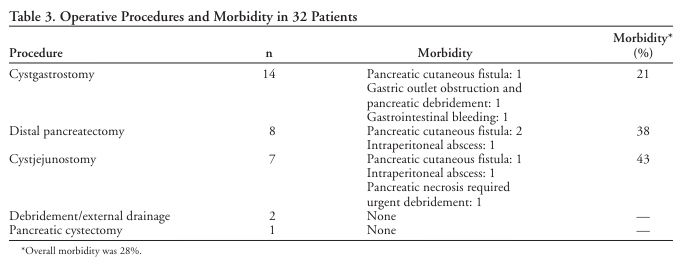
Management of pancreatic pseudocysts

“Operative internal drainage has been standard treatment for chronic unresolved pancreatic pseudocysts (PPs). Recently, percutaneous external drainage (PED) has become the primary mode of treatment at many medical centers.”

“ Operative management for PPs appears to be superior to CT-guided PED. Although the later was often successful, it required major salvage procedures in one third of the patients. An expectant management protocol may be suitable for selected patients.”

Continue reading

Pancreatic necrosis

“Pancreatic necrosis is the most devastating complication of acute pancreatitis. Management of this complex disease has improved dramatically over the past decade, and mortality rates are regularly reported in the range of 20% instead of the 50% to 70% range reported in the 1970s. Despite this improvement, 80% of deaths from acute pancreatitis evolve from infectious complications of pancreatic and peripancreatic necrosis.”

Continue reading

Operative Outcomes for Polycystic Liver Disease:

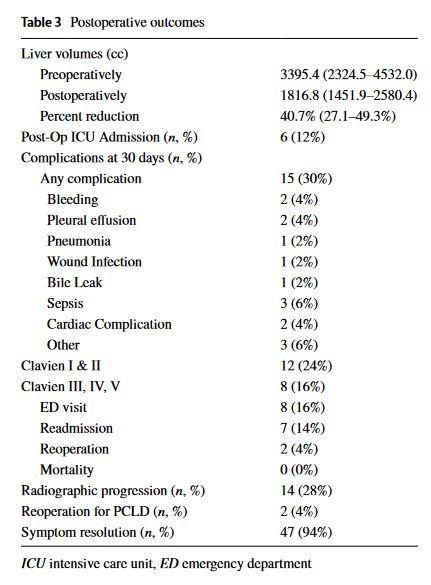
“Given the relative rarity of PCLD, current data on the outcomes of surgical debulking for advanced PCLD are scarce, particularly within the realm of laparoscopic hepatic
resection techniques. We therefore sought to evaluate the characteristics of patients undergoing operative debulking for advanced PCLD and analyze the perioperative and long-
term postoperative outcomes of hepatic resection for PCLD.”

Continue reading

Polycystic Liver Disease: Surgical Management and the role of transplant

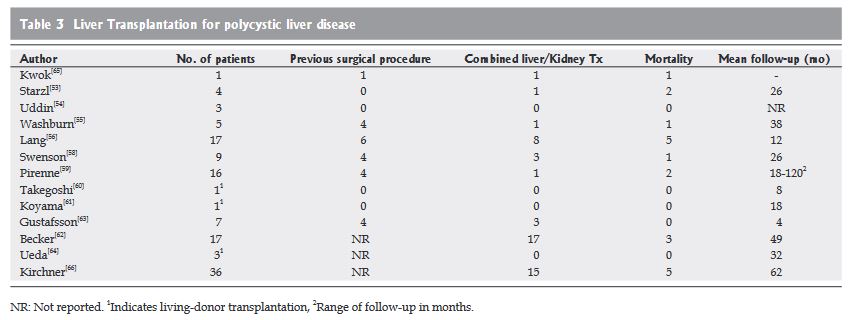
“Adult polycystic liver disease (PCLD) is an autosomal dominant condition commonly associated with autosomal dominant polycystic kidney disease (ADPKD). However
in the last decade, it has been recognized that there is a distinct form of autosomal dominant PCLD that arises without concomitant ADPKD. Early knowledge of the pathogenesis was gained from the study of hepatic cysts in patients with ADPKD.”

Continue reading

Colorectal liver metastases

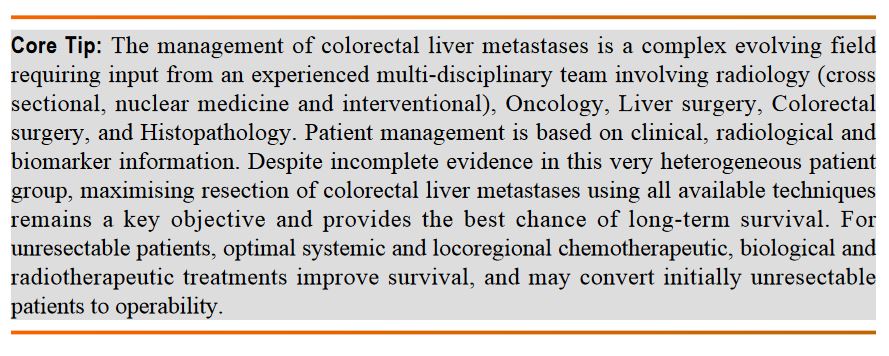
“Colorectal cancer (CRC) represents a major worldwide health care burden, as the
second most common cancer diagnosed in women and third most common in men,
and accounting for 10% of all annually diagnosed cancers and cancer-related deaths
worldwide.
As result of improvements in detection through screening, better referral
pathways, centralisation of services, effective primary surgery, development of
systemic chemotherapy, biological agents, and understanding of tumour biology,
survival rates following diagnosis have improved.
Nevertheless, at least 25%-50% of patients with CRC develop colorectal liver
metastases (CRLM) during the course of their illness.”

Continue reading

Drain Placement After Uncomplicated Hepatic Resection Increases Severe Postoperative Complication Rate

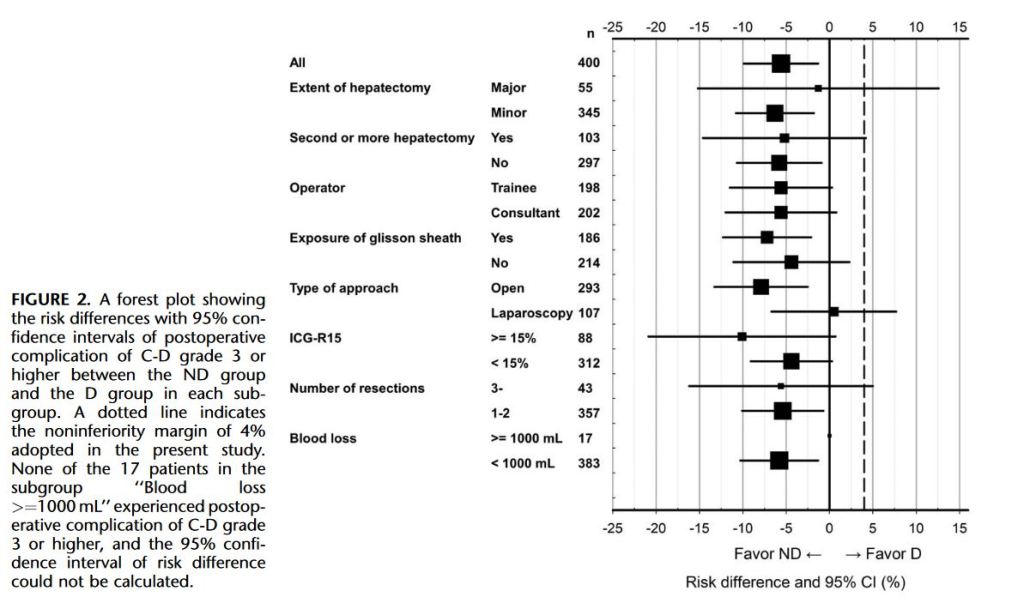
“Advances in surgical techniques and perioperative management over the last 2–3 decades have enabled the safe performance of hepatic resections. In the 1980s, when the perioperative mortality was reported to be as high as around 10%, drain placement was
considered to be necessary so as to provide information about intraabdominal adverse events promptly and for prophylactic drainage. However, as the necessity of drain placement in other surgical fields has been ruled out and as the incidence of life-threatening adverse
events after hepatic resection decreased, several randomized controlled trials (RCTs) were performed; the conclusions of these trials were that drain placement was not necessary. However, some of them lacked a primary endpoint and calculation of sample size; in
the other studies, the primary endpoint was the incidence of wound-related complication, most of which could be resolved using antibiotics or bed-side opening of the wound, corresponding to Clavien-Dindo (C-D) grade 11 2 or even 1.”

Continue reading