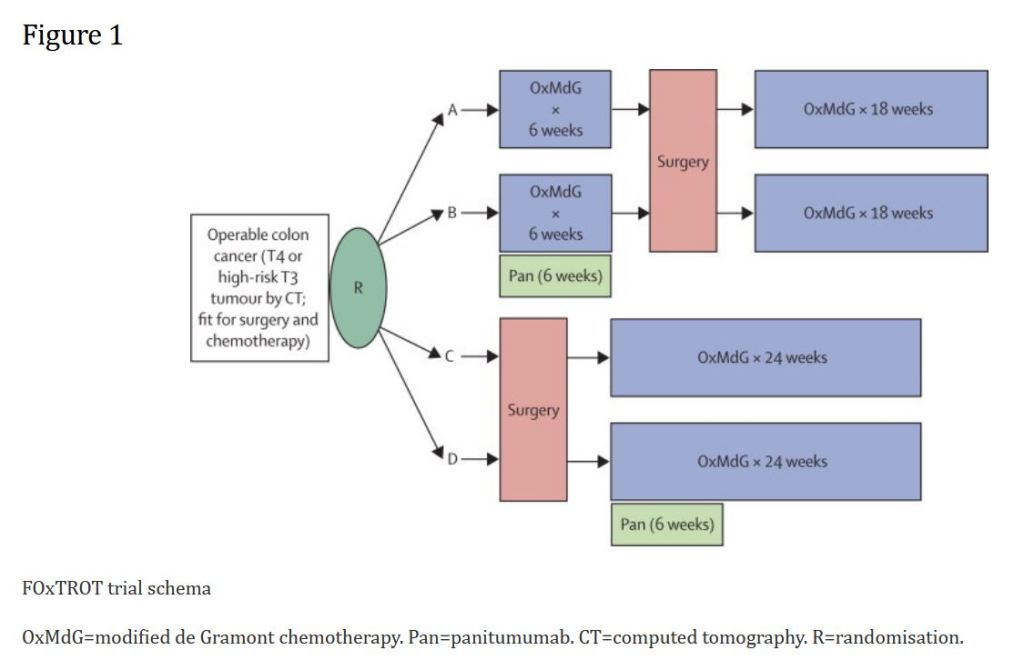
Feasibility of preoperative chemotherapy for locally advanced, operable colon cancer: Foxtrot Study

“Preoperative (neoadjuvant) chemotherapy and radiotherapy are substantially more effective than similar postoperative therapy in oesophageal, gastric, and rectal cancer. Earlier treatment might be more effective at eradicating micrometastatic disease than the same treatment 3 months later, the typical period between diagnosis and starting postoperative chemotherapy, particularly because surgery increases growth factor activity in the early postoperative period, promoting more rapid tumour progression.”

Continue reading

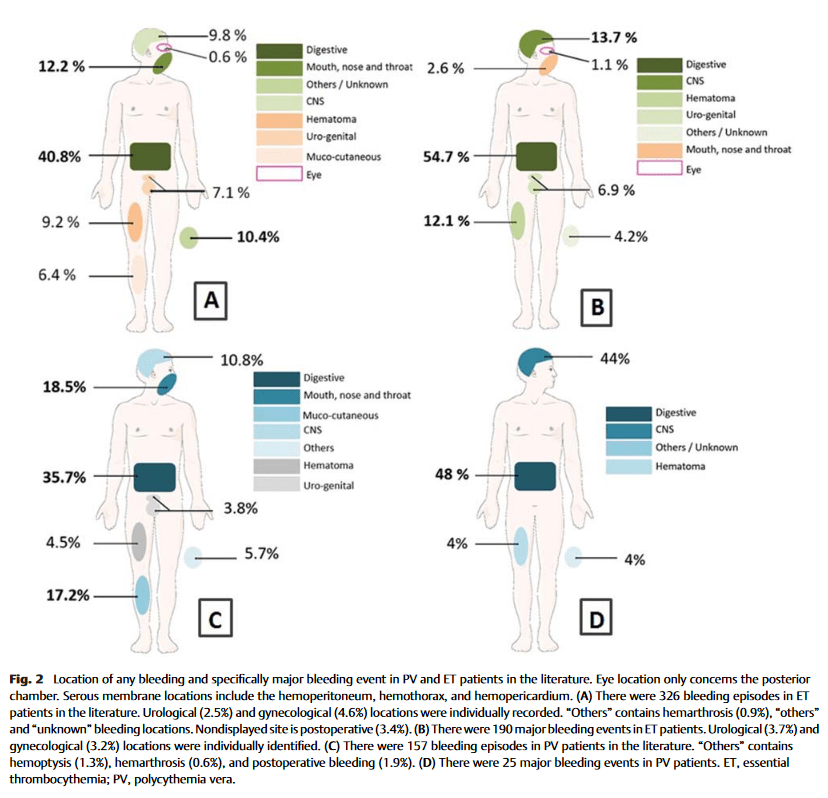
Hemorrhage in Essential Thrombocythemia orPolycythemia Vera

“Hemorrhage is a well-known complication of essential thrombocythemia (ET) and polycythemia vera (PV), but evidence-based data on its management and prevention are lacking to help inform clinicians”

“Myeloproliferative neoplasms (MPNs) are a group of hematological malignancies individualized in the 2016 World Health Organization (WHO) classification.1 They are subdivided into two groups: chronic myeloid leukemia and Philadelphia-negative MPNs, which are further divided into essential thrombocythemia (ET), polycythemia vera (PV), primitive myelofibrosis (PMF), and prefibrotic myelofibrosis.Philadelphia-negative MPNs are characterized by the chronic proliferation of myeloid cells in bone marrow and three main clonal mutations.”

Continue reading

For your review: Desmoplastic melanoma

Nicolson NG, Han D. Desmoplastic melanoma. J Surg Oncol. 2019 Jan;119(2):208-215. doi: 10.1002/jso.25317. Epub 2018 Nov 27.

Desmoplastic melanoma (DM) is a rare melanoma variant that has unique biology and pathology compared with conventional melanoma (non-DM). Importantly, DM is classified into pure and mixed histologic subtypes, which have been correlated with outcomes. Management of DM broadly mirrors that of non-DM; however, there are unique considerations for DM that influence treatment approaches. This paper will provide a contemporary overview of this disease and will review the literature regarding the management of DM.

Continue reading

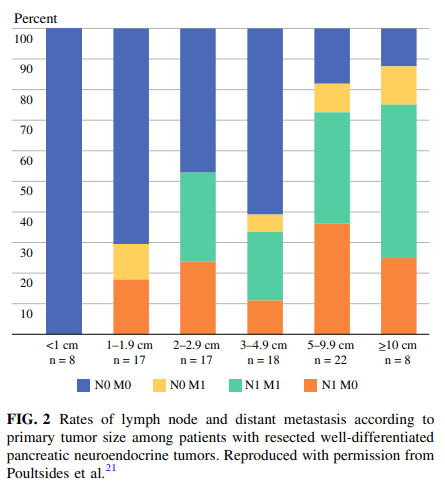
The Landmark Series: Pancreatic Neuroendocrine Tumors

“Pancreatic neuroendocrine tumors (PNETs) comprise a heterogeneous group of neoplasms arising from pancreatic islet cells that remain relatively rare but are increasing in incidence worldwide. While significant advances have been made in recent years with regard to systemic therapies for patients with advanced disease, surgical resection remains the standard of care for most patients with localized tumors. Although formal pancreatectomy with regional lymphadenectomy is the standard approach for most PNETs, pancreas-preserving approaches without formal lymphadenectomy are acceptable for smaller tumors at low risk for lymph node metastases.”

Continue reading

Handsewn vs. stapled anastomoses in colon and rectal surgery

“Trials comparing handsewn with stapled anastomoses in colon and rectal surgery have not found statistical differences. Despite this, authors have differed in their conclusions as to which technique is superior. To help determine whether differences in patient outcomes are present, a meta-analysis of all trials was performed.”

Continue reading

Diverting Ostomy: For Whom, When, What, Where, and Why

“Fecal diversion is an important tool in the surgical armamentarium. There is much controversy regarding which clinical scenarios warrant diversion. Some of the most common applications for the use of a diverting stoma include construction of diverting ileostomy or colostomy, ostomy for low colorectal/coloanal anastomosis, inflammatory bowel disease, diverticular disease, and obstructing colorectal cancer with the conclusion that diverting loop ileostomy is preferred to loop colostomy” (Plasencia)

Continue reading