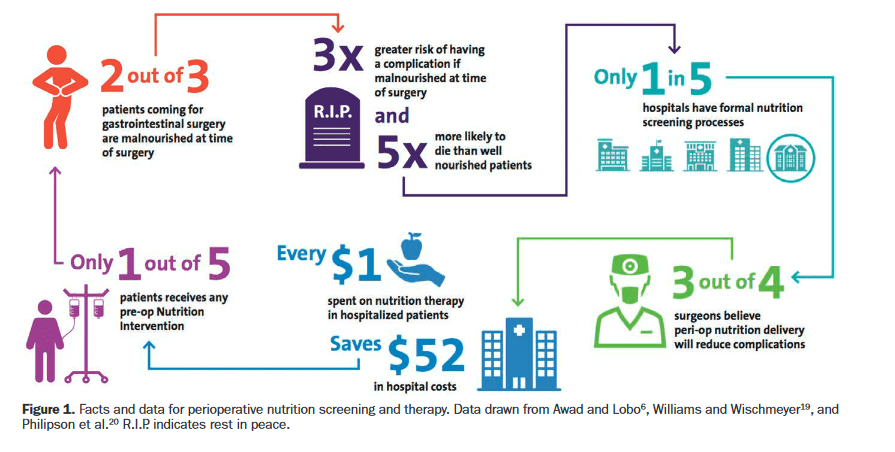
Enhanced Recovery and Perioperative Quality Initiative on Nutrition Screening and Therapy Within a Surgical Enhanced Recovery Pathway

“Perioperative malnutrition has proven to be challenging to define, diagnose, and treat. Despite these challenges, it is well known that sub-optimal nutritional status is a strong independent predictor of poor postoperative outcomes.”

“Malnourished surgical patients have significantly higher postoperative mortality, morbidity, length of stay (LOS), readmission rates, and increased hospital costs.It is estimated that 24%–65% of patients undergoing surgery are at nutrition risk. Additionally, recent prospective observational data indicate that undernourished patients or patients at risk of malnutrition are twice as likely to be readmitted within 30 days after elective colorectal surgery.”

Continue reading

Periprocedural bridging anticoagulation

Rechenmacher SJ, Fang JC. Bridging Anticoagulation: Primum Non Nocere. J Am Coll Cardiol. 2015 Sep 22;66(12):1392-403.

Full-text for Emory users.

Conclusions: Periprocedural anticoagulation management is a common clinical dilemma with limited evidence (but 1 notable randomized trial) to guide our practices. Although bridging anticoagulation may be necessary for those patients at highest risk for TE, for most patients it produces excessive bleeding, longer length of hospital stay, and other significant morbidities, while providing no clear prevention of TE. Unfortunately, contemporary clinical practice, as noted in physician surveys, continues to favor interruption of OAC and the use of bridging anticoagulation. While awaiting the results of additional randomized trials, physicians should carefully reconsider the practice of routine bridging and whether periprocedural anticoagulation interruption is even necessary.

Central Illustration. Bridging Anticoagulation: Algorithms for Periprocedural Interrupting and Bridging Anticoagulation. Decision trees for periprocedural interruption of chronic oral anticoagulation (top) and for periprocedural bridging anticoagulation (bottom). OAC = oral anticoagulation.

Continue reading

Sugammadex and anaphylaxis

“Anaphylaxis is described as a severe, life‑threatening, generalized or systemic hypersensitivity reaction. It occurs rarely during surgery and anesthesia but neuromuscular blocking agents, non‑steroidal anti‑inflammatory drugs (NSAIDs), and antibiotics are considered common causes of anaphylaxis”

“Sugammadex is a synthetic modified gamma‑cyclodextrin derivative first designed to selectively bind to the steroidal neuromuscular blocking agent molecule to provide rapid recovery of neuromuscular function. Sugammadex is extensively used for reversing the effects of rocuronium and to a lesser extent, vecuronium.”

Continue reading

Identification and Management of Perioperative Anaphylaxis

The most commonly involved agents in perioperative anaphylaxis are NMBAs, antibiotics, antiseptics, latex, and dyes However, any medication or substance the patient comes into contact with perioperatively can be a potential cause. The primary risk factor is a previous perioperative anaphylaxis or allergy to the medications or substances used in the procedure.

Continue reading

Intraoperative cholangiography during laparoscopiccholecystectomy:

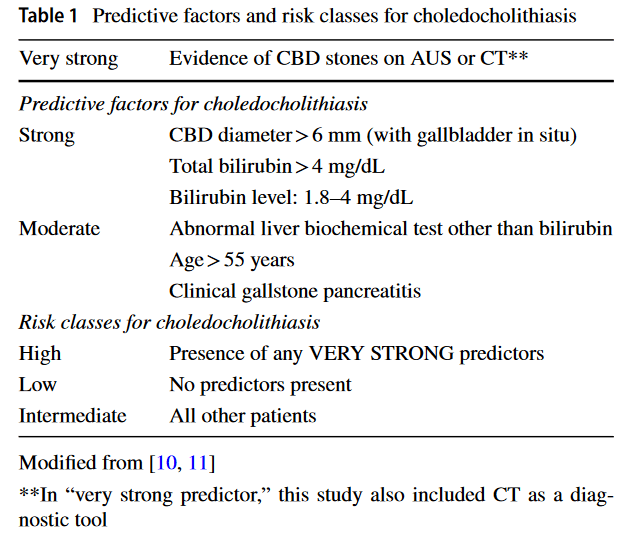
“Based on the study results, the 2016 WSES risk classes for choledocholithiasis could be an effective approach for predicting the risk of choledocholithiasis. Considering its advantages for detecting CBD stones and biliary injuries, the routine use of IOC is still suggested.” (Lai)

(Lai)
Continue reading

Incidence of problematic common bile duct calculi in patients undergoing laparoscopic cholecystectomy.

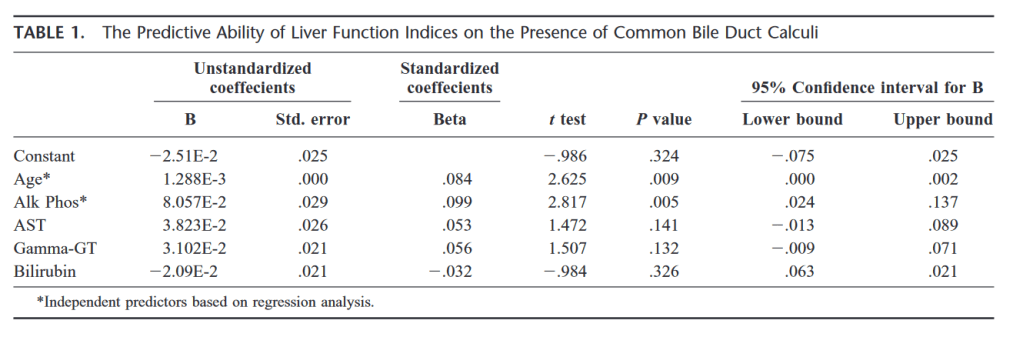
“Choledocholithiasis occurs in 3.4% of patients undergoing laparoscopic cholecystectomy but more than one third of these pass the calculi spontaneously within 6 weeks of operation and may be spared endoscopic retrograde cholangiopancreatography.” (Collins)

(Collins)
Continue reading

The risk of injury to inferior epigastric artery (IEA) subjects during abdominal procedure

“The anatomical position of the inferior epigastric artery (IEA) subjects it to risk of injury during abdominal procedures that are close to the artery, such as laparoscopic trocar insertion, insertion of intra-abdominal drains, Tenckhoffâ catheter (peritoneal dialysis catheter) and paracentesis. This article aims to raise the awareness of the anatomical variations of the course of the IEA in relation to abdominal landmarks in order to define a safer zone for laparoscopic ancillary trocar placement. Methods of managing the IEA injury as well as techniques to minimise the risk of injury to the IEA are reviewed and discussed.”

Continue reading