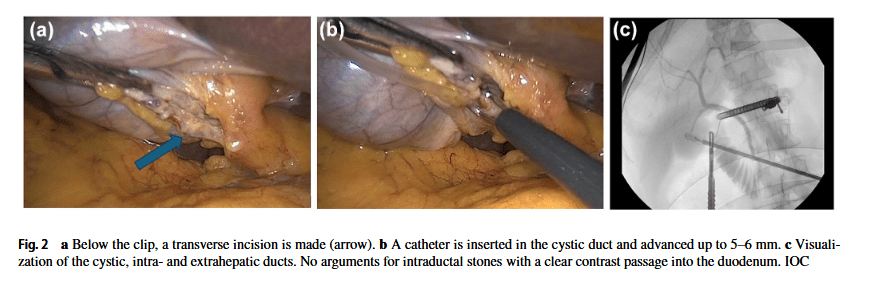
Advantages of routine intraoperative cholangiography in a teaching hospital

“The role of routine IOC during cholecystectomy has been controversial. Opponents to routine IOC assert that this procedure increases operating times and exposes caregivers and patients to radiation. In addition, there is the possibility of detection of indolent CBD stones with consequently unnecessary removal. On the other hand, advocates in favor
of routine IOC state that intraoperative visualization of the bile duct anatomy may decrease either the rate of complications such as CBD injury, or hospital readmissions for subsequent removal of retained CBD stones. Despite lacking strong evidence for not performing IOC vs. routine IOC vs. selective IOC, fitting in one of these three groups can depend on training, technical experience, and surgical habit. If a surgeon never performs IOC in their daily practice, they are not eager to change their habits, even though literature may suggest otherwise.”
Continue reading

Subtotal Cholecystectomye“Fenestrating” vs“Reconstituting” Subtypes and the Prevention ofBile Duct Injury

“Laparoscopic cholecystectomy is a well-established procedure with clear benefits for patients over open cholecystectomy. However, it is associated with an increased rate of
bile duct injury. Biliary injuries occur more commonly when operations are made more difficult due to the presence of severe acute and/or chronic inflammation. Under these conditions, secure ductal identification by the critical view of safety (CVS) may be very challenging because CVS requires clearing of the inflamed hepatocystic triangle in
order to demonstrate the cystic duct, cystic artery, and the cystic plate. It is a rigorous method, but as we have previously stressed, this is actually one of the strengths of the
CVS method of identification. The infundibular technique, in which the funnel-shaped infundibular-cystic duct junction is the rationale for identification, is much easier to achieve than CVS.”

Continue reading

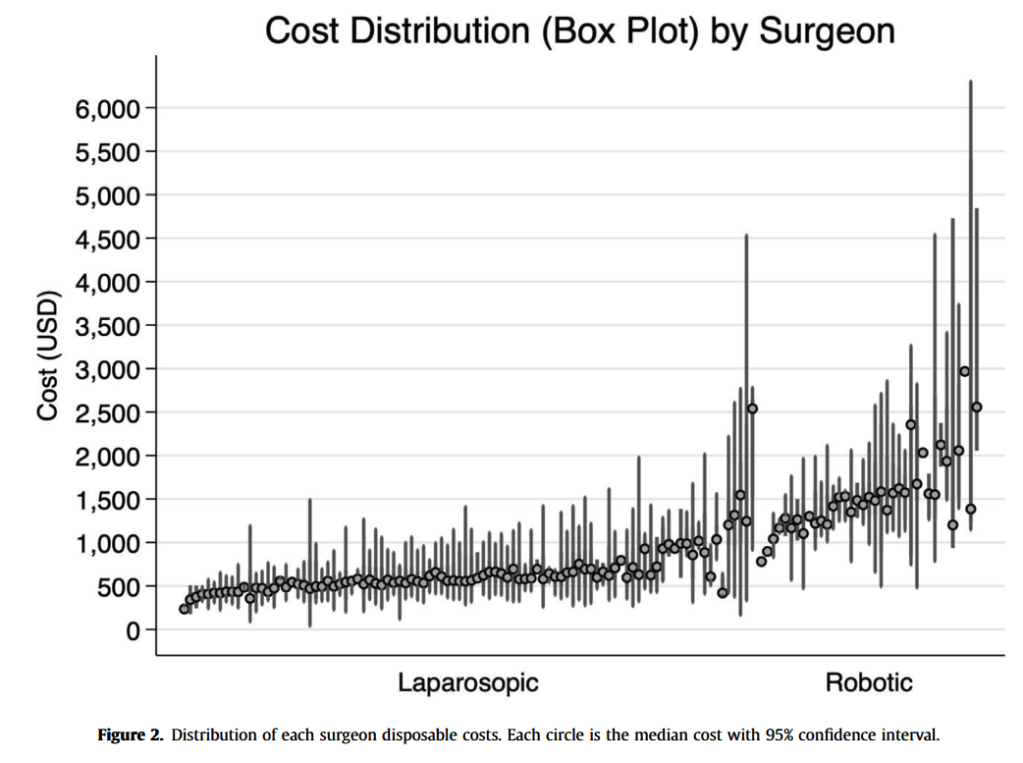
Impact of the robotic platform and surgeon variation on cholecystectomy disposable costs

“Cholecystectomy is the seventh most common operation in the United States, with 605,000 minimally invasive ambulatory, 280,000 minimally invasive inpatient, and 49,000 inpatient open procedures annually. It is ranked 10th of all principal operative procedures in aggregate annual cost ($4.3 billion). As such, managing the cost of cholecystectomy has the potential to impact health care finances. RC consistently has been shown to be more costly than LC. 5 Despite this, the percentage of RC in the United States has increased rapidly as the robotic platform becomes more accessible in hospitals, surgeon interest grows, and marketing has increased. Because third-party reimbursement is not dependent on the platform, additional costs burden hospitals and should be theoretically offset by improved patient outcomes or other indirect benefits.”

Continue reading

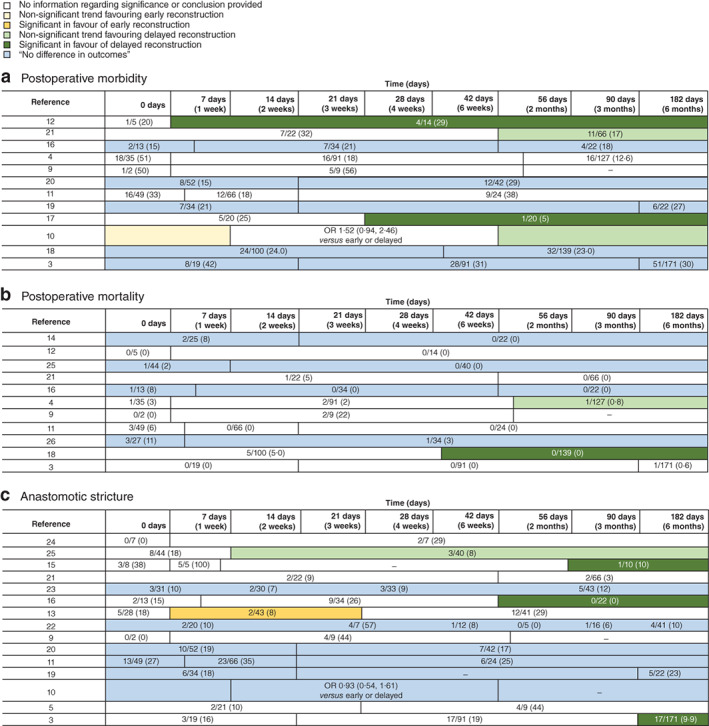
Optimal timing for surgical reconstruction of bile duct injury

“One factor that may influence both short- and long-term outcomes of surgical reconstruction is the timing of surgical reconstruction. Delaying surgical reconstruction allows for optimization of the clinical condition of the patient as adequate sepsis control is achieved. In this period, percutaneous drainage of biloma and diversion of bile is
necessary to stop intra-abdominal leakage and to treat intra-abdominal sepsis. Immediate or early reconstruction, however, may reduce the burden for the patient and may prevent a decline in the clinical condition in the first place. Early reconstruction may also lead to shorter duration of hospital stay and thus reduce costs5 . Bile duct ischaemia, however, may still be developing at the time of an early repair, eventually causing strictures proximal to the level of the anastomosis. This is especially the case when there is concomitant vascular injury.”

Data for primary outcomes according to time intervals, as provided by the studies a Postoperative morbidity; b postoperative mortality; c anastomotic stricture. Values in parentheses are percentages. OR, odds ratio. The key indicates the conclusion as provided by the studies.
Continue reading

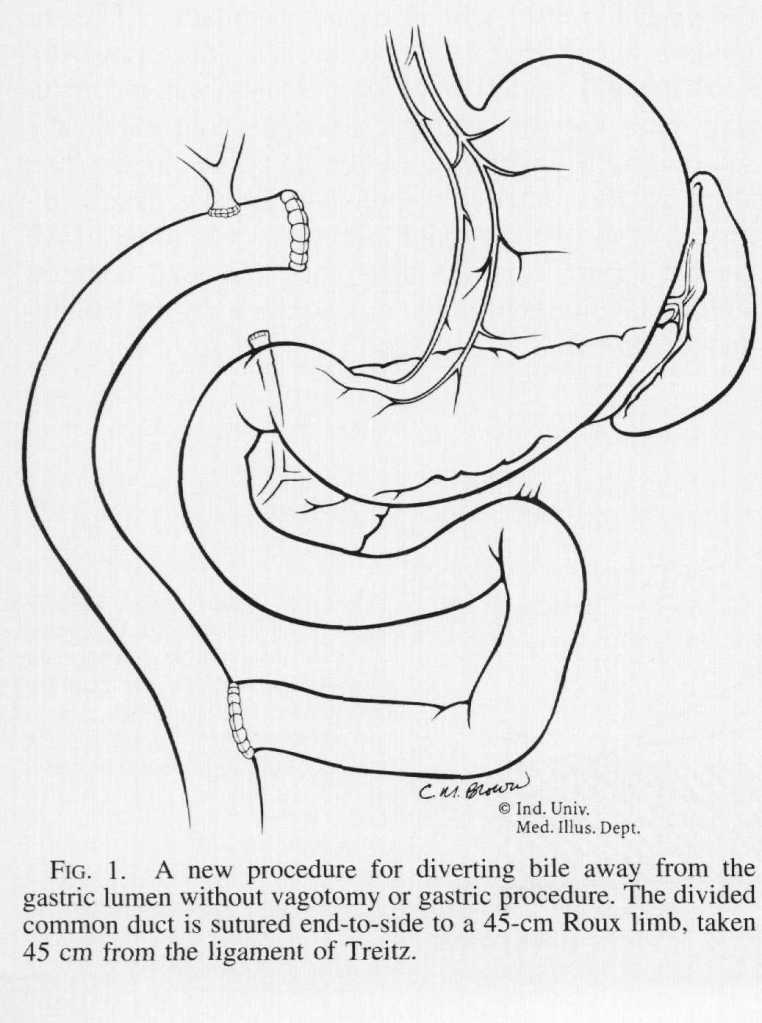
Primary Bile Reflux Gastritis: Which Treatment is Better, Roux-en-Y or Biliary Diversion?

“Various treatments for [Primary Bile Reflux Gastritis] have been proposed since its recognition. Operations that have been utilized are the Roux-en-Y procedure, the Braun enteroenterostomy, the Henley jejunal interposition, and several modifications of each of these operations. These procedures produce relief from bile reflux, but all have particular side effects of their own. Before the utilization of vagotomy for ulcer disease, stomal ulceration at the gastrojejunal anastomosis was the most frequent postoperative problem. Currently, the most commonly applied operation is the Roux-en-Y gastrojejunostomy, which requires vagotomy and antrectomy and results in the equally disabling Roux stasis syndrome in about one-half of patients.”

“Because of these difficulties, a new procedure is proposed wherein only bile is diverted by means of a Roux-en-Y limb and no gastric procedure is done. This allows minimal disturbance of gastric motility and totally diverts bile away from the gastric lumen.”

Continue reading

B-SAFE landmarks

“The incidence of biliary injury after laparoscopic cholecystectomy (LC) has shown a declining trend though it may still be twice that as with open cholecystectomy. Major biliary or vasculobiliary injury is associated with significant morbidity. As prevention is the best strategy, the concept of a culture of safe cholecystectomy has been recently introduced to educate surgeons and apprise them of basic tenets of safe performance of LC. Various aspects of safe cholecystectomy include:
(1) thorough knowledge of relevant anatomy, various anatomical landmarks, and anatomical variations
(2) an understanding of the mechanisms involved in biliary/vascular injury, the most important being the misidentification injury
(3) identification of various preoperative and intraoperative predictors of difficult cholecystectomy
(4) proper gallbladder retraction
(5) safe use of various energy devices
(6) understanding the critical view of safety, including its doublet view and documentation
(7) awareness of various error traps (e.g., fundus first technique)
(8) use of various bailout strategies (e.g., subtotal cholecystectomy) in difficult gallbladder cases
(9) use of intraoperative imaging techniques (e.g., intraoperative cholangiogram) to ascertain correct anatomy
(10) understanding the concept of time-out.”

Continue reading

Bismuth classification, detection, and management of Bile Duct Injury during laparoscopic cholecystectomy

“Bile duct injury (BDI) is a dangerous complication of cholecystectomy, with significant postoperative sequelae for the patient in terms of morbidity, mortality, and long-term quality of life. BDIs have an estimated incidence of 0.4–1.5%, but considering the number of cholecystectomies performed worldwide, mostly by laparoscopy, surgeons must be prepared to manage this surgical challenge. Most BDIs are recognized either during the procedure or in the immediate postoperative period. However, some BDIs may be discovered later during the postoperative period, and this may translate to delayed or inappropriate treatments. Providing a specific diagnosis and a precise description of the BDI will expedite the decision-making process and increase the chance of treatment success.”

Continue reading