Inter-Rater Agreement of the Classification of Intraoperative Adverse Events (ClassIntra) in Abdominal Surgery

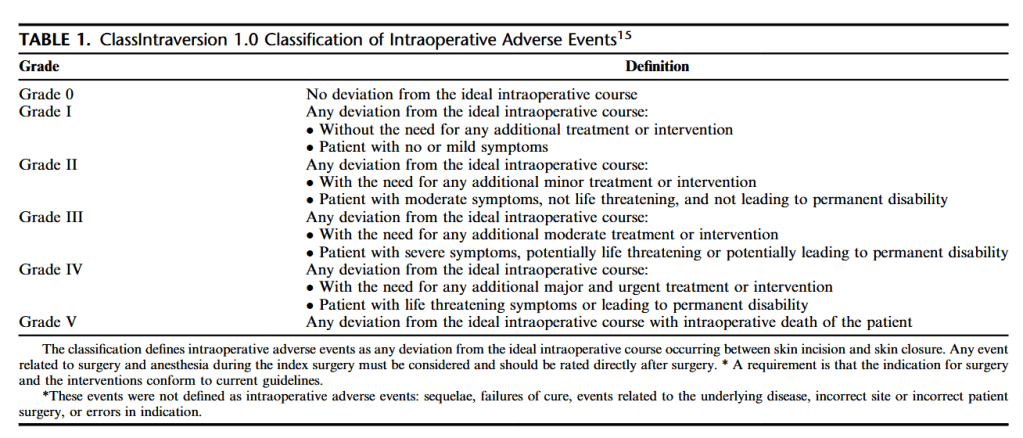
“In surgery, adverse events and medical errors occur pre-operatively, intraoperatively, and postoperatively. Standardized classification of postoperative complications, for example, using the Clavien-Dindo classification, is widely adopted, and has proven relevant to research and quality improvement programs. Prospectively validated classification systems for intraoperative adverse events (iAEs) are not yet broadly adopted. IAEs have a major impact at many levels. First, there is an association between iAEs and postoperative outcome. Second, hospital stays for patients experiencing iAEs are 40% more expensive compared with patients without iAEs. Third, readmission rates in patients whose surgery is
complicated by an iAE are twofold higher. Recently a promising new and practical classification system for iAEs was proposed, the classification of intraoperative complications (CLASSIC). CLASSIC defines iAEs as any deviation from the ideal intraoperative course occurring between skin incision and skin closure, irrespective of the origin (ie, surgical and anesthesiological difficulties, or technical failures). Compared with previous scores such as the severity score by Kaafarani et al. ClassIntra is more inclusive,
accounting for any type iAE, for example, surgical, anesthesiologic, and organizational, and can be graded directly after skin closure.”

Continue reading

Surgical technique in constructing the jejunojejunostomy and the riskof small bowel obstruction after Roux-en-Y gastric bypass

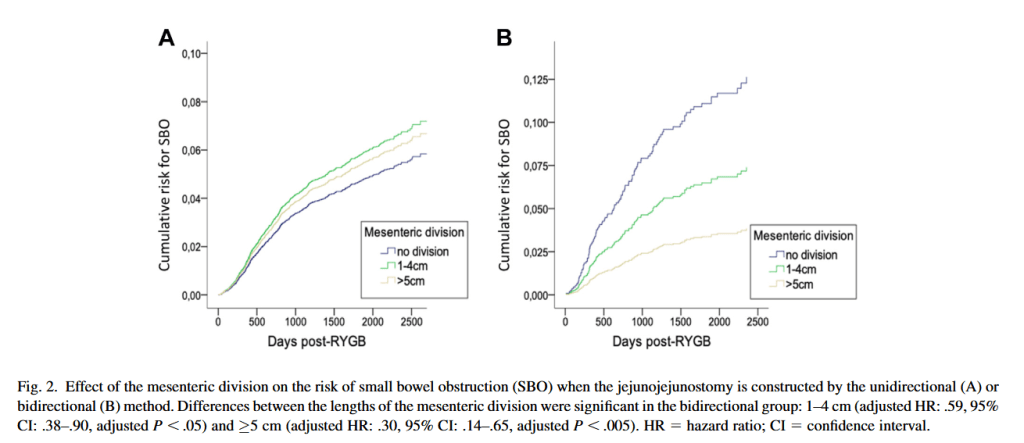
“Laparoscopic Roux-en-Y gastric bypass (RYGB) surgery is an effective bariatric procedure with excellent outcomes in terms of weight loss and reducing co-morbidities. Large series have demonstrated that the procedure can be performed with low postoperative morbidity and very low mortality. However, concerns have been raised about long-term complications, especially small bowel obstruction (SBO).
In Sweden, RYGB is almost exclusively performed laparoscopically using the antecolic, antegastric Gothenburg technique. Since the technique was first described, alterations have been introduced to reduce the risk of internal herniation, but these modifications have been reported to increase the risk of kinking of the jejunojejunostomy (JJ). Our group has previously demonstrated that diagnostic laparoscopy in RYGB patients suffering from postprandial symptoms often reveals surgically correctable dysfunction/kinking at the JJ.”

Continue reading

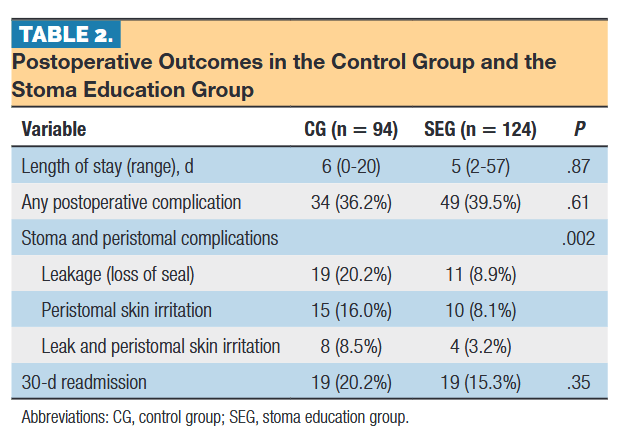
Institution of a Preoperative Stoma Education Group Class Decreases Rate of Peristomal Complications

“Over the previous 2 decades, a greater emphasis has been placed on preoperative education for patients anticipated to require a new stoma as part of an upcoming surgery. Preoperative stoma site marking, in combination with education and counseling with an ostomy nurse prior to surgery, has been associated with a decrease in stomal and peristomal complications such as peristomal skin irritation and appliance leakage.”

Continue reading

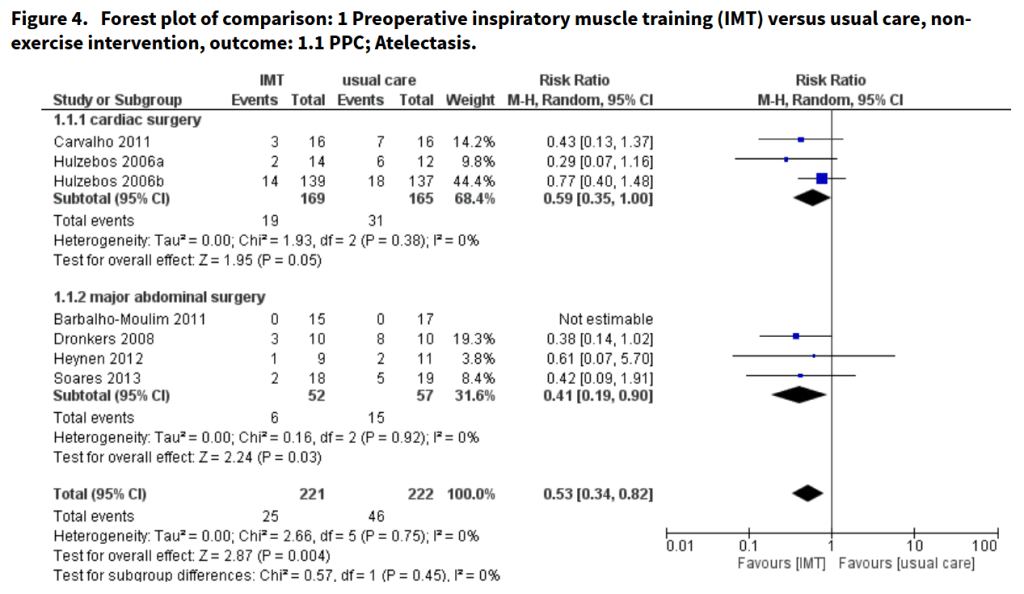
Preoperative inspiratory muscle training for postoperative pulmonary complications in adults undergoing cardiac and major abdominal surgery

“Despite advances in perioperative care in the last few decades, postoperative pulmonary complications (PPCs) are probably the leading cause of morbidity and mortality in adults undergoing chest and abdominal surgery. PPCs and cardiac complications are commonly regarded as the two major causes of perioperative problems in selected groups of patients undergoing these high-risk surgical procedures. However, PPCs are more common than postoperative cardiac complications and play a bigger role in mortality and healthcare costs. Despite these factors, the natural history of PPCs and the necessity of preventive strategies have not been well recognized in studies to date.”

Continue reading

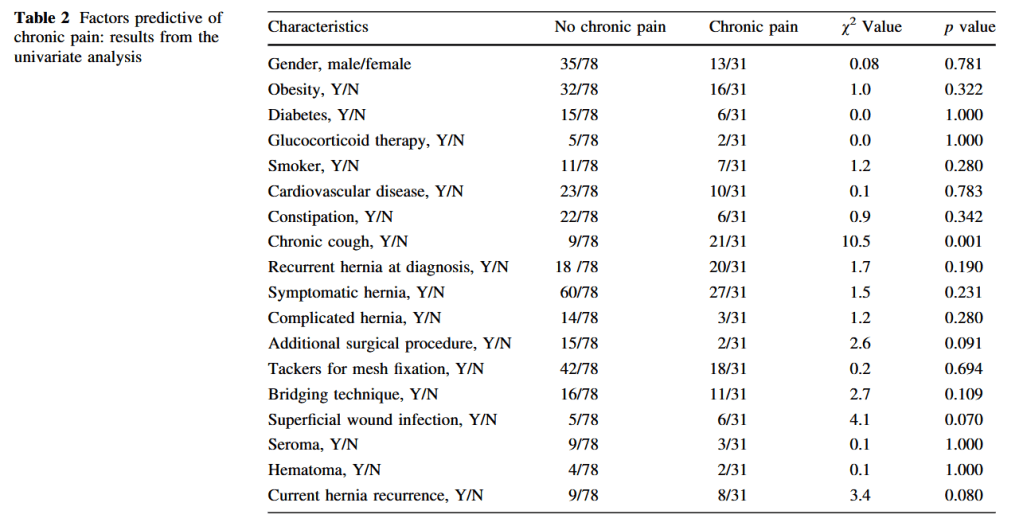
Risk Factors for Chronic Pain after Open Ventral Hernia Repair by Underlay Mesh Placement

“Incisional hernia is one of the most frequent long-term complications after abdominal surgery (11%–20%). After primary repair, rates of recurrence range from 24% to 54%. It has been clearly demonstrated that the use of prostheses for a tension-free repair allows for a
significant reduction in recurrence rate, and even for the treatment of small defects. However, the type and position of the mesh and the mesh fixation technique used are still a matter of debate. The underlay position of the mesh allows for easy treatment of major parietal defects with limited dissection and potentially lower rates of mesh infection, but this position exposes the patient to the risk of small bowel occlusion and enterocutaneous fistula.”

Continue reading

Robotic compared with laparoscopic cholecystectomy

“Robotic cholecystectomy was independently associated with a lower risk of serious complications, lower rate conversion to open, and hospitalization ≥24 hours compared with laparoscopic cholecystectomy. These findings suggest that new technologies might enhance the safety of minimally invasive surgery.”

Continue reading

Noninvasive positive pressure ventilation for acute respiratory failure following upper abdominal surgery

“More than four million abdominal surgeries are performed in the US every year and in England about 250,000 abdominal operations are performed per year. Adults undergoing upper abdominal surgery are at an increased risk of postoperative pulmonary complications.
Acute respiratory failure is a relatively common complication after abdominal surgery and is associated with significant morbidity and mortality. According to Michelet 2010, the development of respiratory complication may be explained by two pathological mechanisms.
The first is linked to surgical complications, notably with the occurrence of anastomotic leakage leading to mediastinitis, septic shock, and acute respiratory distress. The second is of medical origin, with multifactorial impairment of respiratory function.”

Continue reading