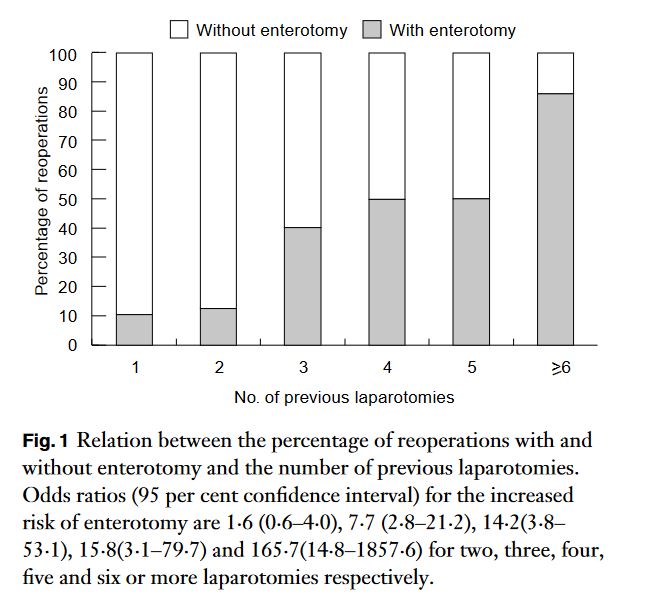
Morbidity and mortality of inadvertent enterotomy during adhesiotomy

“Postoperative intra-abdominal adhesions are a major concern in modern surgery. Intestinal obstruction is an important and well known clinical consequence of adhesions, resulting in significant morbidity and mortality rates, and high financial costs. Secondary infertility in women and chronic abdominal and pelvic pain are other, frequently cited, adhesion-related problems. Furthermore, intraabdominal adhesions render reoperation dif®cult and may
increase the complication rate of the intended surgical procedure. Prolonged operating time, unfeasibility of the laparoscopic approach and inadvertent enterotomy are known drawbacks of reoperative abdominal surgery, directly related to adhesions.”
Continue reading

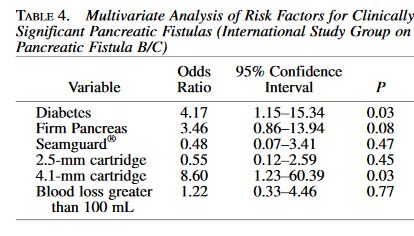
Risk Factors for Pancreatic Fistula after Stapled Gland Transection

“Distal Pancreatectomy (DP) is performed for both benign and malignant conditions affecting the body and tail of the pancreas. DP is also performed for chronic pancreatitis and occasionally for abdominal trauma. With improvements in imaging, surgical technology and technique, and postoperative care, the mortality from DP at high-volume centers is approximately 1 per cent. Despite the low mortality rate from DP, the morbidity rate from this procedure remains high (24 to 64 per cent in some series) with pancreatic fistula (PF) as
a common concern. Even with the use of linear stapling devices, fibrin glue, somatostatin analogs, thermal sealing devices, and mesh staple line reinforcement, PF continues to be a burden to patient quality of life and healthcare resources for those patients undergoing DP.”

Continue reading

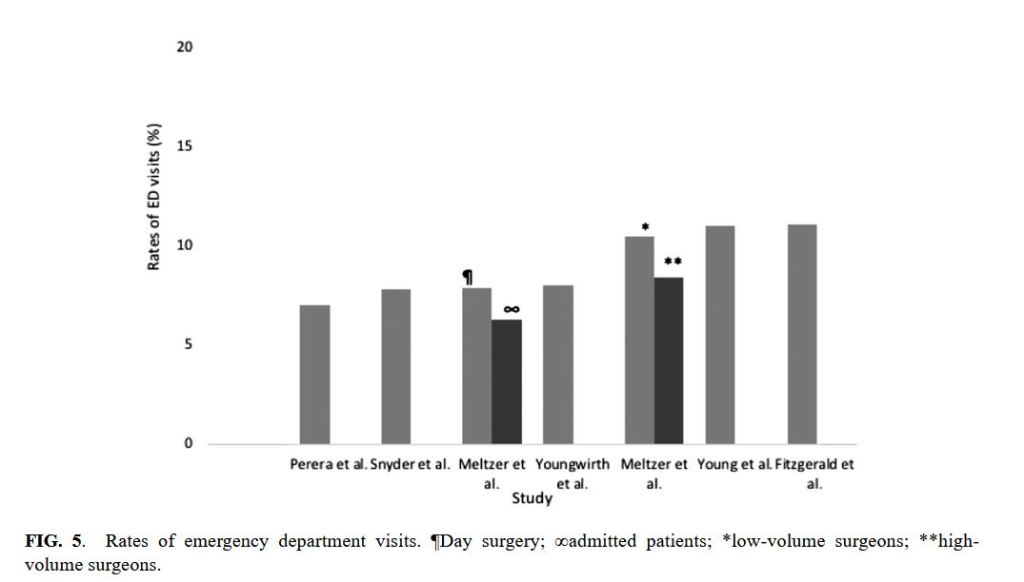
Unplanned Reoperations, Emergency Department Visits and Hospital Readmission After Thyroidectomy

“Emergency Department visits and hospital readmission after thyroidectomy are common, and there are several practices that can reduce their occurrence. Routine postoperative calcium and vitamin D supplementation may reduce rates of postoperative hypocalcemia, and avoiding postoperative hypertension may decrease the risk of neck hematoma development and the need for reoperation. Older age, thyroid cancer, dependent functional status, higher ASA score, diabetes, chronic obstructive pulmonary disease, steroid use, hemodialysis, and recent weight loss increase the risk of hospital readmission after thyroid surgery. By further identifying risk factors for reoperation, ED visits, and readmission, this review may assist practitioners in optimizing perioperative care and therefore reducing patient morbidity and mortality after thyroid operations.”

Continue reading

Postpancreatectomy hemorrhages: risk factors and outcomes

One discussion this week involved etiologies of postpancreatectomy hemorrhage.


Reference: Yekebas EF, et al. Postpancreatectomy hemorrhage: diagnosis and treatment: an analysis in 1669 consecutive pancreatic resections. Annals of Surgery. 2007 Aug;246(2):269-280. doi:10.1097/01.sla.0000262953.77735.db

Summary: With the purpose of creating algorithms for managing postpancreatectomy hemorrhage (PPH), Yekebas et al (2007) restrospectively analyzed more than 1669 pancreatic resections conducted between 1992 and 2006.  They concluded that the prognosis of postpancreatectomy hemorrhage (PPH) is primarily dependent on the presence of “preceding pancreatic fistula” (p.269).

Continue reading

Step-up vs open necrosectomy for necrotizing pancreatitis

Here are recent publications on the management of necrotizing pancreatitis.


BACKGROUND: The 2010 randomized PANTER trial in (infected) necrotizing pancreatitis found a minimally invasive step-up approach to be superior to primary open necrosectomy for the primary combined endpoint of mortality and major complications, but long-term results are unknown.

NEW FINDINGS: With extended follow-up, in the step-up group, patients had fewer incisional hernias, less exocrine insufficiency and a trend towards less endocrine insufficiency. No differences between groups were seen for recurrent or chronic pancreatitis, pancreatic endoscopic or surgical interventions, quality of life or costs.

IMPACT: Considering both short and long-term results, the step-up approach is superior to open necrosectomy for the treatment of infected necrotizing pancreatitis.

Continue reading