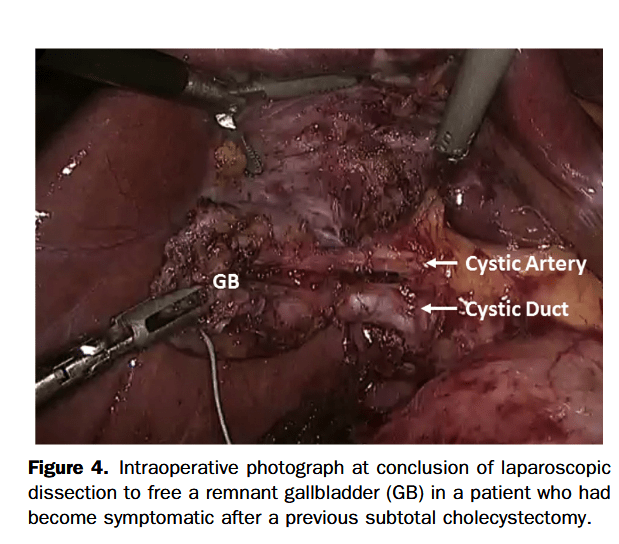
“Iatrogenic bile duct injury is a major cause of morbidity and mortality following laparoscopic cholecystectomy, occurring in 0.5–1.4% of cases. The presence of variant biliary anatomy increases the risk of such injuries. Prior studies have estimated that 19–39% of the population have anatomic variations of the biliary tree. These aberrant ducts can be mistaken for the cystic duct and clipped or cauterized inadvertently.”
Continue readingAuthor Archives: John
Surgical technique in constructing the jejunojejunostomy and the riskof small bowel obstruction after Roux-en-Y gastric bypass
“Laparoscopic Roux-en-Y gastric bypass (RYGB) surgery is an effective bariatric procedure with excellent outcomes in terms of weight loss and reducing co-morbidities. Large series have demonstrated that the procedure can be performed with low postoperative morbidity and very low mortality. However, concerns have been raised about long-term complications, especially small bowel obstruction (SBO).
In Sweden, RYGB is almost exclusively performed laparoscopically using the antecolic, antegastric Gothenburg technique. Since the technique was first described, alterations have been introduced to reduce the risk of internal herniation, but these modifications have been reported to increase the risk of kinking of the jejunojejunostomy (JJ). Our group has previously demonstrated that diagnostic laparoscopy in RYGB patients suffering from postprandial symptoms often reveals surgically correctable dysfunction/kinking at the JJ.”

Management of afferent loop obstruction
“Afferent loop obstruction is a purely mechanical complication that infrequently occurs following construction of a gastrojejunostomy. The operations most commonly associated with this complication are gastrectomy with Billroth II or Roux-en-Y reconstruction, and
pancreaticoduodenectomy with conventional loop or Roux-en-Y reconstruction. Etiology of afferent loop obstruction includes:
(1) entrapment, compression and kinking by postoperative adhesions
(2) internal herniation, volvulus and intussusception
(3) stenosis due to ulceration at the gastrojejunostomy site and radiation enteritis of the afferent loop
(4) cancer recurrence
(5) enteroliths, bezoars and foreign bodies.

Colonic Interposition After Adult Oesophagectomy
“Higher rates of morbidity and mortality following colonic conduits are reported to be due to be associated with longer operating times and the additional colo-gastric and colo-colic anastomoses. Yet, colonic conduits have the advantages of being longer, acid resistant, and possess an excellent blood supply. No consensus regarding the optimum site of colonic conduit (right vs. left) or placement route (posterior mediastinal, retrosternal or subcutaneous) exists. The operation is usually carried out based on individual surgeons’ preferences and experience, and in the absence of randomised controlled trials, this situation is likely to continue. The aim of this systematic review and meta-analysis was
to determine the optimal site of colonic conduit and route of placement after adult oesophagectomy.”

Complications of Jejunostomy Feeding Tubes
“To help mitigate the perioperative risks of poor nutrition status, nutritional interventions via either parenteral or enteral techniques are available. For these reasons, especially in the
setting of foregut reconstruction and planned return to oncology therapy, our bias has been the use of postoperative jejunal feeding tube access in our surgical oncology population in
high-risk and nutritionally depleted patients. Jejunostomy feeding tubes are not without complication, however, with high reported rates of tube dysfunction. Jejunostomy tubes
can be easily dislodged, have imperfect seals at wound exit sites leading to leakage, and can be somewhat cumbersome for patients and caregivers to maintain. Some authors have
begun to advocate for the selective placement of jejunostomy tubes following gastric and esophageal resections.”

Management of leakage and fistulas after bariatric surgery
“Leaks and fistulas are among the most feared complications of bariatric surgery. Variable in presentation, acuity, and severity, these often require multimodal and multispecialty management strategies for optimal outcomes. Recent advancements in the realm of endoscopic therapies have made these integral to the treatment algorithm of post-operative leaks and fistulas. In this review, we will discuss the epidemiology, pathophysiology and classification of post-bariatric surgery defects and provide an in-depth assessment of current management strategies, with a focus on endoscopic therapies.”

ACR Appropriateness Criteria® Suspected Small-Bowel Obstruction
“Small-bowel obstruction (SBO) is responsible for up to 16% of hospital admissions for abdominal pain with mortality ranging between 2% and 8% overall, and as high as 25%
when associated with bowel ischemia. Radiologic imaging plays the key role in the diagnosis and management of SBO because neither patient presentation, the clinical examination, nor laboratory testing are sufficiently sensitive or specific enough to diagnose or guide management. Imaging not only diagnoses the presence of SBO but also can aid in the differentiation of high-grade from low-grade obstruction. This differentiation helps to guide referring physicians between surgical treatment for high-grade or complicated SBO versus conservative management with enteric tube decompression.”