Cirrhotic nutritional management

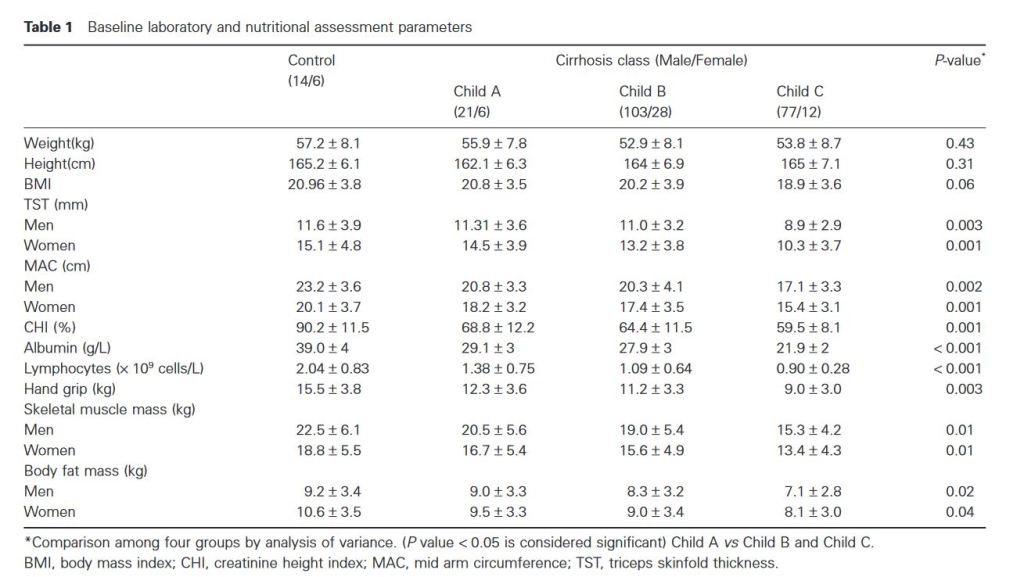
“Prevalence of malnutrition in chronic liver disease ranges between 10% and 100%, depends on severity of liver disease. Prevalence is more in patients with alcoholic cirrhosis compared to nonalcoholic cirrhotics. 3 Malnutrition is seen in all clinical stages but is easier to detect in advanced stages of liver cirrhosis. Many patients have subtle changes such as fat soluble vitamin deficiency, anemia from iron, folate or pyridoxine deficiency, altered cell-mediated immune functions and minimal loss of muscle mass, while patients with end-stage liver disease have muscle wasting, decreased fat stores, and cachexia.”

Continue reading

Postoperative pancreatic fistula

This week’s discussion included risk scoring and management of postoperative pancreatic fistula.


Nahm CB, Connor SJ, Samra JS, Mittal A. Postoperative pancreatic fistula: a
review of traditional and emerging concepts. Clin Exp Gastroenterol. 2018 Mar
15;11:105-118.

Prediction: “Biochemical markers of POP after pancreatic resection are evident from the first postoperative day. These include serum amylase and lipase, and urinary trypsinogen-2. In an observational study of 61 patients undergoing pancreatic resection, the presence of POP on the first postoperative day as determined by these markers was found to be a strong predictor of the development of POPF (OR 17.81, 95% CI 2.17–145.9) [128]

Continue reading

Refractory Variceal Bleed in Cirrhosis

Acute variceal bleeding is the major cause of mortality in patients with cirrhosis. The standard medical and endo-scopic treatment has reduced the mortality of variceal bleeding from 50% to 10–20%. The refractory variceal bleedis either because of failure to control the bleed or failure of secondary prophylaxis. The patients refractory to standardmedical therapy need further interventions. The rescue therapies include balloon tamponade, self-expanding metalstents (SEMS) placement, shunt procedures, including transjugular intrahepatic portosystemic shunt (TIPS),balloon-occluded retrograde transvenous obliteration (BRTO), and endoscopic ultrasound (EUS) guided coiling.

Continue reading

Non-Hepatic Abdominal Surgery in Patients with Cirrhotic Liver Disease

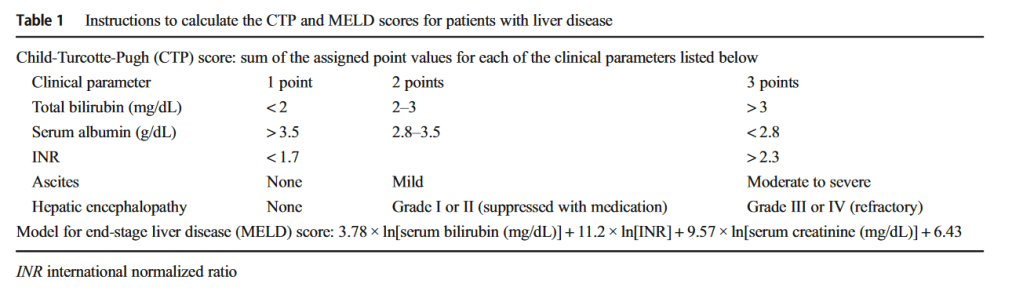
Cirrhotic liver disease is an important cause of peri-operative morbidity and mortality in general surgical patients. Early recog-nition and optimization of liver dysfunction is imperative before any elective surgery. Patients with MELD <12 or classified asChild A have a higher morbidity and mortality than matched controls without liver dysfunction, but are generally safe for electiveprocedures with appropriate patient education.

Continue reading

Incidence of problematic common bile duct calculi in patients undergoing laparoscopic cholecystectomy.

“Choledocholithiasis occurs in 3.4% of patients undergoing laparoscopic cholecystectomy but more than one third of these pass the calculi spontaneously within 6 weeks of operation and may be spared endoscopic retrograde cholangiopancreatography.” (Collins)

(Collins)
Continue reading

Incidence of biliary stricture formation after pancreaticoduodenectomy (PD) for benign and malignant periampullary disease.

“Between January 1995 and April 2003, 1595 patients underwent PD for periampullary disease (392 benign, 1203 malignant). A retrospective analysis of a prospectively collected database was performed to determine the incidence of biliary stricture after PD.”

Results: “Forty-two of the 1595 patients (2.6%) who underwent PD developed postoperative jaundice secondary to a stricture of the biliary-enteric anastomosis. There was no difference in the incidence of biliary strictures after resection for benign (n = 10, 2.6%) or malignant disease (n = 32, 2.6%). The median time to stricture formation resulting in jaundice was 13 months (range, 1–106 months) and was similar for patients with benign and malignant disease. Preoperative jaundice did not protect against biliary stricture formation. By univariate analysis, biliary strictures were associated with preoperative percutaneous biliary drainage (odds ratio [OR] = 2.11, P = 0.02) and postoperative biliary stenting (OR = 2.11, P = 0.013). Postoperative chemoradiotherapy in patients with malignant disease was not associated with stricture formation. All strictures were initially managed with percutaneous biliary balloon dilatation and stenting, and only 2 patients required redo hepaticojejunostomy. Recurrent neoplastic disease was discovered in only 3 of the 32 patients (9%) with malignant disease. All 3 of these patients had cholangiocarcinoma as their initial diagnosis.”

Continue reading

Pneumobilia versus portal venous gas

“Pneumobilia should be differentiated from portal venous gas. Portal venous gas is peripherally distributed to within 2 cm of the liver margin, whereas pneumobilia is centrally distributed.” (Gupta, P, et al. “PLAIN FILMS: BASICS.” Acute Care Surgery: Imaging Essentials for Rapid Diagnosis Eds. Kathryn L. Butler, et al. McGraw Hill, 2015.)

Continue reading