Trends and Risk Factors for Venous Thromboembolism Among Hospitalized Medical Patients

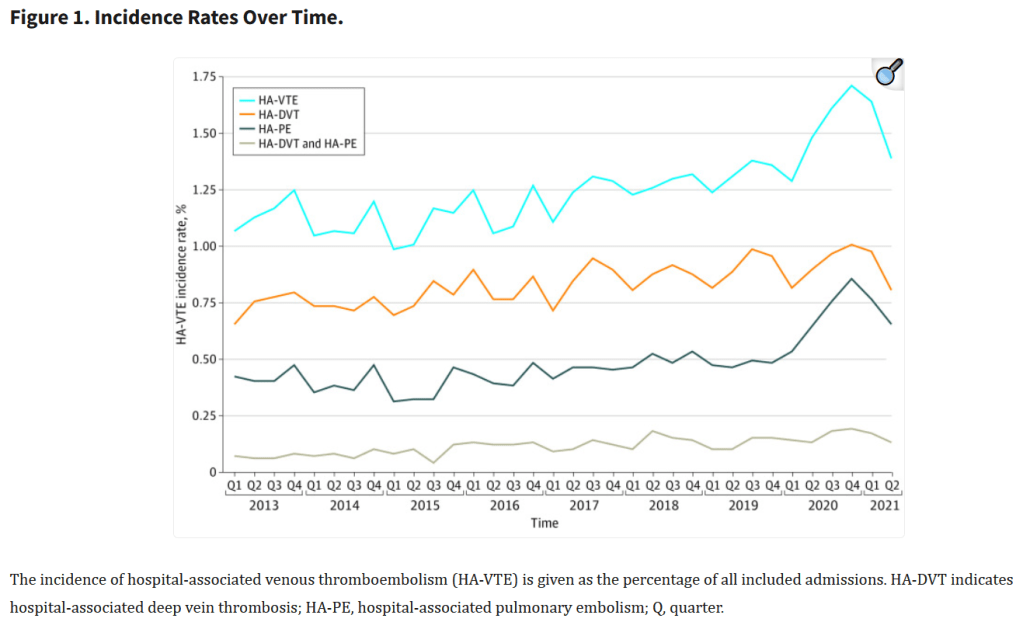
“Hospital-associated venous thromboembolism (HA-VTE), commonly defined as deep vein thrombosis (DVT), pulmonary embolism (PE), or both occurring during or within 90 days of hospital admission, is a frequent complication of hospitalization, accounting for approximately one-half to two-thirds of VTE incidence worldwide. HA-VTE events are associated with substantial burdens. They are a leading factor associated with hospital mortality and lost disability-adjusted life-years.”

Continue reading

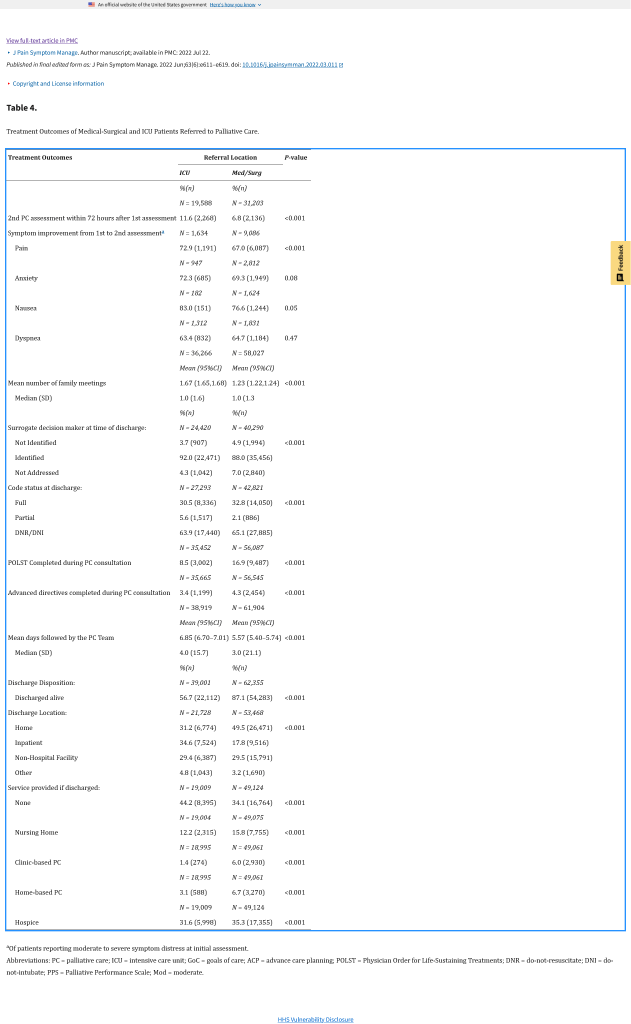
Utilization and Delivery of Specialty Palliative Care in the ICU

“Palliative care (PC) interventions in the critically ill have been associated with reduced subsequent ICU admissions and reduced ICU length of stay. Barriers to PC integration
and utilization in the ICU include unrealistic expectations of ICU interventions by patients and families, barriers related to ICU culture as well as cultural attributes of patients and families, insufficient training in PC principles for ICU clinicians, PC workforce shortages,
and inability of patients to participate in treatment discussions. Overcoming these barriers and assessing patient and provider needs for specialty PC depends on the availability and capabilities of PC services at the institutional level, the bandwidth of providers and characteristics of the patient population.”

Continue reading

Immediate versus Postponed Intervention for Infected Necrotizing Pancreatitis

“Acute pancreatitis is the most common pancreatic disease worldwide. Necrotizing pancreatitis develops in approximately 20 to 30% of patients with acute pancreatitis. Pancreatic and peripancreatic necrosis that becomes infected nearly always leads
to invasive intervention. The current standard approach for infected necrotizing pancreatitis is a minimally invasive step-up approach with catheter drainage as the first step. International guidelines advise postponement of catheter drainage and administration of antibiotics until the infected pancreatic and peripancreatic necrosis has become encapsulated; such walled-off necrosis usually takes 4 weeks to develop.”

Continue reading

Bleeding After Hemorrhoidectomy in Patients on Anticoagulation Medications

“It has been estimated that approximately 4.4% of the United States population has symptomatic hemorrhoids, contributing to as many as 2.5 million ambulatory visits
annually. Excisional hemorrhoidectomy is the preferred treatment for grade 3-4 hemorrhoids and patients unresponsive to non-operative treatment. Despite being a relatively quick, outpatient procedure, one potential serious complication includes post-hemorrhoidectomy
bleeding. Reported rates of this complication have varied. Studies suggest that .4-10% of hemorrhoidectomy cases will be complicated by bleeding and many requiring a second intervention.”

Continue reading

Metabolic Changes after Urinary Diversion

“Urologists who perform urinary diversions should not only be familiar with surgical techniques to create these diversions but should also be aware of metabolic changes that arise when intestinal segments are used to divert or to store urine. Many patients have a long life expectancy, even after oncological surgery with urinary diversion. The advance of medical care makes urinary diversion possible in older, less fit patients with impaired renal function. The duration of contact between urine and bowel, the segment and length of bowel used are factors that determine the nature and grade of metabolic effects. Diversion will result in immediate changes in metabolism.”

“The most popular diversions to date are made from ileal or ileocolonic segments. Noncontinent ileocutaneostomy or Bricker diversion is the most frequently used type of
diversion. This procedure was popularized by Bricker. In this procedure, a conduit is made from approximately 15 to 25 centimeters of preterminal ileum. Reasons for this
popularity over other types of diversion are the relative ease and simplicity of the procedure, the predictable functional results (no risk for incontinence, retention, and catheterization problems), and the fact that this type of diversion results in less metabolic changes (shorter bowel segment, no urinary storage).”

Continue reading

Noninvasive positive pressure ventilation for acute respiratory failure following upper abdominal surgery

“More than four million abdominal surgeries are performed in the US every year and in England about 250,000 abdominal operations are performed per year. Adults undergoing upper abdominal surgery are at an increased risk of postoperative pulmonary complications.
Acute respiratory failure is a relatively common complication after abdominal surgery and is associated with significant morbidity and mortality. According to Michelet 2010, the development of respiratory complication may be explained by two pathological mechanisms.
The first is linked to surgical complications, notably with the occurrence of anastomotic leakage leading to mediastinitis, septic shock, and acute respiratory distress. The second is of medical origin, with multifactorial impairment of respiratory function.”

Continue reading

Clinical characteristics and outcomes of patients with hepaticangiomyolipoma

“Angiomyolipoma (AML) is a solid mesenchymal tumor, mainly described in the
kidney, and belongs to the group of perivascular epithelioid cell tumors
(PEComas). Hepatic localization of AML, described for the first time in 1976, is
rare, since only around 600 cases were reported after an exhaustive search of the
literature up to the year 2017. Hepatic AML (HAML) poses a veritable diagnostic
challenge in radiological terms, especially when fat content is low, because this type of
tumor may appear as a hypervascular tumor associated with a washout phase that
mimics other, more common hypervascular hepatic tumors, such as hepatocellular
carcinoma”

Continue reading