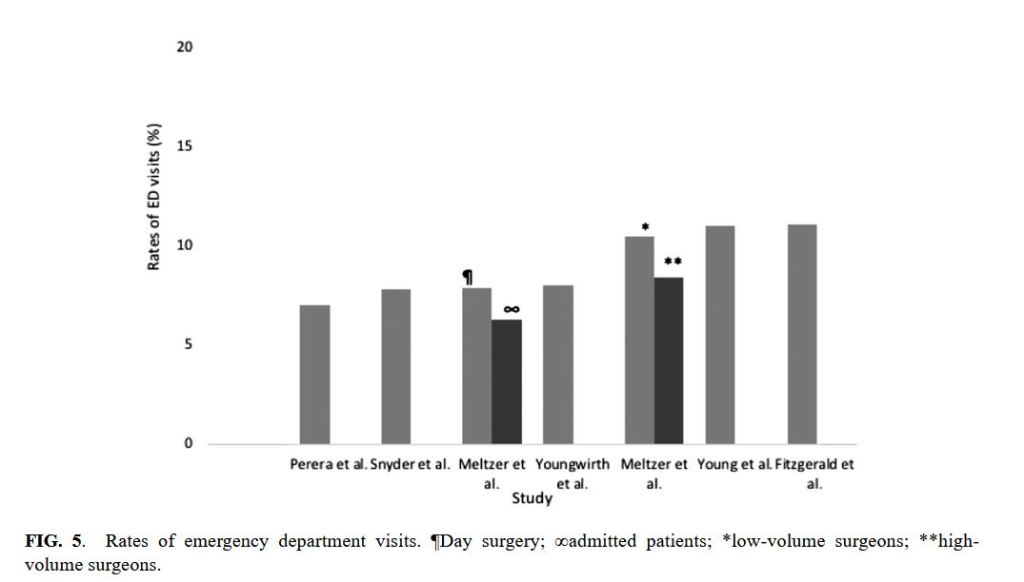
“Emergency Department visits and hospital readmission after thyroidectomy are common, and there are several practices that can reduce their occurrence. Routine postoperative calcium and vitamin D supplementation may reduce rates of postoperative hypocalcemia, and avoiding postoperative hypertension may decrease the risk of neck hematoma development and the need for reoperation. Older age, thyroid cancer, dependent functional status, higher ASA score, diabetes, chronic obstructive pulmonary disease, steroid use, hemodialysis, and recent weight loss increase the risk of hospital readmission after thyroid surgery. By further identifying risk factors for reoperation, ED visits, and readmission, this review may assist practitioners in optimizing perioperative care and therefore reducing patient morbidity and mortality after thyroid operations.”
“Duodenal stump leakage (DSL) is a postoperative complication specific to patients with the formation of a blind endof the duodenum, e.g., Roux-en-Y or Billroth-II reconstruction. The incidence of DSL after radical gastrectomy with a duodenal stump ranges between 1.8% and 7.7%, with a mortality rate of 7–67%.” “Although manual reinforcement of the duodenal stump is equally effective in preventing DSL development in both laparoscopic and open surgeries, it may not be routinely performed because of its technical difficulty during laparoscopic gastrectomies.”
Abstract: Leakage from the duodenal stump has been the most feared complication of the Billroth II reconstruction following gastric resection. The purpose of our study was to evaluate four methods of duodenal stump closure in 200 patients. One hundred and forty-seven (74%) patients had duodenal ulcers; 28 (14%) had gastric ulcers; and 25 (13%) had a variety of other inflammatory conditions. The most common indication for operation was acute hemorrhage (51%), followed by perforation (24%), intractability (15%), and obstruction (10%). Conventional duodenal closures were performed in 160 (80%) patients, Nissen’s closure in 25 (13%), Bancroft’s closure in 6 (3%), and tube duodenostomy in 9 (5%). Duodenal leaks occurred in four (2.5%) patients with conventional closures and in three (33%) patients with tube duodenostomies. No leaks occurred in patients with Nissen’s or Bancroft’s closures. The hospital mortality rate for the series was 9.5%; however, no patient who developed a duodenal leak died. We conclude that Nissen’s and Bancroft’s closures were safe and effective, but that tube duodenostomy did not reliably prevent uncontrolled leakage.
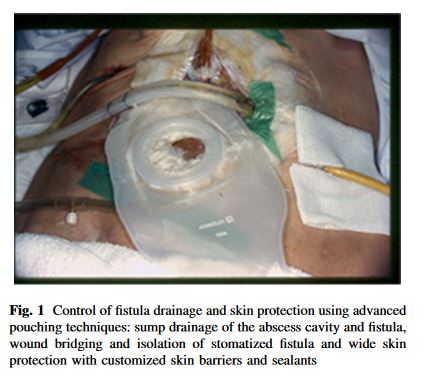
“Enterocutaneous Fistula (ECF) is defined as an abnormal connection between the gastrointestinal tract and the skin, and it requires labor-intensive medical management and surgical expertise. Complex wound management, severe malnutrition, frequent infectious complications, chronic pain, and depression require significant investment of health care resources and make the short-term and long-term care of these patients difficult.”
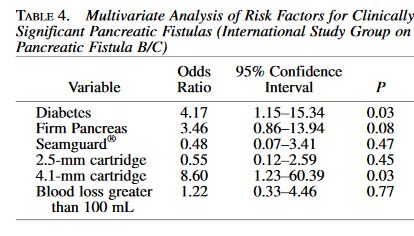
“Readmissions are a common complication after pancreaticoduodenectomy and are increasingly being used as a performance metric affecting quality assessment, public reporting, and reimbursement. This study aims to identify general and pancreatectomy-specific factors contributing to 30-day readmission after pancreaticoduodenectomy, and determine the additive value of incorporating pancreatectomy-specific factors into a large national dataset.” “Large registry analyses of pancreatectomy outcomes are markedly improved by the incorporation of granular procedure-specific data. These data emphasize the need for prevention and careful management of perioperative infectious complications, fluid management, thromboprophylaxis, and pancreatic fistulae.”
“Enteral ostomies are common in the management of patients with gastrointestinal conditions, including colorectal cancer (CRC), inflammatory bowel disease (IBD), diverticular disease, intestinal trauma, and intestinal perforation. An estimated 750,000 Americans live with an ostomy and 130,000 new ostomy surgeries occur in the United States annually. People with ostomies often face postsurgical complications and challenges to daily self-care. Studies have suggested that adequate stomal care improves clinical outcomes and reduces hospitalizations. However, little guidance exists to support clinicians in managing patients with an ostomy beyond the immediate perioperative period.”
“Obstruction and perforation due to colorectal cancer represent challenging matters in terms of diagnosis, life-saving strategies, obstruction resolution and oncologic challenge. The aims of the current paper are to update the previous WSES guidelines for the management of large bowel perforation and obstructive left colon carcinoma (OLCC) and to develop new guidelines on obstructive right colon carcinoma (ORCC).” “CT scan is the best imaging technique to evaluate large bowel obstruction and perforation. For OLCC, self-expandable metallic stent (SEMS), when available, offers interesting advantages as compared to emergency surgery; however, the positioning of SEMS for surgically treatable causes carries some long-term oncologic disadvantages, which are still under analysis. In the context of emergency surgery, resection and primary anastomosis (RPA) is preferable to Hartmann’s procedure, whenever the characteristics of the patient and the surgeon are permissive. Right-sided loop colostomy is preferable in rectal cancer, when preoperative therapies are predicted. With regards to the treatment of ORCC, right colectomy represents the procedure of choice; alternatives, such as internal bypass and loop ileostomy, are of limited value.”
“Conclusions: grey areas and opportunities for improvements
We found some limitations within the present guidelines:
– They fail to cover all the possible abdominal scenarios when colon cancer occurs as an emergency: for example, associated resections were not taken into considerations, neither we discussed about therapeutic strategies in case of evidence of peritoneal carcinomatosis. – Despite our attempts to underline suggestions in case of low technical resources, the present guidelines are generally oriented toward hospitals with high level of resources.
On the other side, in our opinion, the current guidelines suggest some stimuli for doctors involved in this field:
– To review the approach to patient suffering from abdominal pain by introducing and promoting the use of bedside abdominal US. – To bear in mind that the emergency surgeon should have a strong oncologic background or that the specialised colorectal surgeon should have a strong background of surgical pathophysiology, emergency surgery and damage control philosophy. – To promote the use of clinical pathways within singular Hospitals”