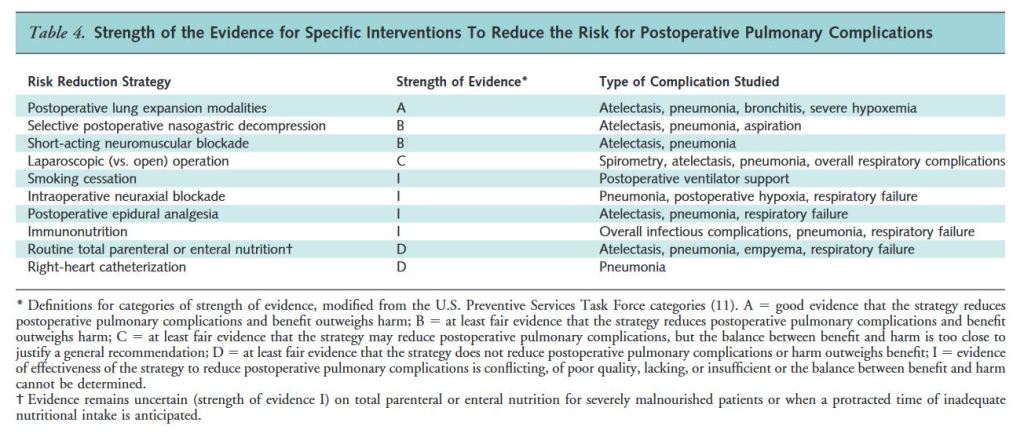
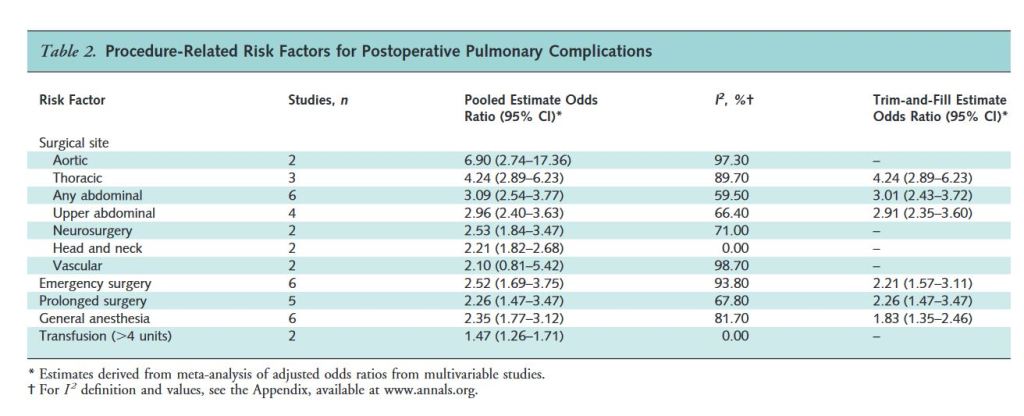
“Postoperative pulmonary complications are as common as cardiac complications for patients undergoing non-cardiothoracic surgery. Further, these complications have similar mortality rates and length of stay after elective abdominal surgery or hip fracture repair. This current systematic review synthesizes the evidence on preventive strategies and focuses on atelectasis, pneumonia, and respiratory failure.”
“Postoperative pulmonary complications contribute importantly to the risk for surgery and anesthesia. The most important and morbid postoperative pulmonary complications are atelectasis, pneumonia, respiratory failure, and exacerbation of underlying chronic lung disease. Clinicians who care for patients in the perioperative period may be surprised to learn that postoperative pulmonary complications are equally prevalent and contribute similarly to morbidity, mortality, and length of stay.”
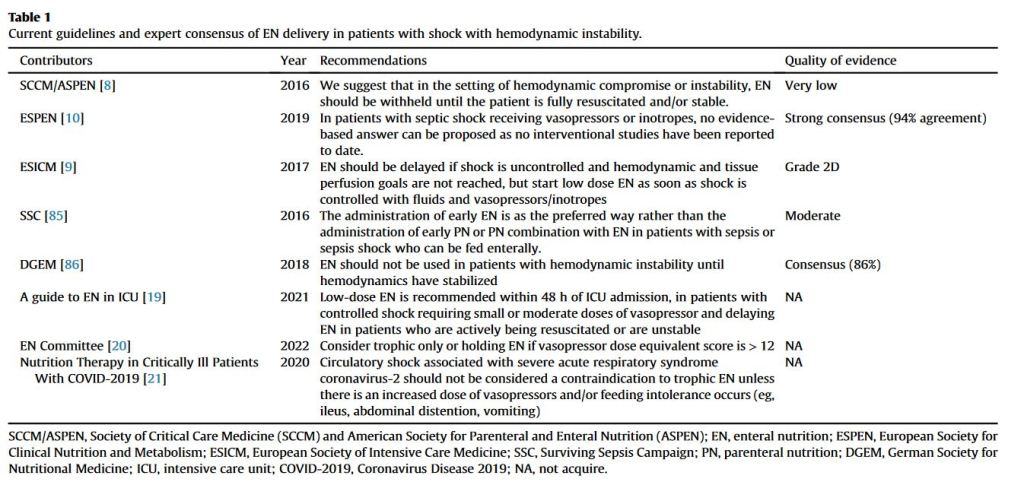
“Shock is a common critical illness characterized by microcirculatory disorders and insufficient tissue perfusion. Patients with shock and hemodynamic instability generally require vasopressors to maintain the target mean arterial pressure. Enteral nutrition (EN) is an important therapeutic intervention in critically ill patients and has unique benefits for intestinal recovery. However, the initiation of early EN in patients with shock receiving vasopressors remains controversial.” “It remains a therapeutic challenge in critical care nutrition therapy to determine the initiation time of EN in patients with shock receiving vasopressors and the safe threshold region for initiating EN with vasopressors. Therefore, the current review aimed to summarize the evidence on the optimal and safe timing of early EN initiation in patients with shock receiving vasopressors to improve clinical practice.”
“The prophylactic use of nasogastric tubes after abdominal operations, flexible tubes inserted through the nose, pharynx, oesophagus and into the stomach, has happened only in the last century, becoming so prevalent that it has been variously described as “the standard of care” (Montgomery 1996), “traditionally used by most surgeons” (Lee 2002), “common practice” (Cunningham 1992, Sakadamis 1999, Manning 2001), “unquestioned” (Savassi-Rocha 1992), and “routine” (Wolff 1989). What is to be achieved by this prophylaxis is gastric decompression, decreased likelihood of nausea and vomiting, decreased distention, less chance of pulmonary aspiration and pneumonia, less chance of wound separation and infection, less chance of fascial dehiscence and hernia, earlier return of bowel function, and earlier hospital discharge.”
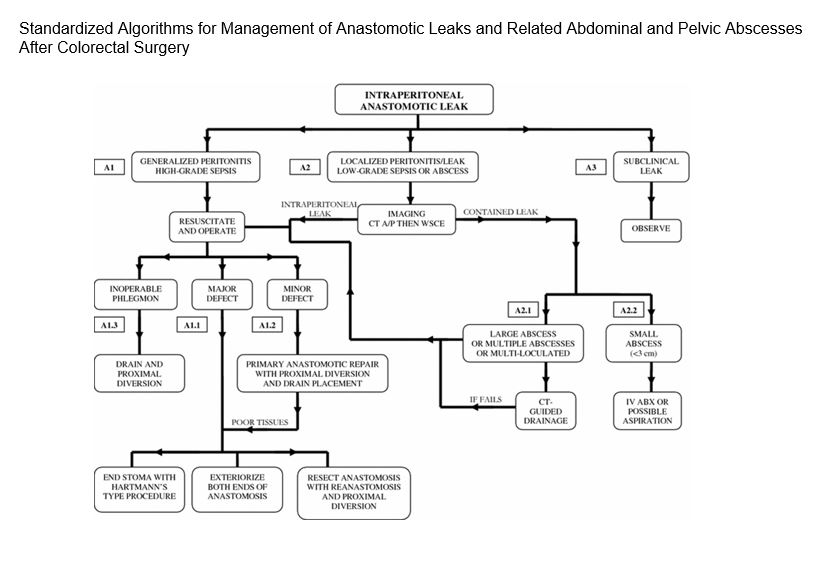
“The risk factors and incidence of anastomotic leak following colorectal surgery are well reported in the literature. However, the management of the multiple clinical scenarios that may be encountered has not been standardized.” In this study, “management scenarios were divided into those for intraperitoneal anastomoses, extraperitoneal (low pelvic) anastomoses, and anastomoses with proximal diverting stomas. Management options were then based on the clinical presentation and radiographic findings and organized into three interconnected algorithms.”
Recommendations for the management of intraperitoneal anastomotic leak with references to the pertinent sections of this article for more information. KEY: IV ABX=intravenous antibiotics; CT=computed tomographic; WSCE=water soluble contrast enema; CT A/P=computed tomographic scan of the abdomen and pelvisContinue reading →
“The reported complication rates after breast cancer surgery are low, with rates ranging from 2% to 50%, and are reportedly more common when performed in conjunction with axillary surgery and immediate breast reconstruction. A breakdown by procedure type has shown morbidity rates between 5% and 50% after mastectomy and from 3% to 35% after lumpectomy with or without reconstruction.”
“Hypoparathyroidism (HP) is a recognized but serious complication of thyroidectomy. Conventional techniques for parathyroid autograft (PA) occur with the insertion of parathyroid slices in muscle pockets and have a published incidence of HP of 4%–8%. The purpose of this study was to analyze the incidence of HP after thyroidectomy at our center, where we have used a modified technique for PA.”