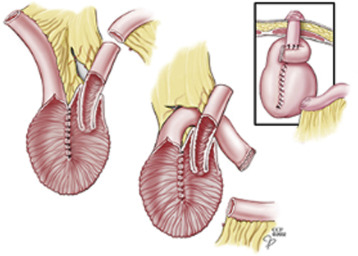
Continent ileostomy modifications

Today’s discussion topics included the Barnett continent intestinal reservoir.


Worsey J, Fazio VW. (2017). Continent Ileostomy. In: Current Therapy in Colon and Rectal Surgery, 3rd ed, pgs. 204-208. Elsevier: NY.

Full-text for Emory users.

Philadelphia Illustration Dept./Elsevier

FIGURE 40-3. Barnett modification of the continent ileostomy. (Cleveland Clinic Center for Medical Art & Photography.)

Continue reading

Surgical Grand Rounds: EVAR, FEVAR, and Open Repair: What to make of alphabet soup

Presented by Amanda Fobare, MD, Chief Resident

Department of Surgery, Emory University School of Medicine

February 27, 2020


The evidence: EVAR vs. open repair for elective AAA repair: 

  • EVAR 1 – Endovascular Aneurysm Repair Trial 1 (UK)- Lancet (2005, 2016)
  • DREAM – Dutch Randomized Endovascular Aneurysm Management Trial (Netherlands & Belgium)- NEJM (2004), JVS (2017)
  • OVER – Open versus Endovascular Repair Trial (USA)- JAMA (2009), NEJM (2012)

Continue reading

Belatacept-based immunosuppression in de novo liver transplant recipients: 1-year experience from a phase II randomized study.

Klintmalm GB, et al. Belatacept-based immunosuppression in de novo liver transplant recipients: 1-year experience from a phase II randomized study. Am J Transplant. 2014 Aug;14(8):1817-27.

Free full-text. 

“This exploratory phase II study evaluated the safety and efficacy of belatacept in de novo adult liver transplant recipients. Patients were randomized (N = 260) to one of the following immunosuppressive regimens: (i) basiliximab + belatacept high dose [HD] + mycophenolate mofetil (MMF), (ii) belatacept HD + MMF, (iii) belatacept low dose [LD] + MMF, (iv) tacrolimus + MMF, or (v) tacrolimus alone. Continue reading

Effect of inflow and outflow sites on the results of tibioperoneal vein grafts.

Sidawy AN, Menzoian JO, Cantelmo NL, LoGerfo FW. Effect of inflow and outflow
sites on the results of tibioperoneal vein grafts. Am J Surg. 1986 Aug;152(2):211-4.

Full-text for Emory users.

“We have reviewed our experience with the tibial vessel bypass operation and have found the overall patency and limb salvage rates to be acceptable. Patients were divided into two groups based on the site of the proximal anastomosis. In Group I, the proximal anastomosis was at the common femoral artery and in Group II, the proximal anastomosis was at the distal superficial femoral artery or the popliteal artery. The patients in the two groups were similar with regard to indications for operation, age, and sex. However, in Group I, 35 percent of the patients were diabetic and in Group II, 74 percent of the patients were diabetic. In the Group I patients, the 72 month graft patency rate was 65 percent with a limb salvage rate of 75 percent. In the Group II patients, the 72 month patency rate was 81 percent with a limb salvage rate of 89 percent. Continue reading

Extended-duration thromboprophylaxis after CRS/HIPEC

Khan S, et al. Incidence, Risk Factors, and Prevention Strategies for Venous Thromboembolism after Cytoreductive Surgery and Hyperthermic Intraperitoneal Chemotherapy. Ann Surg Oncol. 2019 Jul;26(7):2276-2284.

Full-text for Emory users.

“A policy change was made in February 2010 to discharge all patients post-CRS/HIPEC with 14 days of additional pharmacothromboprophylaxis, which consisted of low-molecular-weight heparin in 327 of 447 (73%) cases (Supplemental Figure). The 60-day VTE rate decreased from 10.2 to 4.9% after this policy was instituted (p = 0.10, Fig. 2).”

“This policy is in accordance with established guidelines indicating the need for a total of 4 weeks of pharmacothromboprophylaxis in high-risk patients after abdominal or pelvic surgery for cancer. [2,21] Given that patients have an average length of stay of nearly 2 weeks, discharging them on 14 days of pharmacothromboprophylaxis fulfills this duration.”

Continue reading

Postoperative negative pressure pulmonary edema

Liu R, Wang J, Zhao G, Su Z. Negative pressure pulmonary edema after general anesthesia: A case report and literature review. Medicine (Baltimore). 2019 Apr;98(17): e15389. doi: 10.1097/MD.0000000000015389.

Free full-text.

It is widely accepted that the central mechanism of postoperative NPPE is related to rapid negative intrapleural pressure increasing due to forceful inspiration against the obstruction, which can be up to 10 times or more that of normal breathing. [7] A typical event leading to acute airway obstruction associated with postoperative NPPE is laryngospasm. Other procedure that increases the risk of NPPE includes oropharyngeal, head, and neck surgery. Five [8–12] of the reported 29 cases involved upper respiratory tract surgery, and 10 [1,3,6,7,13–18] of the cases involved head and neck surgery, which may be related to tissue swelling and the sensitive dilator muscle of the upper airway in head and neck surgeries.

Continue reading

Articles of interest: Elimination of the Autopsy Requirement by CMS

Rueckert J. Elimination of the Autopsy Requirement by CMS. N Engl J Med. 2020 Feb 13;382(7):683-684.

Full-text for Emory users.

The autopsy plays a vital role in quality assurance by providing education and feedback to clinicians regarding diagnostic accuracy, therapeutic efficacy, and medical complications. At our institution, we promote a culture of transparency. Discrepant cases are discussed with the treating physicians and families and are also presented at conferences on morbidity and mortality, to educate a broad audience. As is the case at other academic institutions, our autopsy service provides extensive support of cutting-edge research efforts and hence is not “obsolete.”

CMS is making a mistake. A robust autopsy service plays an important role in providing and maintaining high-quality patient care. By eliminating the autopsy requirement, we are burying opportunities for improvement. The autopsy should be supported, not undermined.

Continue reading