Presented by:
Michael J. Connor, Jr., MD
Critical Care Medicine & Nephrology
Emory University School of Medicine
michael.connor@emory.edu
Dr. Connor’s full presentation is available for download on his Twitter feed: @criticalbeansmd

Presented by:
Michael J. Connor, Jr., MD
Critical Care Medicine & Nephrology
Emory University School of Medicine
michael.connor@emory.edu
Dr. Connor’s full presentation is available for download on his Twitter feed: @criticalbeansmd
Zhou F, Yu T, Du R, et al. Clinical course and risk factors for mortality of adult inpatients with COVID-19 in Wuhan, China: a retrospective cohort study. Lancet. 2020 Mar 11. doi: 10.1016/S0140-6736(20)30566-3. [Epub ahead of print]
Full-text for Emory users.
“191 patients (135 from Jinyintan Hospital and 56 from Wuhan Pulmonary Hospital) were included in this study, of whom 137 were discharged and 54 died in hospital. 91 (48%) patients had a comorbidity, with hypertension being the most common (58 [30%] patients), followed by diabetes (36 [19%] patients) and coronary heart disease (15 [8%] patients). Multivariable regression showed increasing odds of in-hospital death associated with older age (odds ratio 1·10, 95% CI 1·03-1·17, per year increase; p=0·0043), higher Sequential Organ Failure Assessment (SOFA) score (5·65, 2·61-12·23; p<0·0001), and d-dimer greater than 1 μg/L (18·42, 2·64-128·55; p=0·0033) on admission. Median duration of viral shedding was 20·0 days (IQR 17·0-24·0) in survivors, but SARS-CoV-2 was detectable until death in non-survivors. The longest observed duration of viral shedding in survivors was 37 days.”
Murken DR, Bleier JIS. Ostomy-Related Complications. Clin Colon Rectal Surg. 2019 May;32(3):176-182.
Full-text for Emory users.
“Stomal necrosis has been reported to occur in up to 20% of ostomates in the immediate postoperative period ([Fig. 1]).[3] Specific risk factors for stoma necrosis include emergent operation, inadequate mobilization of the bowel, excessive mesenteric resection resulting in inadequate arterial blood supply to or venous drainage from the bowel, and constriction in the abdominal wall due to excessively small openings in the fascia, abdominal wall mesh, or skin.[10] [20] Importantly, the obese patient is seven times more likely to experience stoma necrosis than the nonobese patient.[21] Stoma necrosis is much less common for loop stomas given the dual blood supply to both the afferent and efferent limbs.”
Perry AM, Choi SM. Kikuchi-Fujimoto Disease: A Review. Arch Pathol Lab Med. 2018 Nov; 142(11):1341-1346.
“Kikuchi-Fujimoto disease (KFD) is a rare entity characterized by subacute necrotizing lymphadenopathy and frequently associated with fever. Young adults of Asian ancestry are most commonly affected, but it has been reported worldwide. Despite many studies in the literature, the cause of KFD remains uncertain. Histologically, KFD is characterized by paracortical lymph node expansion with patchy, well-circumscribed areas of necrosis showing abundant karyorrhectic nuclear debris and absence of neutrophils and eosinophils. Three evolving histologic patterns — proliferative, necrotizing, and xanthomatous — have been recognized. By immunohistochemistry, histiocytes in KFD are positive for myeloperoxidase. There is a marked predominance of T cells in the lesions (with mostly CD8-positive cells) with very few B cells. The differential diagnosis of KFD includes infectious lymphadenitis, autoimmune lymphadenopathy (primarily systemic lupus erythematosus), and lymphoma.”
Today’s discussion topics included the Barnett continent intestinal reservoir.
Worsey J, Fazio VW. (2017). Continent Ileostomy. In: Current Therapy in Colon and Rectal Surgery, 3rd ed, pgs. 204-208. Elsevier: NY.
Full-text for Emory users.
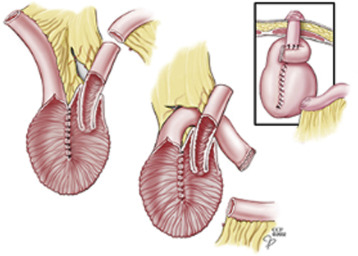
FIGURE 40-3. Barnett modification of the continent ileostomy. (Cleveland Clinic Center for Medical Art & Photography.)
Presented by Amanda Fobare, MD, Chief Resident
Department of Surgery, Emory University School of Medicine
February 27, 2020
The evidence: EVAR vs. open repair for elective AAA repair:
Klintmalm GB, et al. Belatacept-based immunosuppression in de novo liver transplant recipients: 1-year experience from a phase II randomized study. Am J Transplant. 2014 Aug;14(8):1817-27.
“This exploratory phase II study evaluated the safety and efficacy of belatacept in de novo adult liver transplant recipients. Patients were randomized (N = 260) to one of the following immunosuppressive regimens: (i) basiliximab + belatacept high dose [HD] + mycophenolate mofetil (MMF), (ii) belatacept HD + MMF, (iii) belatacept low dose [LD] + MMF, (iv) tacrolimus + MMF, or (v) tacrolimus alone. Continue reading


