Management of Patients With Acute Lower Gastrointestinal Bleeding

“Acute lower gastrointestinal bleeding (LGIB) is one of the most common reasons for hospitalization in the United States due to a digestive disorder, accounting for over 100,000 admissions annually. Although historically LGIB has referred to a bleeding source originating distal to the ligament of Treitz, small bowel bleeding is considered a separate entity, with a distinct diagnostic and therapeutic algorithm. For the purposes of this clinical practice guideline, LGIB refers to hematochezia or bright red blood per rectum originating from a colorectal source.”

Continue reading

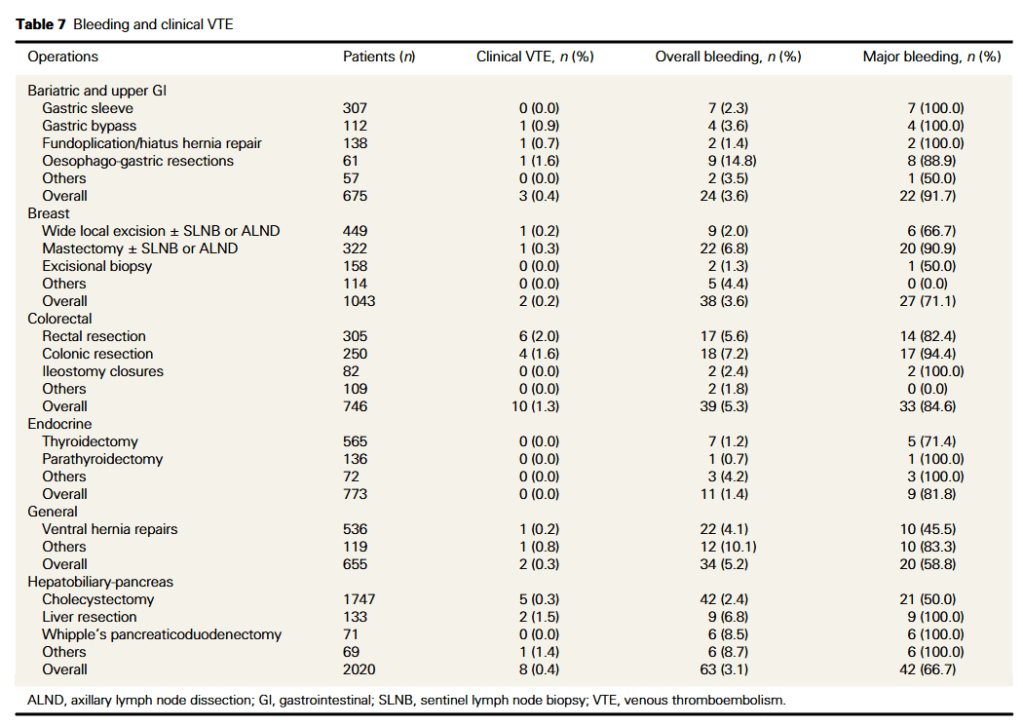
Variations in practice of thromboprophylaxis across general surgical subspecialties: a multicentre (PROTECTinG) study of elective major surgeries

“General surgical patients who undergo major operations are at risk of venous thromboembolism (VTE). This incurs significant morbidity and healthcare costs. Therefore, the Royal Australasian College of Surgeons and other regulatory bodies recommend routine thromboprophylaxis. Moreover, considerations for thromboprophylaxis is an integral part of theatre timeout performed prior to any operation.”

“In this study, we extend the observations made from our multicentre survey by quantifying the heterogeneity of perioperative thromboprophylaxis across all major general surgical operations, and placing them in context of their bleeding and VTE risk. Findings from this study will highlight areas of practice with the greatest variability, allow surgeons to benchmark their practices against that of their colleagues and focus future research to optimize perioperative thromboprophylaxis.”

Continue reading

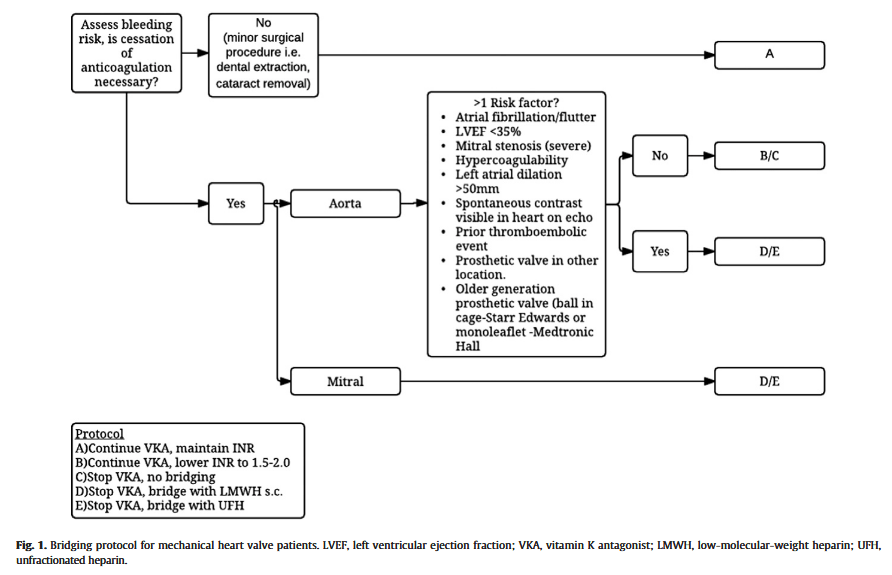
Anticoagulant bridging in left-sided mechanical heart valve patients

“There are two strategies for heparin bridging; administration of intravenous unfractionated heparin (UFH), and subcutaneous low-molecular-weight heparin (LMWH). While both strategies reduce the risk of valve thrombus formation, they have distinct biomedical, financial, and logistical profiles. UFH is administered intravenously according to a nomogram and hence requires peri-procedural hospital admission and continuous monitoring of
activated partial thromboplastin time (aPTT). In contrast, LMWH is administered subcutaneously once or twice daily in an outpatient setting and usually does not require continuous blood monitoring of anti-Xa levels.”

Continue reading

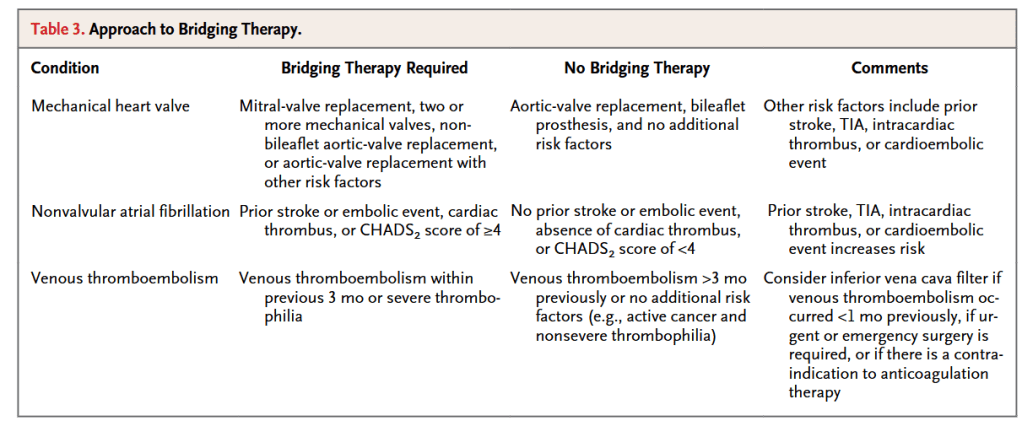
Management of antithrombotic therapy in patients undergoing invasive procedures

“The question of whether antithrombotic therapy should be suspended in a patient who
will be undergoing an invasive procedure involves balancing the risk of postproce-
dural bleeding with continued treatment against the thrombotic risk with suspension
of treatment and use of bridging anticoagulation therapy. In general, a patient under-
going a procedure that is associated with a low risk of bleeding (low-risk procedure)
can safely continue antithrombotic therapy and should do so, particularly if the pa-
tient is at high risk for a thromboembolic event (high-risk patient). Conversely, a pa-
tient undergoing a high-risk procedure can temporarily discontinue antithrombotic
agents safely if the patient is at low risk for a thromboembolic event (low-risk patient).”

Continue reading

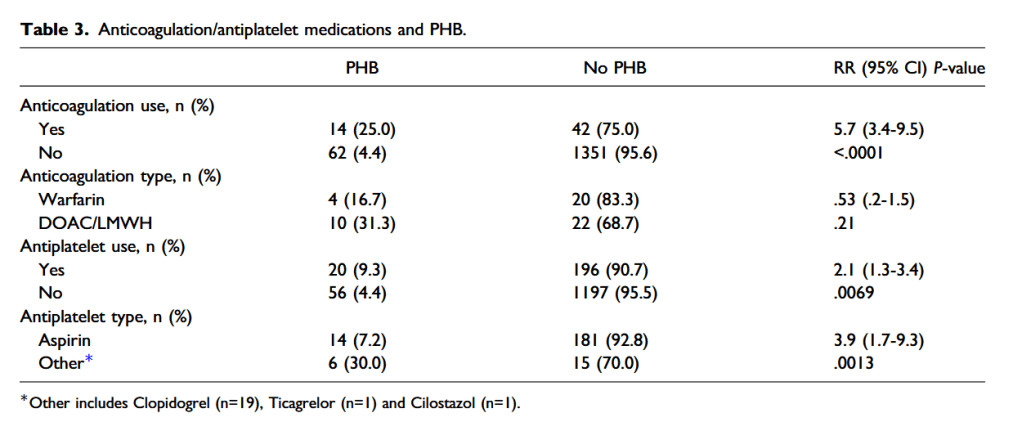
Bleeding After Hemorrhoidectomy in Patients on Anticoagulation Medications

“It has been estimated that approximately 4.4% of the United States population has symptomatic hemorrhoids, contributing to as many as 2.5 million ambulatory visits
annually. Excisional hemorrhoidectomy is the preferred treatment for grade 3-4 hemorrhoids and patients unresponsive to non-operative treatment. Despite being a relatively quick, outpatient procedure, one potential serious complication includes post-hemorrhoidectomy
bleeding. Reported rates of this complication have varied. Studies suggest that .4-10% of hemorrhoidectomy cases will be complicated by bleeding and many requiring a second intervention.”

Continue reading

Bleeding After Hemorrhoidectomy in Patients on Anticoagulation Medications

“It has been estimated that approximately 4.4% of the United States population has symptomatic hemorrhoids, contributing to as many as 2.5 million ambulatory visits annually. Excisional hemorrhoidectomy is the preferred treatment for grade 3-4 hemorrhoids and patients unresponsive to non-operative treatment. Despite being a relatively quick, outpatient procedure, one potential serious complication includes post-hemorrhoidectomy bleeding. Reported rates of this complication have varied. Studies suggest that .4-10% of hemorrhoidectomy cases will be complicated by bleeding and many requiring a second intervention. Among risk factors that have been associated with delayed bleeding are male sex, post-operative constipation, and the use of laxatives. Scarce data exist on the association of baseline oral anticoagulation or antiplatelet medications with delayed bleeding.”

Continue reading

Periprocedural bridging anticoagulation

Rechenmacher SJ, Fang JC. Bridging Anticoagulation: Primum Non Nocere. J Am Coll Cardiol. 2015 Sep 22;66(12):1392-403.

Full-text for Emory users.

Conclusions: Periprocedural anticoagulation management is a common clinical dilemma with limited evidence (but 1 notable randomized trial) to guide our practices. Although bridging anticoagulation may be necessary for those patients at highest risk for TE, for most patients it produces excessive bleeding, longer length of hospital stay, and other significant morbidities, while providing no clear prevention of TE. Unfortunately, contemporary clinical practice, as noted in physician surveys, continues to favor interruption of OAC and the use of bridging anticoagulation. While awaiting the results of additional randomized trials, physicians should carefully reconsider the practice of routine bridging and whether periprocedural anticoagulation interruption is even necessary.

Central Illustration. Bridging Anticoagulation: Algorithms for Periprocedural Interrupting and Bridging Anticoagulation. Decision trees for periprocedural interruption of chronic oral anticoagulation (top) and for periprocedural bridging anticoagulation (bottom). OAC = oral anticoagulation.

Continue reading