Long-term symptom resolution following the surgical management of chronic pancreatitis

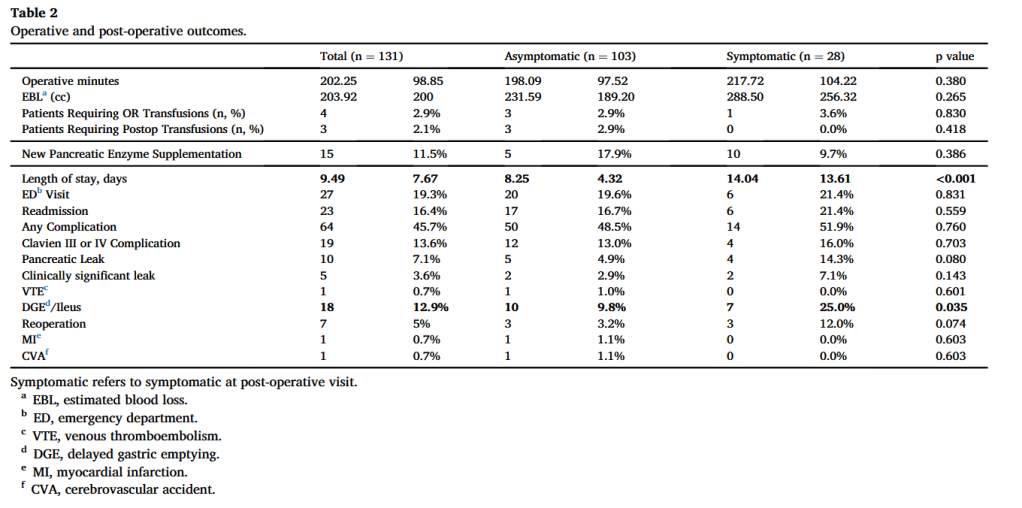
“Chronic pancreatitis is characterized by recurrent inflammation and fibrosis, resulting in pervasive symptoms of abdominal pain, early satiety, nausea, malnutrition, and pancreatic insufficiency. Though there are limited data on the true prevalence of chronic pancreatitis, an
estimated 5 to 14 per 100,000 patients are diagnosed annually in the US. While the overall incidence and prevalence of chronic pancreatitis remain relatively low, it contributes a significant morbidity and financial burden, with an annual healthcare cost exceeding $3 billion, largely due to increased utilization and symptom palliating efforts. Furthermore,
disability secondary to chronic pancreatitis symptoms creates a substantial personal burden, with increased work absenteeism and reducedquality of life. Treatment efforts initially focus on symptom management and reversal of instigating factors, consisting primarily of medical
and endoscopic techniques; however, up to 50 % of all cases of chronic pancreatitis eventually require surgical intervention due to persistent symptoms, most commonly debilitating abdominal pain. Additionally, current data suggest that surgery is superior to endoscopy in maintaining symptom resolution and preserving pancreatic function.”

Continue reading

Risk Factors and Outcomes for Postoperative Delirium after Major Surgery in Elderly Patients

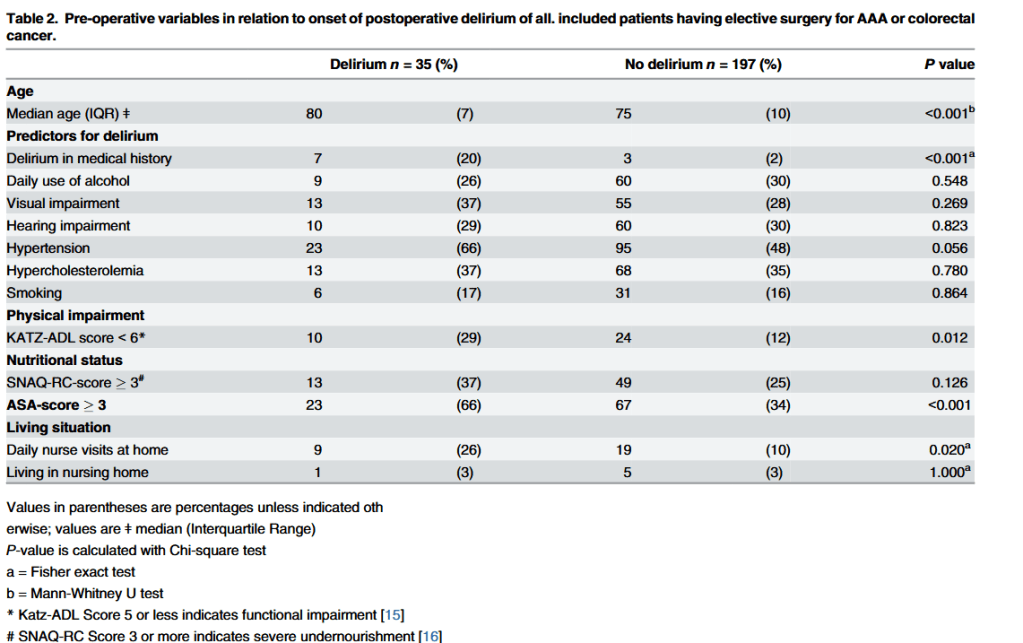
“The number of people over 65 years is increasing and will continue to do so over the coming decades. Similarly, the number of elderly patients requiring surgery is expected to increase.
Delirium is a common and serious problem in hospitalized patients, especially in the elderly.
Postoperative delirium is associated with an increase in postoperative complications, a decrease in functional capacity, a prolonged hospital stay and a direct increase of healthcare costs.
Early identification of patients at risk for delirium is important because adequate well timed
interventions could prevent occurrence of delirium and the related detrimental outcome.
Several prediction models have been developed, including multiple risk factors for postoperative delirium. However, these studies are of varying quality and each with a heterogeneous population.
Measuring frailty may be a more sensitive marker of determining post-operative delirium. However, to this date, there is no consensus on a clear definition and quantification of
frailty. Several assessment instruments have been developed for frailty during the last decades.
The most evidence based process to identify frail patients at this moment is comprehensive
geriatric assessment. However, this is a resource intensive, time consuming process and therefore not suitable for clinical practice”

Continue reading

Comparing Outcomes Between “Pull” Versus “Push” Percutaneous Endoscopic Gastrostomy in Acute Care Surgery: Under-Reported Pull Percutaneous Endoscopic Gastrostomy Incidence of Tube Dislodgement

“Percutaneous endoscopic gastrostomy (PEG) tube placement is a commonly performed procedure in trauma patients.Since the establishment of the acute care surgery (ACS)
model, the role of ACS in PEG tube placement in many institutions has expanded. The incidence of PEG tube complications has been under-reported in the literature and varies
widely among the patient populations studied and the definition of complications utilized. Major and minor complications may range from 3% to 26%. Our institution, under an ACS model, has previously reported an overall 25% complication rate with 10% major and 14% minor complications associated with pull PEG.”

Continue reading

ACG Clinical Guideline: Focal Liver Lesions

“With the continued dramatic rise in the widespread role of imaging in diagnosis and management of patients, there is a resultant rise in detection of asymptomatic incidental liver lesions. Common imaging modalities in which incidental liver lesions are detected include ultrasonography (US) with or without contrast agent (CEUS), computed tomography (CT), and magnetic resonance imaging (MRI) for abdominal or nonabdominal indications (breast and spine). Studies show a continued upward trend in utilization of CT/MRI/US imaging in adults in the United States and Canada, inevitably resulting in increased detection of incidental FLLs within the liver. In fact, some studies show that up to 52% of patients without cancer have a benign liver lesion at autopsy. The American College of Radiology reports that up to 15% of patients have an incidental liver lesion detected
on routine nonsurveillance imaging. Therefore, it is critical to understand appropriate management of incidentally detected benign FLLs because they have differing clinical implications from malignant lesions such as hepatocellular carcinoma (HCC), intrahepatic cholangiocarcinoma (iCCA), and metastatic disease.”

Continue reading

Six versus three years of adjuvant imatinib in patients with localized GIST at high risk of relapse

“Gastrointestinal stromal tumor (GIST) is the most common sarcoma and also a paradigmatic model for precision medicine in solid tumors, with the tyrosine kinase inhibitor
imatinib as a standard first-line treatment in the advanced phase and as adjuvant treatment in KIT- or PDGFRA-mutated GIST.”
Whether a longer duration of imatinib treatment improves disease-free survival (DFS) has not been explored in a randomized setting. The randomized IMADGIST study was initiated in 2014 with the aim to determine whether the prolongation of adjuvant imatinib during 3 additional years improves the outcome of high-risk GIST patients versus a standard total duration of 3 years as recommended by clinical practice guidelines. The primary endpoint was DFS. We report here the results of this clinical study.”

Figure 2 Disease-free survival in the in the 3-years and 6-years arms. (A) DFS in the entire series; (B) DFS in the stratification subgroup with a risk of relapse of 35%-70%; (C) DFS in the stratification subgroup with a risk of relapse >70%; (D) DFS in the stratification subgroup with a risk of relapse >70%, with (solid lines) or without (dotted lines) tumor rupture. CI, confidence interval; DFS, disease-free survival; Est, estimate; HR, hazard ratio; KM, Kaplan-Meier.
Continue reading

Long-term outcomes after extrahepatic excision of congenital choladocal cysts

“Congenital choladocal cysts are generally treated by resection of the dilated extrahepatic biliary duct followed by hepaticojejunostomy, but it is associated with postoperative complications, including postoperative cholangitis, intrahepatic calculi, pancreatitis, and carcinogenesis, in the remnant bile duct. We investigated the most common long-term complications and identified the factors implicated in their development.”

Continue reading

Pancreatitis after Biliary Tract Surgery (Historical article)

“Acute pancreatitis after operation on the biliary tract is a serious complication. This study was undertaken in an attempt to determine predisposing factors which might exist in patients undergoing operation for biliary tract disease. A large number of patients have been studied by postoperative serum amylase determinations and correlations have been made between the performance of various procedures and the occurrence of clinical and subclinical pancreatitis.”

Continue reading