Post-op GI bleed after Frey procedure for chronic pancreatitis. 

“Chronic pancreatitis (CP) is a progressive fibro-inflammatory disease of the pancreas leading to irreversible parenchymal damage with gradual loss of exocrine and endocrine functions. The most common and debilitating manifestation of this disease is intractable pain which may lead to loss of work, unemployment, narcotic dependence, and impairment of the quality of life (QOL). About 30–50% of patients with CP will require surgery during their life time.2,3 Several surgical procedures have been described in the literature, and these are broadly classified as drainage, resectional or a combination of the two. Each respective
procedure is chosen based on the degree of pancreatic ductal dilatation, glandular morphology, local complications, and to some extent on the experience and preference of the surgeon. The Frey procedure (FP) has emerged over the past 30 years as one of the most commonly performed operations for painful CP associated with enlarged pancreatic head. The procedure results in substantial and sustained pain relief in the majority of patients. Like other major operations, FP also is associated with several post operative complications.”

Continue reading

Splenectomy and gastric devascularization in patient with chronic pancreatitis sequelae leading to splenic vein thrombosis

“Patients with extrahepatic portal vein thrombosis may present from infancy through adulthood with variceal bleeding. Physiologically, such patients differ from patient s with cirrhosis and variceal bleeding in that they have a normal liver and maintain good portal perfusion through hepatopedal collaterals.”
“Therapeutic options range from noninterventive, through ablative procedures, to shunt operations. The goal should be definitive control of bleeding and return to a normal lifestyle. Distal splenorenal shunt offers the best option if technically feasible, but if no shuntable veins are patent, ablative procedures and sclerotherapy may be required. A noninterventive, noninvestigational approach is inappropriate in patients who can be offered definitive
therapy. Splenectomy for hypersplenism should not be done in these patients.” (Galloway)

Galloway
Continue reading

Pancreas-sparing duodenectomy for duodenal polyposis

“Pancreas-sparing duodenectomy, although technically demanding, eliminates the need for pancreatic resection. Pancreas-sparing duodenectomy is associated with good absorptive capacity, weight gain, and quality of life. Furthermore, it may reduce the risk of subsequent malignancy. Long-term surveillance, however, is still required. Pancreas-sparing duodenectomy is contraindicated in the setting of malignancy.”

Continue reading

Primary Bile Reflux Gastritis: Which Treatment is Better, Roux-en-Y or Biliary Diversion?

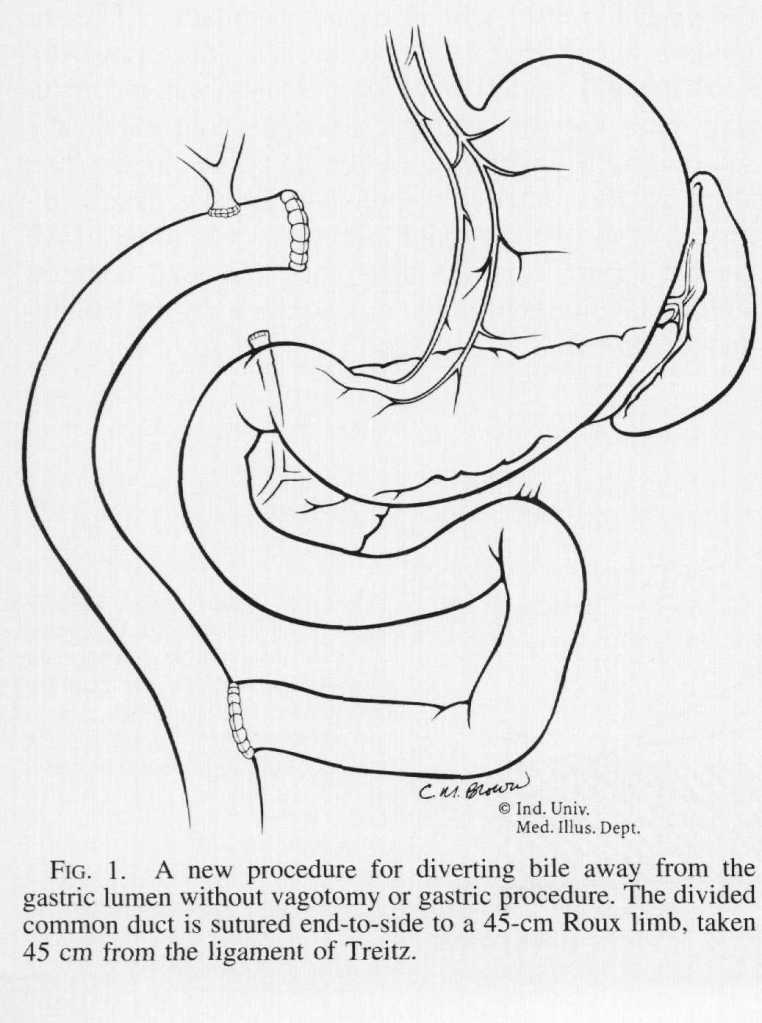
“Various treatments for [Primary Bile Reflux Gastritis] have been proposed since its recognition. Operations that have been utilized are the Roux-en-Y procedure, the Braun enteroenterostomy, the Henley jejunal interposition, and several modifications of each of these operations. These procedures produce relief from bile reflux, but all have particular side effects of their own. Before the utilization of vagotomy for ulcer disease, stomal ulceration at the gastrojejunal anastomosis was the most frequent postoperative problem. Currently, the most commonly applied operation is the Roux-en-Y gastrojejunostomy, which requires vagotomy and antrectomy and results in the equally disabling Roux stasis syndrome in about one-half of patients.”

“Because of these difficulties, a new procedure is proposed wherein only bile is diverted by means of a Roux-en-Y limb and no gastric procedure is done. This allows minimal disturbance of gastric motility and totally diverts bile away from the gastric lumen.”

Continue reading

Hepatic Arterial Infusion Pump Chemotherapy for Unresectable Intrahepatic Cholangiocarcinoma

“Because most patients die from progressive disease in the liver, hepatic arterial infusion pump (HAIP) chemotherapy with floxuridine is an attractive treatment option for unresectable [Intrahepatic cholangiocarcinoma] iCCA. The rationale for HAIP chemotherapy is that iCCA relies mostly on arterial blood supply. Moreover, floxuridine, also known as FUDR, is characterized by its high first-pass effect; approximately 95% is directly metabolized in the liver. Hence, this allows for an up to 400-fold dose increase in subsequent intratumoral exposure compared with systemic treatment, with minimal systemic exposure and side effects”

Continue reading

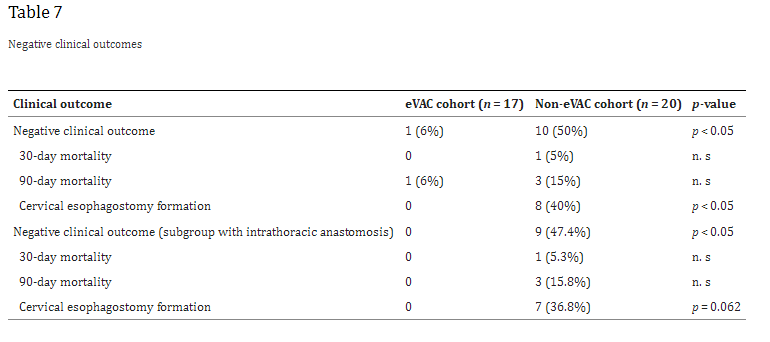
Endoscopic Vacuum Therapy Significantly Improves Clinical Outcomes of Anastomotic Leakages After Esophagectomies

“Anastomotic leakages continue to be a highly challenging complication in esophageal surgery. According to the literature, the risk of anastomotic leakage after esophagectomy ranges between 4 and 35%. The location of the anastomotic leakage is a significant factor in determining patient outcomes. Notwithstanding, cervical anastomoses bear a higher risk for leakage; the consequences of an intrathoracic (mediastinal) leakage are usually more devastating. A leakage into the thoracic cavity typically leads to mediastinitis and severe pneumonia and contributes to the significant mortality rates in esophageal surgery. In contrast, cervical anastomotic leakages tend to frequently present as wound infections often only requiring external drainage”

“The clinical outcomes strongly depend on an early diagnosis and appropriate treatment, which can extent over several weeks or even months. In the past, the mainstay of treatment was based on surgical repair, external drainage of sepsis via chest tubes, and interventional treatment modalities like endoscopic stent deployment or clipping. In 2008, endoscopic vacuum-assisted closure (eVAC) therapy was successfully applied in patients with anastomotic leakages after esophagectomies. As in other vacuum-assisted wound therapies, eVAC cleans the defect by reducing the amount of exudative fluids and necrotic tissue, thus accelerating the healing process by contributing to a better local perfusion as well as through the formation of granulation tissue.”

Continue reading

Negative Pressure Wound Therapy for Surgical-site Infection

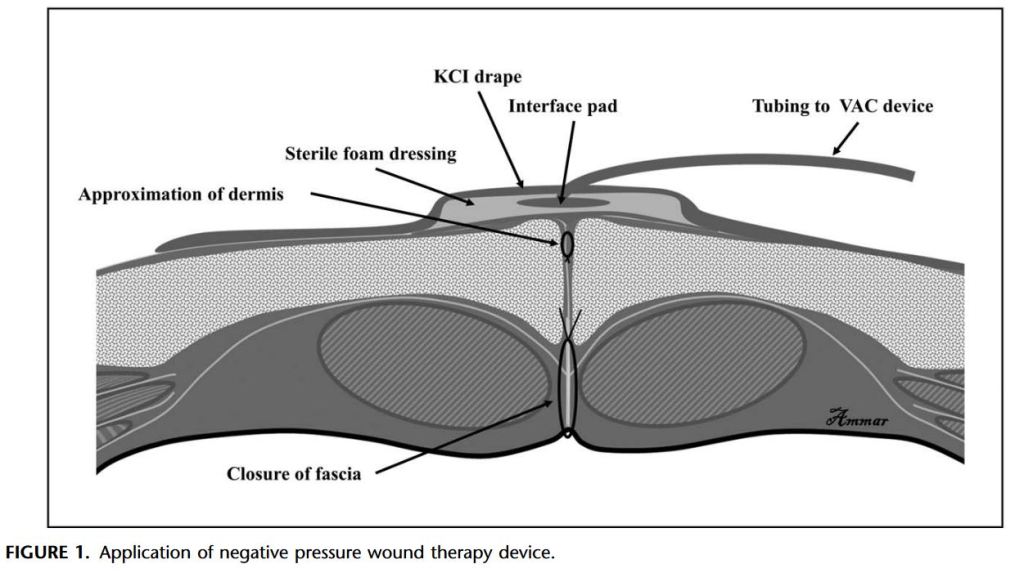
“Despite improvement in infection control, SSIs remain a common cause of morbidity after abdominal surgery. SSI has been associated with an increased risk of reoperation, prolonged hospitalization, readmission, and higher costs. Recent retrospective studies have suggested that the use of negative pressure wound therapy can potentially prevent this complication.”

Continue reading